News
NLC slams DisCos for classifying consumers into bands, threatens strike

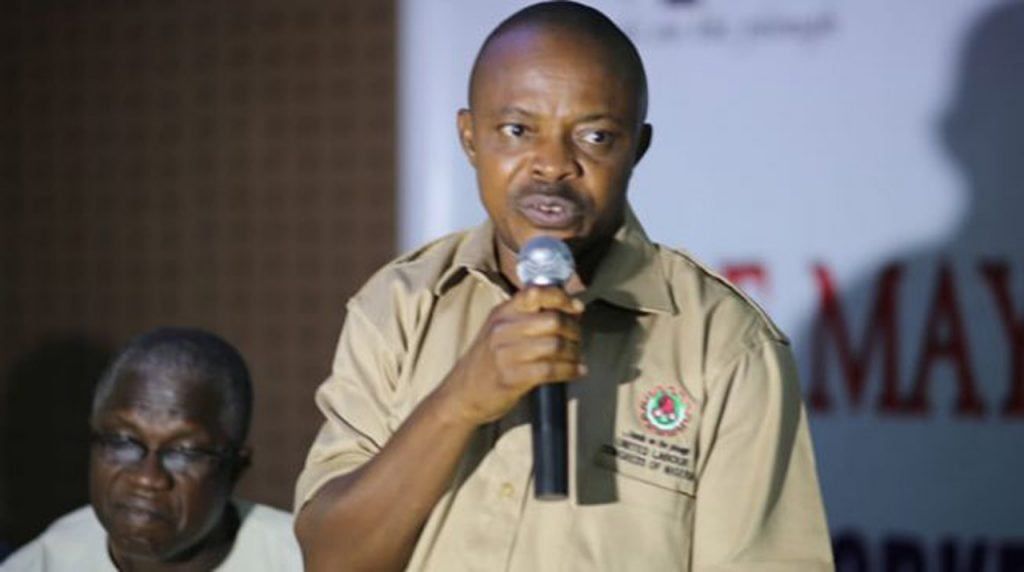
The Nigeria Labour Congress has threatened a nationwide industrial action over the recurring collapse of the country’s electricity grid, declaring that more than a decade after privatisation, the sector has delivered “darkness, exploitation and economic pain.”
The labour centre also described the classification of consumers into Bands A, B and C as institutionalised extortion.
Speaking at the annual conference of women and youth organised by the National Union of Electricity Employees in Abuja on Sunday, the NLC President, Joe Ajaero, issued what he called a final warning to authorities and operators, insisting that organised labour would resist further tariff increases or policies that worsen hardship without improving supply.
He lamented that over 10 years after the unbundling and sale of the Power Holding Company of Nigeria successor firms, electricity generation had remained between 4,000 and 5,000 megawatts, nearly the same level recorded before privatisation, despite rising population and industrial demand.

Describing the situation as shameful, Ajaero called for a comprehensive review of the sector.
“We once again sound the alarm on the deplorable state of the nation’s electricity sector. We declare that the failed privatisation experiment has plunged Nigerian workers, women, youth and industries into deeper energy poverty as the national grid continues to collapse while DISCOs persistently reject loads from the Transmission Company of Nigeria,” he said.
“Instead of progress, we witness regression. Instead of light, we have darkness. The national grid collapses with the frequency of a faulty generator, sometimes plunging the entire nation into a blackout. This is not the turnaround we were promised; this is a well-orchestrated robbery of the Nigerian people.
“NLC once again maintains that the power sector privatisation was a grand deception. The exercise was a fraudulent transfer of public wealth into the hands of a few speculators who lack both the technical expertise and the financial backbone to manage the nation’s electricity assets.
“The so-called investors did not buy these companies with their own money. They borrowed heavily from Nigerian banks, draining domestic credit and contributing to the depreciation of the naira. They acquired the DISCOs and GENCOs on a shoestring budget and now expect Nigerian workers to pay for their loans through outrageous tariffs.”
Ajaero said the band classification system amounted to a backdoor tariff hike, burdening consumers with higher costs without commensurate service.
“Banding remains the institutionalisation of extortion. Band A consumers pay through their noses but still receive epileptic supply. This government is asking Nigerians to pay for darkness. We reject this segregation. Electricity is a right, not a commodity to be auctioned to the highest bidder while the poor are left in the dark,” he said.
He also faulted reports of a planned bailout for generation companies, questioning the rationale for such intervention.
“We insist that there is no justification for a massive bailout to private firms that have failed to deliver. If the government is serious about the welfare of Nigerians, it must stop using our commonwealth to enrich a cartel of failed investors,” he added.
The NLC president urged the government to return the sector to what he called a social service model, arguing that only the state could shoulder the heavy capital investment and long gestation period required.
“The private sector has failed. It is time to take back the power for the people,” he said.
Ajaero called for a national stakeholders’ summit comprising workers, unions, manufacturers and experts to produce a roadmap prioritising affordable and stable electricity, reversal of the privatisation framework and greater public investment in infrastructure.
“The Nigerian people cannot continue to pay for darkness. When power is not available, it cannot be affordable. Power must be returned to the people,” he stated.
PUNCH Online reports that Nigeria has long battled inadequate generation and frequent system collapses, with available supply falling far short of installed capacity.
The Federal Government has, in recent months, outlined reform plans, including measures aimed at settling debts, improving infrastructure and moving towards tariffs that reflect market realities.(Punch)
-

 Politics16 hours ago
Atiku’s Lobbyist Deletes Post On Purported Trump Commission Appointment
-
News15 hours ago
Lab test showed my wife’s fresh orange juice unfit for consumption – Osinbajo
-
Politics16 hours ago
World Igbo Congress warns politicians against threatening Igbos over support for Obi
-
Politics16 hours ago
I am confident I will become Lagos governor next year – NDC gov candidate, Doherty
-
Business15 hours ago
Nigeria’s syndicated loans jump 21-fold to $2.86bn
-
Politics15 hours ago
Tinubu’s policies improving student welfare, says NANS
-
Metro16 hours ago
Nigerian-British businessman dies after penis enlargement procedure in Thailand
-
Metro15 hours ago
Kogi chief allegedly impregnates teen, damages womb