Opinion
Why Lekki risks becoming a mega-project without a mega plan

BY GBENGA ONABANJO
Some months ago, I wrote Private Capital, Public Failure as a warning: that the Lekki–Epe axis was drifting toward a familiar Nigerian paradox—world-class private ambition surrounded by fragile, improvised public systems. The response confirmed what many already knew, but few were willing to say aloud: we were building prosperity on a foundation of neglect.
Recently, after a personal visit to the Dangote Refinery in Ibeju-Lekki, that concern sharpened into something more urgent. What stands on that coastline is not just Africa’s largest refinery. It is a once-in-a-generation urban anchor—the kind of industrial gravity that, in other countries, becomes the seed around which entire cities are carefully planned, governed, and grown.
The question before Lagos, and indeed Nigeria, is no longer whether private capital can transform our economy. Dangote has answered that. The question now is whether public systems can rise to meet it.

From Mega-Project to Mega-City
History is unambiguous on this point: every major industrial leap produces a city around it. Rotterdam grew around its port. Houston grew around energy. Singapore grew around logistics and trade. But those cities did not emerge by accident. They were designed, regulated, and governed into existence.
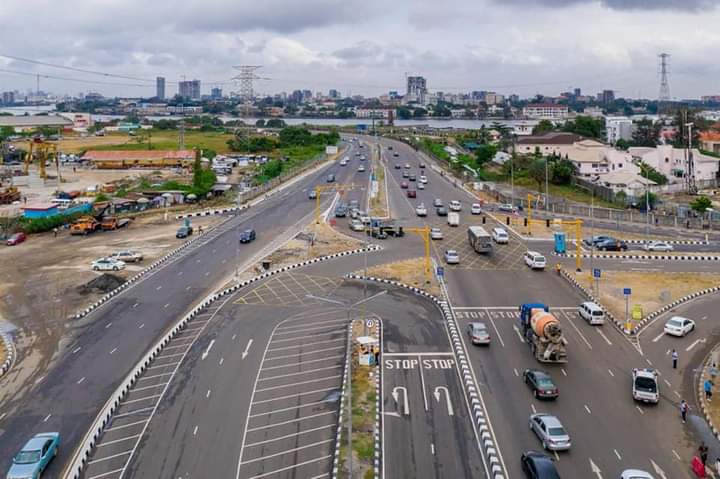
The danger for Lekki is not that it will fail to grow. The danger is that it will grow without a plan, and in doing so, become Africa’s most expensive version of dysfunction: luxury estates trapped in a corridor of congestion, flooding, pollution, and informal sprawl.
If the refinery is the engine, then urban governance must be the chassis. Without it, speed becomes chaos.
The Real Lesson of Lekki–Epe
We already ran this experiment once. The Lekki–Epe Expressway became a magnet for investment long before it became a corridor of infrastructure. Estates rose faster than drains. Towers rose faster than transformers. Traffic multiplied faster than road capacity.
What emerged was not a “growth corridor,” but a “stress corridor”—where every new development deepened the strain on roads, schools, hospitals, and public safety.
The lesson is simple and unforgiving: Cities do not collapse from lack of wealth. They collapse from lack of coordination.
The Multi-Corridor Vision That Was Lost
Lekki was never meant to be a single funnel road with buildings stacked on either side. The original sub-regional planning framework envisioned parallel spines: an Atlantic coastal road, a lagoon-side highway, the Lekki–Epe express spine, and additional regional and mainland link corridors. Together, these were meant to form a networked grid, not a bottleneck.
Even the abandoned bridge structure near the entrance to Victoria Garden City tells this story. It was conceived as part of a bypass—linking the Freedom Way and VGC/Ikota axis—so that Lekki–Epe would not become the only artery for an entire sub-region.
The tragedy is not that Lagos lacked ideas. It is that delivery and completion culture failed. Today, what should have been a web of movement has hardened into a single stressed spine, carrying residential traffic, industrial freight, informal commerce, and regional mobility all at once.
Land Tenure and the Fatal Sequence
At the heart of Lekki’s disorder lies a quiet but powerful contradiction in Nigeria’s land system. Under the Land Use Act, all land in a state is vested in the Governor, held in trust for the people. In theory, this gives the government extraordinary power to shape growth, reserve corridors, and plan infrastructure decades in advance.
In practice, that power is rarely exercised as a strategy. It is treated as a transaction. Land is sold by families and communities. Titles are regularised. Developers build. Only afterwards does planning arrive—often in the form of road widening, compensation, demolition, and conflict.
In countries like the Netherlands and Canada, the sequence runs in reverse. There, a highway is not merely a road; it is a planning instrument. Land around it is zoned, buffered, and phased. Development rights are released gradually. Farmers, logistics parks, industrial estates, green belts, and residential zones appear not by accident, but by design. That is why their highways are flanked by fields, forests, and factories, not by bedroom windows and front gates.
Nigeria’s challenge, therefore, is not the absence of legal power over land. It is the absence of a planning system that uses that power before the market uses the land. Until that sequence is corrected, every new corridor—Lekki included—will drift toward the same fate: a national artery transformed into a residential street.
The Test Before the Trucks Arrive
What makes this moment different is scale and speed. The refinery is operational. The port is active. Investors are arriving. Population is moving in. Freight volumes are about to rise dramatically.
If Lekki enters this next phase governed by the same logic that shaped the last—build first, regulate later—the consequences will be amplified: not just in traffic and inconvenience, but in public safety, environmental risk, and long-term economic competitiveness. This is the moment when a corridor becomes a city, or a problem that grows too large to fix.
A Question That Cannot Be Deferred
When private capital moves faster than public systems, it does not create a partnership. It creates an imbalance. The imbalance is what turns opportunity into resentment, growth into gridlock, and ambition into disorder.
Lagos now faces a choice that will not wait for another masterplan or another administration: Will the Lekki axis be governed as a national asset, shaped by long-term public interest?
Or will it continue as a private frontier, where the market decides first, and government responds later?
In the second part, I will turn from diagnosis to design.
From roads that behave like dams, to corridors without trees, to the hidden cost of moving a nation’s fuel by truck instead of rail or pipeline, the next instalment will examine how Lekki can still be redesigned into a future-ready, climate-resilient, and human-centred urban spine—before the rains fall and the convoys roll in.
Onabanjo, an architect, environmentalist, and urban policy advocate, writes from Lagos.
-

 News20 hours ago
BREAKING: INEC declares Accord Party’s Adeleke winner of Osun governorship election
-
Politics19 hours ago
‘Bulldozer’: How Adeleke defeated APC, others to secure second term in Osun
-
News19 hours ago
Borno parents beg FG to rescue 52 children, others 90 days after abduction
-
Business19 hours ago
SEC orders Nigerian capital market firms to cut North Korea, Iran ties
-
Business19 hours ago
Tinubu’s tax reforms promised relief, evidence shows multiple levies are killing businesses
-
Opinion19 hours ago
ABACHA: 28 years on, still no evidence
-
 Sports21 hours ago
Osimhen gives Arsenal transfer green light
-
Metro19 hours ago
In Ekiti, students abandon school for online scam as mums form ‘Iya Omo Ologo Association’