News
Senate decries envelope budgeting, non-release of capital allocation to security agencies

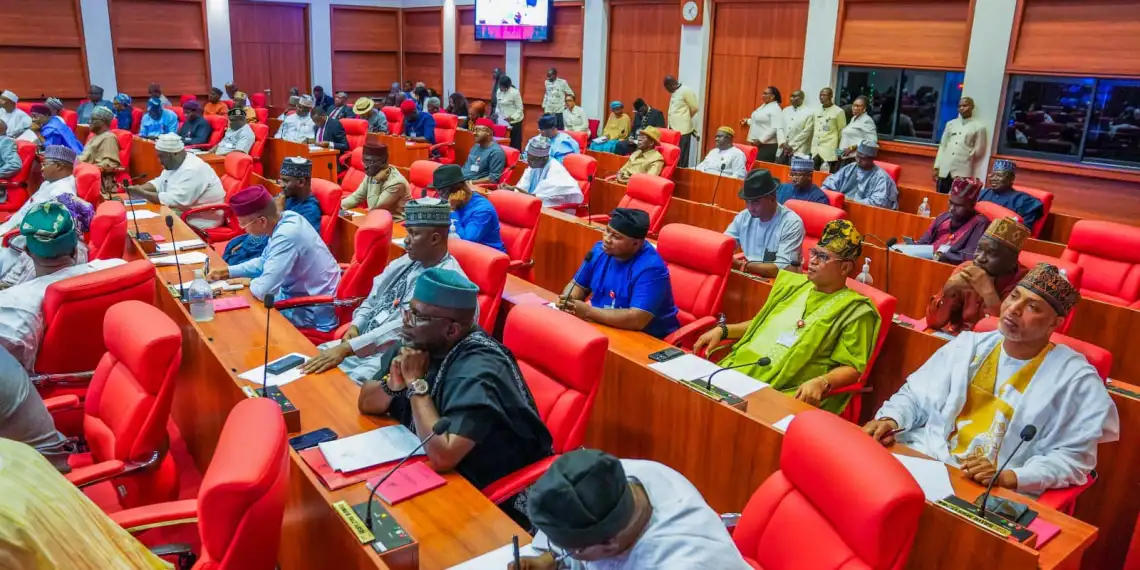
The Chairman of the Senate Committee on National Security and Intelligence, Yahaya Abdullahi, on Wednesday, decried the envelope budgeting system for security and intelligence agencies.
Mr Abdullahi expressed concern when the Permanent Secretary, Special Services, Office of the National Security Adviser, Mohammed Sanusi, appeared before the committee for budget defence.
He said the meeting was convened to examine budgetary provisions to fund the operations of the security and intelligence community for the 2026 financial year.
Mr Abdullahi, while recalling that President Bola Tinubu recently declared a national security emergency, said the committee considered it necessary to allocate budgetary resources to the intelligence community.

“This is to ensure that it is commensurate with the challenges facing the nation,” he said.
The senator said that security agencies needed to perform optimally and address the myriad of emerging security threats to national stability, adding that they needed to be properly funded.
“It is, however, disheartening to note that the security and intelligence agency’s budget is still subject to the vagaries of the envelope system of budgeting rather than to genuine needs and requirements,” he stated.
The lawmaker said that the non-release or partial release of capital funds allocated to security agencies in the 2024 and 2025 budgets was inappropriate.
“This has, no doubt, impacted very negatively on their capacity to procure materials and modern security equipment as well as their operational capabilities,” he said.
Mr Abdullahi stressed the need for the National Assembly to provide the intelligence community with the necessary resources to safeguard the nation, the citizens and their property.
A member of the committee, Orji Kalu (APC-Abia), commended the security and intelligence community for appearing before the committee promptly.
He said: “In previous instances, some invitees—especially certain ministers—have not adhered to scheduled times, arriving hours late and citing various excuses.
“Such delays negatively affect our work, especially during this critical budget period,” he said.
Mr Kalu, while describing budget deliberations as serious matters, said: “Delays hinder our ability to perform our constitutional duties effectively.
“I urge that this culture of punctuality and respect for institutional processes be maintained.”
Also speaking, Mr Sanusi said the brief covered the Office of the National Security Adviser and its centres.
The centres, according to him, include the National Counter Terrorism Centre, the National Cyber Security Coordination Centre, the National Centre for Control of Small Arms and Light Weapons, and the Presidential Amnesty Programmes, among others.
Mr Sanusi said the key focus area for the intelligence community in the current financial year included, but was not limited to, combating terrorism, banditry and kidnapping through enhanced intelligence and community-based strategies.
“It is noteworthy that the operations and the activities of the securities in the 2025 financial year are not without challenges.
“Some of these key challenges encountered by the intelligence community in the implementation of the 2025 budget include, among others, the envelope system of budgeting,” he said.
Mr Sanusi said the envelope system imposed significant constraints on resource allocation to the intelligence community.
“There are irregular releases of the overhead cost, non-implementation of the release of the 2025 capital appropriation and irregular release of foreign service personnel shortfall,” he stated.
He, therefore, called for adequate funding for the intelligence committee through a supplementary budget.
“This is to ensure a timely and speedy response to issues of national security. We all agree that no nation can grow without adequate security,” Mr Sanusi said.
(NAN)
-

 News23 hours ago
Lakurawa terrorists kill four soldiers in Sokoto
-
Politics23 hours ago
Osun poll: APC, Accord wage N20,000-per-vote war
-
World News23 hours ago
Ex-Cambridge professor accused of plagiarism found dead
-
Sports23 hours ago
Gala reject £111m, insist Osimhen not for sale
-
Politics23 hours ago
Atiku, Obi, others’ summit shifted to August 31
-
Metro23 hours ago
Family, friends celebrate Wigwe
-
Metro23 hours ago
Man Allegedly Beheads Woman In Adamawa Hotel
-
News23 hours ago
Helpless! Borno families sell houses to pay ransom