Politics
Electoral Act Raises Presidential Campaign Expenses To N10bn


Leader of the Senate, Senator Opeyemi Bamidele, has explained that the new regime reviewed upward the election spending limit under Section 92(1-8) of the Electoral Act, raising the spending threshold for presidential poll from N5 billion to N10 billion.
He provided the key highlights of the new regime in a statement released by his Directorate of Media and Public Affairs on Sunday.
Senator Bamidele said it also raised the spending threshold for governorship poll from N1 billion to N3 billion; from N100 million to ₦500 million for the Senate; from N70 million to N250 million for the House of Representatives; from N30 million to N100 million for the House of Assembly; from N30 million to N60 million for Area Council and from N5 million to N10 million for the councillorship poll.
Under Section 125(1-2), Bamidele explained how the new legislation stiffened measures against vote buying, impersonation, and result manipulation, recommending a two-year imprisonment for such offences or a fine ranging between N500,000 and N2 million or both upon conviction.

Section 74(1) of the Electoral Act, according to Bamidele, specifically mandates the REC to release the certified true copy of any document within 24 hours after payment has been made. The failure to comply will attract an imprisonment of a minimum term of two years without an option of fine.
The National Assembly also highlighted the creation of a dedicated fund for the Independent National Electoral Commission (INEC), mandatory electronic transmission of election results and creation of a digital membership register by all political parties, among others, as part of key reforms in the Electoral Act, 2026.
The new electoral governance framework, according to the parliament, equally mandates the INEC to deploy bimodal voters verification system (BVAS) for voters accreditation; recommend two-year jail imprisonment for the Resident Electoral Commissioner (REC) that withholds vital documents; establish an electronic register of voters and review upward campaign funds for different elective offices.
The National Assembly had harmonised different versions of the Electoral Bill 2026 produced by its two Chambers, especially with respect to Clause 60(3); passed the Bill into law and transmitted it to President Bola Ahmed Tinubu for assent in order to avoid constitutional crisis that might arise in the preparation of the 2027 general election.
The president had subsequently signed the Electoral Bill 2026 into law after 24 hours of its enactment, thereby completing the two-year process of recrafting the new regime expected to shape the next elections positively.
Although the civil society organisations (CSOs) had questioned the speed at which the Electoral Bill 2026 was signed into law, the president observed that the essence of democracy was designed to promote conversations aimed at deepening national development, nation-building and stability of the federation.
Contrary to insinuations in some quarters, Bamidele explained how the National Assembly sustainably engaged the CSOs, INEC, Office of the Attorney-General of Federation (OAGF) and development partners, among others, for two consecutive years before the new electoral regime came into force.
He said the making of the new regime “is a collective work that involves nearly all critical stakeholders. The National Assembly worked with such different stakeholders as OAGF, CSOs, INEC and our development partners, among others, before we eventually completed the process.
“As we were making progress, the stakeholders too were making their input, and all the inputs were incorporated in the Act. In view of the time constraint we are facing now, I do not believe the Executive requires days or weeks to review it before assent since we all contributed to it. Its outcome is not a unilateral effort of the parliament, but of Nigerians at large.”
Consequently, Bamidele explained the potential of the new electoral governance framework “to obviously strengthen institutional independence; enhance transparency in election management; improve technological integration and reinforce accountability mechanisms in the country’s election management system.
Under Section 3, for instance, the senate leader pointed out that the new legislation established a dedicated fund for the INEC, which according to him, would guarantee the financial autonomy, operational stability and administrative continuity of the commission.
With this provision alone, according to Bamidele, INEC will operate with greater independence and quicker corrective powers. The section requires that election funds be released earlier, at least six months before the general election and expands INEC’s powers to review questionable result declarations made under duress or procedural violations
He also cited Section 47 of the Electoral Act, which mandated all presiding officers “to use BVAS or any other technological device that may be prescribed by the Commission, for the accreditation of voters, to verify, confirm or authenticate the particulars of the intending voter in the manner prescribed by the Commission.”
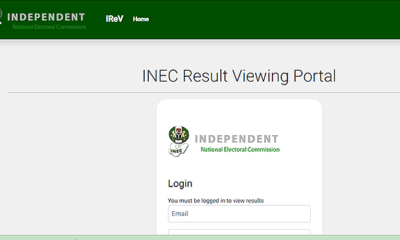
While Section 60(3) mandates the electronic transmission of election results to the INEC Result Viewing Portal (IReV), he revealed that Section 60(6) recommended “a six-month imprisonment or a fine of N500,000 or both against any presiding officer, who willfully frustrates the electronic transmission of election result.
“This provision is consistent with the public demands. It also stipulates another measure of consequence if any presiding officer refuses to electronically transmit the results from each polling unit to IREV. We must equally understand that IREV is not a collation platform. It was designed to enhance transparency in our electoral process. An electronic collating system is a project that requires its own planning.”
Nevertheless, the senate leader clarified that the new electoral governance framework conditionally permitted the resort to Form EC8A to transmit election results as prescribed by the INEC provided that the electronic transmission of election results failed due to communication failure,
He also pointed out Section 72(2), which recommended that a certified true copy of the order of the court “shall be sufficient for the purpose of swearing-in any candidate declared as the winner of an election by the court where that the INEC fails, refuses, or neglects to issue the certificate of return.”
Unlike the 2022 Electoral Act that had been repealed, Bamidele explained that the new regime only provided for direct and consensus primaries under Section 84 (1-2) as means of electing candidates for elective offence, thereby phasing out indirect primaries to enable broader party members to participate in the process and reduce the use of money to compromise party delegates.
But Section 77 (1-7), according to him, stipulates stringent measures that will henceforth govern and regulate the conduct of primaries and the process of electing party candidates. The section mandates each political party to maintain a digital register of its members; issue membership cards to each of them and submit such a register to the INEC 21 days before the party primaries, congresses or conventions.
He further pointed out that a political party “shall not use any other register for party primaries, congresses and conventions than the register submitted to the INEC. Besides, any political party that fails to submit the membership register within the stipulated time shall not be eligible to field a candidate for that election. These are indeed consequential restraint measures that will deepen internal democracy and reduce the monetisation of politics in the country.”
He highlighted how Section 49 mandated the presiding officer to separate the queue between men and women in any part of the country where culture did not permit it; Section 54 created support mechanism for persons with visual impairment and Section 93 (4) recommended a fine of ₦10 million for a political party that failed to submit an accurate audited return within the stipulated period.
Given these reforms, the senate leader said: “The Electoral Act, 2026 represents a consolidation and refinement of the country’s electoral governance framework. In all, the Act seeks to enhance electoral credibility, reduce disputes, and strengthen democratic governance in Nigeria.
“The Act emphasises financial and operational independence of INEC; technological integration with procedural safeguards; transparency in collation and declaration; stricter penalties for electoral offences and stronger regulation of political parties.”
-

 News6 hours ago
Abuja Workers Turn To Pick-Up Trucks Amid Rising Transport Costs
-
 Politics11 hours ago
Security Operatives Guard Tinubu’s Billboards Ahead Campaign Launch
-
 News6 hours ago
Ebola patient in Nigeria is Swiss, had not visited DR Congo – Foreign Ministry
-
Politics6 hours ago
Results With Discrepancies Won’t Be Uploaded On IREV – INEC
-
News24 hours ago
El Niño projected to cause 31,400 deaths in Nigeria
-
 News6 hours ago
Zamfara Community Fights Back
-
Politics6 hours ago
2027: You Can’t Hide Voters’ Register And Expect Trust – Atiku Tells INEC
-
Politics5 hours ago
South-East has better presidential options than Peter Obi – Umahi