Business
GenCos dump Presidency’s N2.8tn debt deal


The Association of Power Generation Companies has firmly rejected claims by Presidency sources that N2.8tn constitutes a newly verified and final settlement of legacy debts owed to electricity generation companies, describing the assertion as inaccurate and misleading.
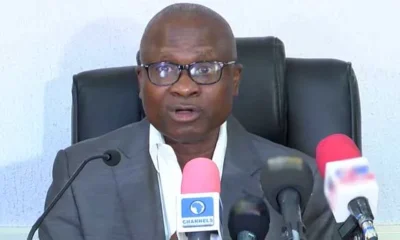
In a statement titled “APGC Position on Misleading Reports Regarding GenCos’ Debt Reconciliation,” issued on Monday in Abuja, the Chief Executive Officer of the association, Joy Ogaji, said the figure did not emerge from any officially concluded reconciliation process. She urged those behind the claim to disclose the basis for their computation.
“We categorically reject recent media reports suggesting that N2.8tn represents a newly verified and final settlement of GenCos’ legacy debts. The report is completely inaccurate. It is fake news,” Ogaji said.
On Monday, The PUNCH reported that Bola Tinubu had approved the payment of N2.8tn to generation companies as the Federal Government’s verified liability for accumulated electricity subsidies dating back to 2010.

The report, quoting senior officials in the Presidency and the Federal Ministry of Power with direct knowledge of the negotiations, stated that the President rejected the N6tn claim submitted by operators and insisted he would not approve payment beyond the audited figure.
“The President has approved an amount. The audit has shown that it is N2.8tn, and it has been brought to the President for approval, and the President has approved it.
And then he said he is not going to pay one naira more than that. So that is what the Federal Government is accepting as liability,” the source said.
Responding, the APGC CEO challenged the unnamed Presidency sources cited in the report to publish their audit findings.
“Those Presidency sources should come out openly. I dare them. Publish your audit report. Why hide to throw stones? Issue a formal press release explaining how you arrived at that figure. There is a clear demonstration of poor understanding of the debt structure and how these obligations accumulated,” she added.
Ogaji explained that the outstanding liabilities arose strictly from bilateral commercial agreements executed within the framework of the Nigerian Electricity Supply Industry.
She noted that the total debt is determined through a verifiable process that captures metered megawatts generated by GenCos, energy dispatched to the grid, invoices issued in line with market rules, and settlement reports prepared by the Nigerian Bulk Electricity Trading Plc.
“The outstanding obligations to generation companies arose strictly from bilateral commercial agreements executed within the Nigerian Electricity Supply Industry framework. These are not unilateral claims. They are contractual liabilities resulting from power generated, dispatched, and consumed under regulated tariffs.
“Can the process of obtaining metered MW generated by the GenCos be included here? Any reconciliation or audit of these obligations must be conducted transparently and in accordance with the provisions of those bilateral agreements.
“The energy generated by GenCos is metered and documented. The megawatts generated and dispatched to the grid are captured under established market procedures. These form the basis of invoices rendered under bilateral agreements. So any suggestion that figures are arbitrary is incorrect,” she stated.
She emphasised that any reconciliation or audit must be undertaken transparently and strictly in line with the contractual agreements governing the electricity market. “As of December 2025, no further reconciliation meeting had been convened by NBET following the March 2025 tripartite reconciliation exercise,” she disclosed.
Ogaji recalled that in July 2025, after a tripartite reconciliation involving GenCos, NBET, the Ministry of Finance, and the Office of the Special Adviser on Energy, President Bola Tinubu approved N4tn in recognition of verified legacy obligations.
“It is on record that after a tripartite reconciliation involving GenCos, NBET, the Ministry of Finance, and the Office of the Special Adviser on Energy, His Excellency approved N4tn in recognition of verified legacy obligations. That commitment was made following due process and formal engagement,” she said.
According to her, GenCos participated in the reconciliation process in good faith and subsequently engaged financial institutions, gas suppliers, and investors based on that commitment.
“Financial institutions, gas suppliers, and investors were engaged based on that understanding. Revising figures outside the established reconciliation framework undermines market confidence and contractual sanctity,” Ogaji warned.
She maintained that APGC retains confidence in the President and expects that any further discussions will be conducted transparently and within the framework of the bilateral agreements governing the electricity market. The APGC CEO also attributed the persistent liquidity crisis in the power sector to structural challenges rather than arbitrary demands by generation companies.
“The President cannot approbate and reprobate on the same issue after a concluded reconciliation process. This can be excluded for political correctness. GenCos participated in good faith. Financial institutions, gas suppliers, and investors were engaged based on that commitment. Revising figures outside the established reconciliation framework undermines market confidence and contractual sanctity.
“GenCos participated in good faith. Financial institutions, gas suppliers, and investors were engaged based on that commitment. Revising figures outside the established reconciliation framework undermines market confidence and contractual sanctity. The liquidity crisis in the sector is rooted in: Tariff shortfalls under regulated pricing, market settlement deficits, foreign exchange exposure, and accumulated unpaid invoices. These are structural market realities, not arbitrary demands,” she said.
Nigeria’s power sector has continued to grapple with mounting debts owed to generation companies since the 2013 privatisation of the industry. GenCos have repeatedly warned that delayed payments from NBET and distribution companies have constrained their capacity to meet obligations to gas suppliers and service lenders, raising concerns about the sustainability of electricity generation.
Liquidity shortfalls within the Nigerian Electricity Supply Industry have expanded over time due to non-cost-reflective tariffs, foreign exchange volatility, and persistent settlement gaps.
Against this backdrop, Ogaji insisted that any attempt to alter reconciled figures without formal engagement risks undermining investor confidence at a time when the sector urgently requires fresh capital and policy stability.
“APGC maintains confidence in the President and in the integrity of the July 2025 engagement. We expect that all further discussions will be conducted transparently and within the framework of the bilateral agreements governing the market,” she concluded.(Punch)
-

 Politics28 minutes ago
‘Weapon fashioned against APC’ — outrage as youth leader gifts 2026 Prados to party officials, then deletes post
-
News37 minutes ago
Ebola: NCDC to pay contacts N100,000 weekly
-
Politics35 minutes ago
We’ll Soon Expose Those Plotting To Scuttle My Guber Ambition – Pantami
-
News33 minutes ago
Zamfara Steps Up Ebola Containment Measures After Passenger With 38°C Fever Arrives Airport
-
Politics34 minutes ago
We Won’t Allow Repeat Of 2023 Defeat – Lagos APC
-
Metro31 minutes ago
Okonjo-Iweala’s mother dies at 96
-
Politics30 minutes ago
FULL LIST: Ibrahim Abdulkarim, ICT strategist, named DG as NDC constitutes 155-member campaign council
-
News24 minutes ago
States’ six-month debt servicing bill hits N800bn