Business
M/East Crisis: What Oil Windfall Means For Nigeria

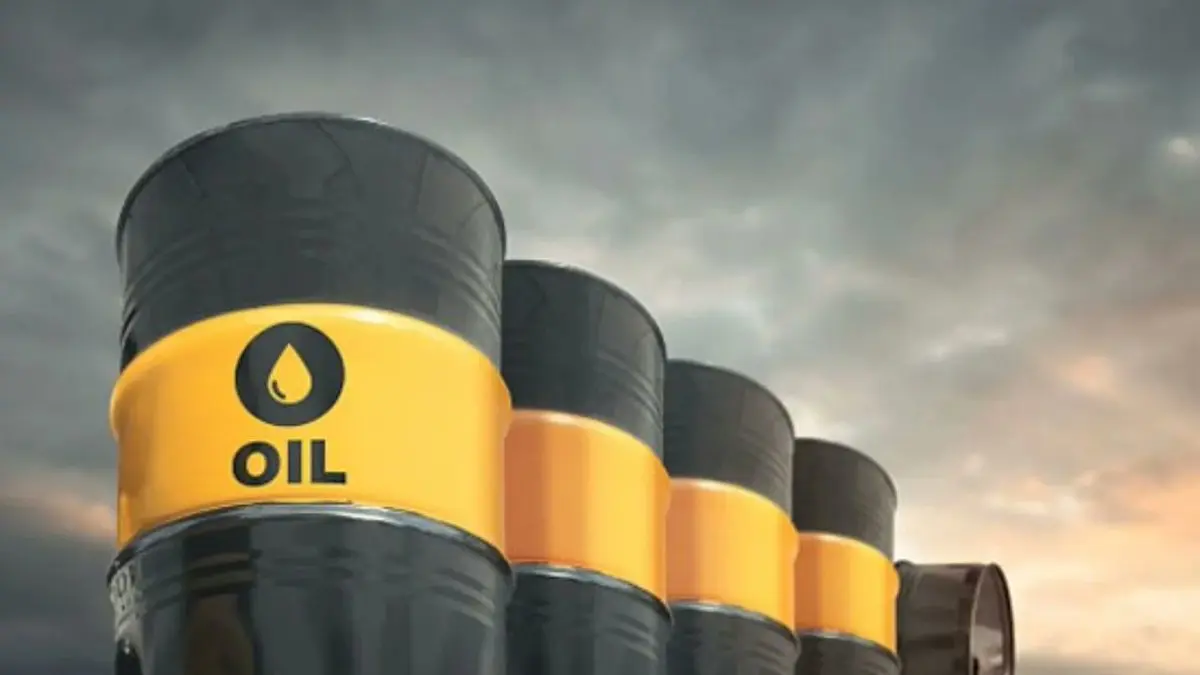
Stakeholders in Nigeria’s economy have outlined key priorities for the country to maximise potential gains from the escalating crisis in the Middle East.
With tensions rising among the United States, Iran and Israel, analysts warn that the conflict could further disrupt global energy supply and push crude oil prices sharply upward.
And true to their prediction, crude oil prices climbed above $100 per barrel as of the time of filing this report on Monday, surging by almost 40 per cent since the start of the Middle East conflict, which was triggered by joint US–Israel strikes on Iran that reportedly led to the killing of Ali Khamenei.
With the crisis persisting, the global oil market has been severely disrupted. The situation worsened following the shutdown of the Strait of Hormuz, a narrow waterway bordering Iran and widely regarded as the world’s most critical energy artery, through which about one-fifth of global oil and natural gas supplies pass.

Nigeria, one of the world’s major oil-producing nations, is already grappling with rising energy costs, with citizens lamenting the growing pressure on household expenses.
Experts told Daily Trust that Nigeria may once again be approaching an oil windfall similar to what occurred in the early 1990s, as renewed geopolitical tensions threaten global energy supply chains.
They recalled that the First Gulf War, triggered by the invasion of Kuwait by Saddam Hussein, removed millions of barrels of crude oil from the international market and caused global prices to surge.
According to stakeholders, the renewed unrest across the Middle East is again raising concerns about supply disruptions, particularly around the Strait of Hormuz.
“When instability threatens supply from major producers such as Iran, Saudi Arabia and Iraq, global crude prices respond quickly. Such price spikes often create revenue windfalls for exporters like Nigeria,” said energy expert, Odusanya Stevenson.
“For Nigeria, however, such moments are always double-edged. Higher crude prices increase export revenues but also raise the cost of imported fuel, transportation and food. In an import-dependent economy, inflationary pressures can offset some of the fiscal gains.
“Still, if global crude prices remain significantly above Nigeria’s benchmark oil price in the federal budget, the country could record billions of dollars in excess revenue within months,” he added.
Lessons from the Gulf War windfall
Stakeholders noted that the Gulf War produced one of the largest oil windfalls in Nigeria’s economic history.
As supplies from Kuwait and parts of Iraq were disrupted, global oil prices surged sharply—from about $17 per barrel to nearly $46 at the peak of the crisis. Nigeria, which was then producing around 1.8 million barrels per day, earned substantial unplanned revenues.
Findings from the Pius Okigbo Panel later revealed that about $12–13 billion accrued during the military administration of Ibrahim Babangida. Experts said much of the money was kept outside normal government accounting systems in special or “dedicated” accounts.
Stevenson noted that although the government at the time argued the funds were used for national stability and infrastructure, the panel concluded that a large portion of the windfall could not be properly accounted for. According to him, the episode has since become a classic example of how resource windfalls can be lost without strong fiscal discipline and transparent governance.
Another energy expert, Ben Owoleke, told Daily Trust that Nigeria may not benefit significantly from the current Middle East crisis as it did during the Gulf War.
He explained that although oil-producing nations typically benefit from price spikes, Nigeria’s current oil sector structure limits such gains.
“Our refineries are not operating optimally and the country still depends heavily on imported refined fuel,” he said.
He added that even the Dangote Refinery, despite its massive capacity, still struggles to secure sufficient crude locally and has had to import crude to sustain production.
“The paradox is clear. While higher oil prices should bring Nigeria more revenue, they may instead lead to higher petrol prices for Nigerians. What should be a blessing for an oil-producing country may once again become an economic burden,” he said.
Owoleke explained that although Nigeria exports millions of barrels of crude oil daily, the actual net revenue reaching government coffers is far smaller than many people assume.
In a separate interview, Stephen Ogaji lamented Nigeria’s declining production levels despite the presence of the Dangote refinery. He noted that petrol prices have already crossed the N1,000 per litre mark and are approaching N1,100, placing enormous pressure on households and businesses.
“The government may make some money from crude oil, but the net effect is hard on Nigerians,” he said.
Waiting for another windfall?
Experts said the real question is not whether another windfall could occur, but how Nigeria will manage it. They noted that the country could experience a significant revenue surge if geopolitical tensions persist and crude prices remain well above the national budget benchmark.
However, Stevenson said the scale of any windfall will depend on factors such as Nigeria’s production levels, output limits set by the Organization of the Petroleum Exporting Countries, security conditions in the Niger Delta, and global demand trends.
Nigeria’s oil production has often been constrained by crude theft, pipeline vandalism and underinvestment. Without addressing these challenges, experts warned that even a surge in global prices may not translate into maximum national benefit.
According to NNPC Limited in its January 2026 monthly report, Nigeria recorded a month-on-month increase in production, with crude oil and condensate reaching 1.64 million barrels per day and natural gas output rising to 7.283 mmscf/d.
However, a significant portion of production remains tied to forward-sale agreements. The company’s 2024 audited financial statement showed commitments exceeding N9 trillion through pre-export financing structures and refinery-linked obligations.
How Nigeria should use a new oil windfall
Stakeholders said Nigeria now has an opportunity to avoid repeating the mistakes of the 1990s. They argued that any excess revenue should be structured to support long-term national development rather than short-term spending.
Owoleke suggested that Nigeria must move quickly to benefit from any price spike, noting that geopolitical crises rarely last long.
Immediate priorities, he said, include boosting production toward the country’s quota under OPEC, curbing crude oil theft in the Niger Delta, and ensuring steady crude supply to the Dangote refinery to cushion Nigerians from rising petrol prices.
Stevenson recommended that part of the excess revenue be saved through institutions such as the Nigeria Sovereign Investment Authority and the Excess Crude Account to protect the economy from future oil price crashes.
He also urged the government to invest in refining capacity, gas infrastructure and petrochemical industries, as well as ports, rail corridors, power infrastructure and industrial zones to diversify the economy.
Petroleum economist Wunmi Iledare urged caution as Nigeria anticipates a possible oil windfall from the ongoing tensions in the Middle East.
“For oil-exporting countries like Nigeria, such developments may generate short-term revenue windfalls. However, experience shows that windfalls can easily become missed opportunities if they are treated simply as spending money,” he said.
Iledare advised that any additional oil revenue should be treated as development capital rather than disposable income.
According to him, the funds should be used to strengthen fiscal buffers, reduce debt pressures, and invest in infrastructure, human capital, and value creation in the petroleum sector, particularly gas development and domestic refining.
Also speaking, Dayo Ayoade, an energy law expert at the University of Lagos, recommended that any revenue above the budget benchmark be saved in the Excess Crude Account and partly invested through the Nigerian Sovereign Investment Authority to support economic stabilisation and infrastructure development.
Similarly, oil and gas analyst Marcel Okeke described the potential windfall as the only positive aspect of the ongoing conflict.
He noted that higher oil prices would increase Nigeria’s dollar earnings and foreign exchange inflows, even at current production levels of about 1.5 to 1.6 million barrels per day.
However, he warned that how the government manages the unexpected revenue remains the critical issue.
Okeke observed that Nigeria is currently grappling with a large budget deficit and limited funding for many Ministries, Departments and Agencies (MDAs).
He advised that any surplus revenue should be saved in the Excess Crude Account or the sovereign wealth fund for economic stabilisation and future development rather than immediate spending.(daily trust)
-

 Metro22 hours ago
Man threatens to release Kano governor’s nude videos, photographs
-
Sports22 hours ago
Harry Kane crowned 2026 Ballon d’Or winner
-
World News22 hours ago
Trump hits back at Obama over Saddam ‘Cheesecake Factory’ jab
-
News22 hours ago
OPHK troops destroy ISWAP enclaves in Lake Chad, kill 16 terrorists
-
Business22 hours ago
Microsoft offers voluntary exit packages to 60,000 staff
-
Politics22 hours ago
‘He was trained in sanitation’ — Shettima says Atiku can’t govern modern economy
-
Politics22 hours ago
2027 Elections: 103m voters, 35m votes and the 68% who may decide the Presidency
-
Politics22 hours ago
FACT CHECK: How Tinubu’s Image On Bread Was Edited To Depict Obi