Politics
APC’s 31 of 36 states narrow options, multi-party contest in 2027

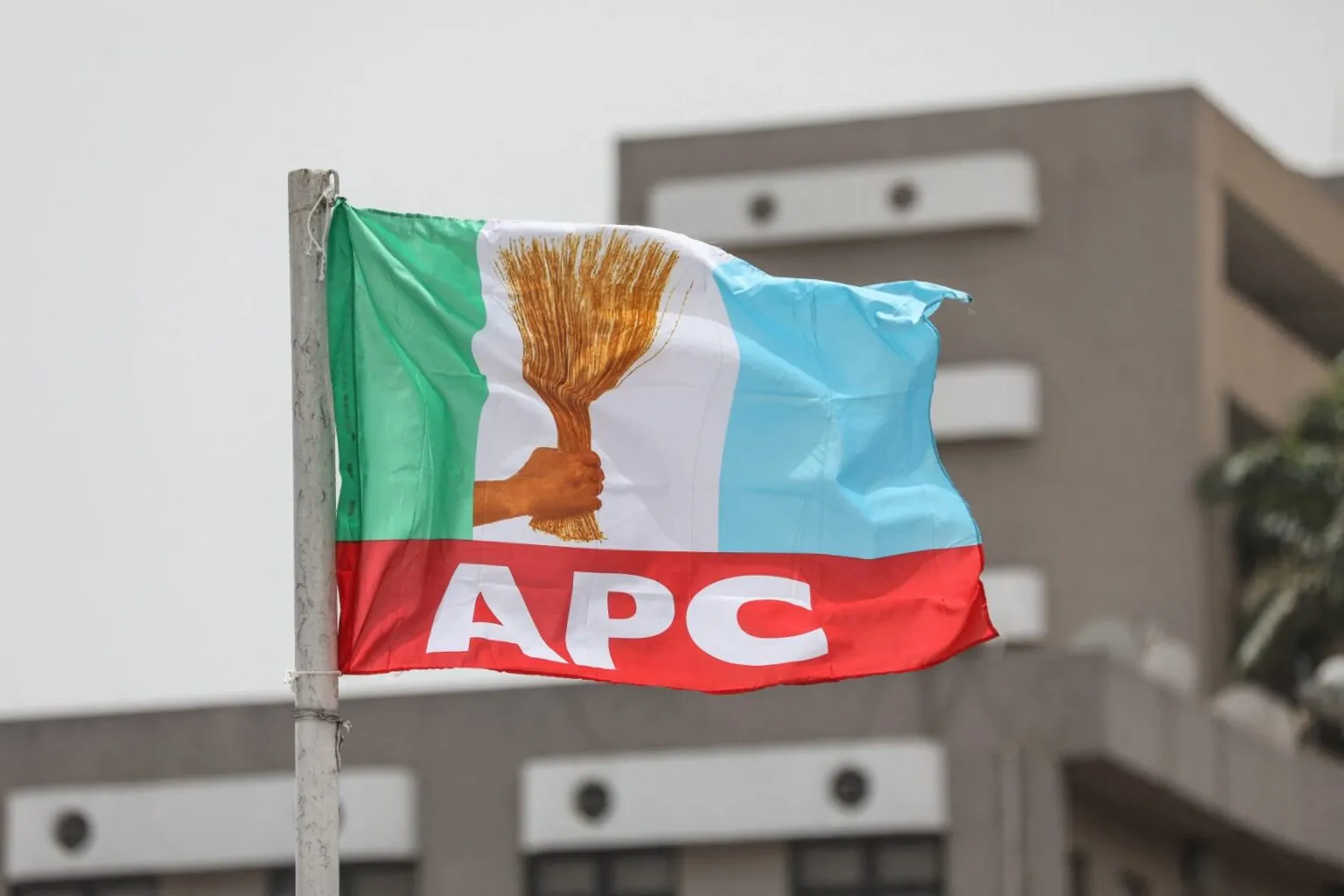
Despite the denial of a one-party state agenda, all indications point to a dominant All Progressives Congress (APC) outing ahead of the 2027 general elections.
With the APC firmly in control of 31 out of 36 states, and three opposition parties left with five, there are growing concerns that the record imbalance rarely makes for a vibrant multi-party contest or viable platforms for credible candidates in the cult-like political circle.
Political observers are worried that the ‘unhealthy’ development could reshape the country’s democratic landscape, with further drift to a one-party democracy and renewed loss of interest in Nigerian politics and its electoral process.
Recall that the consolidation under APC, and by extension President Bola Tinubu, has been accelerated by a wave of defections among governors, federal lawmakers, and influential political figures, realignments that have redefined the contours of power across the federation.

The consequence is that the once-formidable Peoples Democratic Party (PDP) is left with just Oyo and Bauchi State, while the All Progressives Grand Alliance (APGA), Labour Party (LP) and Accord Party have Anambra, Abia and Osun, respectively.
That map unfolded on Monday after Governor Dauda Lawal of Zamfara State announced his move from the PDP to the ruling APC, following what his aides described as “wide consultations with political stakeholders.”
Lawal, reading from the old scrapbook of defection, cited persistent internal crises within the PDP and the need for greater political stability and collaboration with the federal government as his reasons for switching allegiance.
But Lawal’s decision follows an oddly familiar pattern. Since the 2023 general elections, Nigeria’s political class has experienced an unprecedented wave of defections.
Governors, lawmakers, and party stalwarts are increasingly gravitating toward APC, seeing it as a more viable platform for accessing power, federal resources, and strategic positions ahead of 2027.
Nigeria’s 1999 Constitution (as amended) enshrines provisions designed to promote a multi-party system and prevent the dominance of a single political party.
Section 15(1) emphasises national unity and integration, encouraging diversity and broad political participation. Section 222(a) requires parties to maintain a national presence, including offices in at least two-thirds of the states.
Similarly, Section 225(1) mandates that parties operate under constitutions and programmes that reflect federal character and inclusivity, while Section 228(a) empowers the Independent National Electoral Commission (INEC) to regulate party activities.
Ruling party dominate, exceeds two-thirds majority in parliament
Despite these safeguards, political dynamics suggest that Nigeria’s system has been coerced into functioning more like a de facto one-party state, raising questions about competitiveness and democratic resilience.
In 2023, PDP held 11 governorships; by early 2026, more than half of these executives had defected to APC.
The PDP now controls only Oyo and Bauchi, while LP retains Abia, and APGA holds Anambra. APC’s tally has surged to 31 states, reinforced by high-profile defections such as Dauda Lawal (Zamfara), Sheriff Oborevwori (Delta), Umo Eno (Akwa Ibom), Douye Diri (Bayelsa), Peter Mbah (Enugu), Siminalayi Fubara (Rivers), and Caleb Mutfwang (Plateau).
Recall that at the inauguration of the 10th National Assembly in June 2023, APC held 59 Senate seats and 178 in the House of Representatives, while opposition parties, mainly PDP, LP, and the New Nigeria Peoples Party (NNPP), controlled the rest.
Within three years, the balance of power shifted dramatically. Motivated by internal opposition crises and strategic political calculations, lawmakers crossed over to the APC, transforming the legislative landscape.
Today, APC controls approximately 80 Senate seats and 241 House seats, representing a commanding two-thirds majority in both chambers. The PDP has lost at least 66 federal lawmakers, weakening its influence and visibility, while LP and NNPP have struggled to maintain cohesion amid internal disputes.
Analysts estimate over 140 politicians at the federal and state levels have joined the APC since 2023.
Observers attribute this trend to multiple factors: alignment with the ruling party ensures access to federal resources and appointments, internal crises have debilitated opposition parties, and politicians are positioning themselves strategically for the 2027 elections.
The APC now exerts control across almost all geopolitical zones. In the South-South, it governs Delta, Akwa Ibom, Edo, Cross River, Rivers, and Bayelsa.
In the South-East, three of five states, Enugu, Ebonyi, and Imo, are under APC, while pressure mounts on Governor Alex Otti of Abia to follow suit. Governor Charles Soludo of Anambra has publicly expressed support for Tinubu’s re-election.
In the South-West, APC dominates Lagos, Ekiti, Ogun, and Ondo. Despite Ademola Adeleke’s shift to the Accord Party ahead of the August 2026 Osun governorship election, he has endorsed Tinubu for 2027.
Only Governor Seyi Makinde of Oyo remains outside the APC fold, though Tinubu secured victory in Oyo during the 2023 presidential election, a feat he may replicate in 2027.
In the North-Central, APC controls Benue, Niger, Kwara, Nasarawa, Kogi, and Plateau, while in the North-East, Borno, Yobe, Gombe, Taraba, and Adamawa are firmly in its camp. The North-West is similarly dominated, with Katsina, Jigawa, Sokoto, Kebbi, Kaduna, and Kano under APC control.
The APC’s consolidation of power presents far-reaching implications. Its two-thirds majority in both chambers grants unprecedented influence over legislative processes and policy implementation, potentially shaping electoral administration and outcomes.
Opposition parties, weakened both at the state and federal levels, face an uphill struggle to challenge the ruling party.
Supporters argue the defections reflect a dynamic democracy, illustrating politicians’ freedom of association.
Chairman of the South-West Agenda for Asiwaju, Dayo Adeyeye, dismisses claims that the North, which heavily supported Tinubu in 2023, will oppose him in 2027.
He insists that all major emirs, opinion leaders, and stakeholders in the North remain loyal to the president, and pockets of dissent represent only self-serving interests.
A former National Vice Chairman of APC South West, Bankole Oluwajana, said the ruling party’s control of 31 governorships and a two-thirds majority in the National Assembly does not undermine Nigeria’s multi-party system.
“The defections reflect freedom of choice and movement,” he said.
Oluwajana added that the moves also demonstrate President Tinubu’s political sagacity, noting that many opposition members were already aligned with the APC before formally defecting.
He emphasised that Nigeria is not heading towards a one-party state.
“President Tinubu has implemented bold decisions and economic policies that past leaders, including military rulers, could not. These policies are yielding results and drawing opposition members to him,” he said.
President of the Middle Belt Forum, Birtus Pogu, said that the Electoral Act 2026 makes it nearly impossible to unseat an incumbent president, regardless of how many governors join the ruling party.
“It is not about creating a one-party state or buying governors with money to defect. The figures being quoted to suggest that President Tinubu is persuading governors with huge sums are unrealistic,” Pogu said.
He stressed that real-time electronic transmission of election results is key to ensuring credibility.
“If that is implemented, Nigerians will trust whosoever wins the next elections,” he added.
While the Middle Belt is reportedly inclined toward Tinubu’s re-election, Pogu said no formal decision has been made. “President Tinubu must create an enabling environment for free, fair, and credible elections. I do not support a one-party state,” he noted.
Immediate past National Chairman of the ADC, Ralph Nwosu, told The Guardian that the opposition party is not perturbed by the growing number of APC governors and lawmakers. “It amounts to nothing because Nigerians have made up their minds to own the processes toward the 2027 general elections through ADC’s platform. We are keeping our strategies close to our chest.”
He described the developments under President Tinubu as an aberration in politics, warning that Nigerians are deeply apprehensive about it. “Several Nigerians across geopolitical divides have called us to appeal that we should not allow President Tinubu to turn Nigeria into a one-party state.”
Nwosu also revealed the outcomes of meetings he held with stakeholders from the United States, Japan, Europe, and other international communities, who, he said, presented facts and data indicating that Tinubu’s popularity is below five per cent among Nigerians.
“It is not the number of governors that will speak or vote, but the majority of aggrieved Nigerians,” he said. (Guardian)
-

 News7 hours ago
Government official smuggles 14 family members into salary payroll, another collects 13 salaries
-
Entertainment7 hours ago
Wizkid To Headline 2026 Detty December Fest
-
African News4 hours ago
Xenophobia: No request yet from S’Africa on repatriation costs — FG
-
Politics4 hours ago
I ignored warnings before backing Gbenga Daniel for Senate in 2023 – Abiodun
-
Sports7 hours ago
Super Falcons Miss Out Of 2027 World Cup After Defeat To South Africa
-
World News7 hours ago
US sets up task force to end birth tourism, revokes over 600 visas worldwide
-
Politics7 hours ago
Osun Polls: INEC Records 1.9 Million PVC Collections
-
Politics6 hours ago
US report vindicates Atiku on Tinubu govt’s fiscal transparency – Media Office