Business
Importation Wipes Out 90 Rice Mills

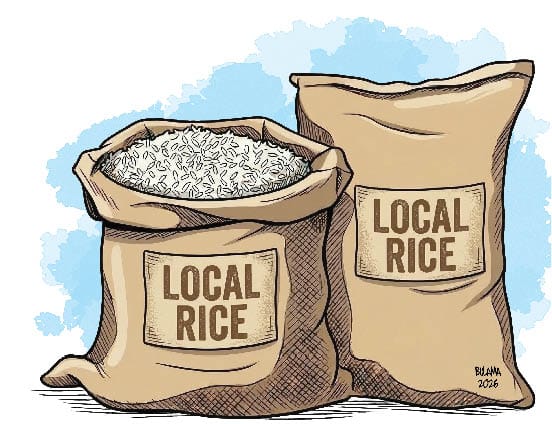
The Nigerian rice sector, which has attracted significant local and foreign investment, is on the verge of total collapse due to a renewed surge in importation, smuggling and price instability.
The Director-General of the Rice Processors Association of Nigeria, Dr. Andy Ekwelem, on Monday, said: “Out of more than 150 rice mills nationwide, nearly 90 have shut down operations. The remaining mills are currently operating between 30 and 70 per cent of their installed capacity.”
The major challenges confronting the farmers and processors, Weekend Trust gathered, include the high rate of rice imports and smuggling of the product into the country which has led to a price collapse.
“Rice imports for the market year 2024/25 were estimated at 2.4 million tons, a 60 per cent increase compared to April 2024 estimate of 1.5 million tons. This excludes the quantity of rice that was smuggled illegally into the country,” according to data from Vestance, an agricultural consulting firm.

Despite decreasing local production, these imports, estimated at about N1 trillion, caused a supply excess since last year, prompting calls by the National Agribusiness Policy Mechanism (NAPM) for the government to stop additional imports in order to save local farmers.
Kolawale Oye, the Managing Director/CEO of Infinera Agribusiness Ltd on his LinkedIn said even in “the government’s own national food balance data, Nigeria recorded a rice surplus of roughly 1.1 million tonnes by December 2025. But that surplus wasn’t a success of local farms and mills, it was driven by imports.”
The 2025 data from the National Bureau of Statistics (NBS) also indicated a surge in Nigeria’s food import bill, which increased from N3.83 trillion in 2023 when President Bola Ahmed Tinubu took over to N7.65 trillion in 2025.
Many farmers who spoke with the Weekend Trust cited the federal government’s waiver on import duties on rice and other items (July 2024 to December 2025) as the major factor behind the high import volumes.
However, during the quarterly engagement meeting with stakeholders in Abuja, the Minister of Agriculture and Food Security, Senator Abubakar Kyari, said only 250,000 metric tons were imported during that window, adding that the figure was insignificant to the country’s local demand, which stands at about 11 million tons.
But speaking during a meeting last Monday with the Rice Processors Association of Nigeria (RIPAN) in Abuja, the Minister of State for Industry, Senator John Owan Enoh, admitted that there was a problem.
“When imported or smuggled rice is sold at prices far below locally processed rice, it undermines domestic production and discourages investment in the sector,” adding that “government will not hesitate to take necessary policy actions to protect local industry and sustain Nigeria’s rice value chain,” he said.
Senator Enoh acknowledged that the increasing volume of cheap foreign rice entering the Nigerian market posed a serious threat to domestic producers and the gains achieved by previous administrations.
Rice import through the land borders was banned by former President Muhammadu Buhari, a development which increased domestic production and prompted processing companies to invest millions of dollars in backward integration.
Because of that policy, paddy production rose from 2.8 million tons in 2010 to 8 million tons in 2021, the high-yield year, driven by the Anchor Borrowers’ Programme, with milled rice output averaging 5.3 million tons annually.
Weekend Trust gathered that this resulted in a demand gap drop and the average yield more than doubled, rising from 1.5 to 3.5 tons per hectare.
Many states, which recorded high production volume, included Kebbi (3.5 million tons), Jigawa (2.1 million tons), Kano (1.6 million tons), and Ebonyi (1.5 million tons) according to data from the Central Bank of Nigeria in 2022.
Since 2017, about 68 medium and large-scale rice mills have been built around the country, particularly in the north, along with thousands of small-scale mills located in Kano, Kebbi, Kaduna, Katsina, Jigawa, Taraba, Benue, Nasarawa, Anambra, Ebonyi, and pockets in other states.
Senator Owan Enoh, however, said: “Many of these issues have been discussed repeatedly over the years. The focus of this administration is not endless dialogue but practical implementation that delivers results for Nigerians.”
The minister emphasised that rice continues to be one of Nigeria’s most popular staple foods and has important strategic importance for the country’s stability.
Rice consumption in Nigeria is estimated at 32–33 kg per person annually, amounting to 6.7 to 7 million metric tons (milled rice) per year.
“A strong rice sector is vital for food security, job creation, and economic growth,” the minister said.

Smuggling pain
The DG of RIPAN, Dr. Andy Ekwelem, said the rice entering Nigeria illegally through land borders bypasses official duties and levies, making it significantly cheaper than locally processed rice and placing domestic producers at a severe disadvantage.
“Smuggled rice enters the Nigerian market at prices that local producers simply cannot compete with,” Dr. Ekwelem said. “This unfair competition has had devastating consequences for the industry.”
He said that the pain on rice processors across the country has been severe.
Alhaji Usman Garba Badawa, a medium-scale miller in Kano told the Weekend Trust that rice milling business is on the verge of total collapse because indicators have shown that they cannot cope with the competition in the market, as foreign rice is selling cheaper or same price as the locally milled one but will always be the first choice of buyers.
He also revealed that, presently, rice from abroad usually gets its way freely into the Kano market from the Babura border in Jigawa State and other borders from Katsina State.
“The recent development in the influx of foreign rice is indeed a bad omen to us, the federal government’s border closure policy gave rise to the establishment of over 200 rice mills in Kano State alone and thousands of jobs were created along the rice value chain. However, with what we are seeing presently, there is a looming threat that may mandate the total closure of these rice mills and render all these people jobless. Now, at this critical economic moment, this development would be to the detriment of the people of Nigeria,” he said.
‘We’re on edge’
Dr. Ekwelem further explained that farmers and processors are currently battling rising production costs, security challenges in farming communities, and inadequate infrastructure.
“Many farmers are forced to sell their produce at a loss due to the pressure created by the influx of cheaper smuggled rice,” noting that “this situation is making it increasingly difficult for local millers to remain viable.”
He also clarified that the recent decline in rice prices recorded in some markets should not be mistaken for increased domestic production- something the Minister of Agriculture and Food Security, Senator Kyari, disagrees with, arguing that it was an increase in domestic production in response to the price crash.
“The drop in prices is largely driven by the activities of organised smuggling networks moving large volumes of rice through illegal channels across Nigeria’s borders,” he argued.
In Kano, our correspondent reports that many rice mills have either suspended production or are running at half capacity.
The bustling Zaria-Kano road, where some of these mills are located, is now relatively silent.
A source in one of the mega rice mills said they have suspended operation for almost three months, adding that several other mega rice mills in the state have suspended production, while a few others have been operating skeletal services for the Ramadan period.
In Benue State, many rice millers shut down operations since last year, following the drop in price, Weekend Trust gathered.
An entrepreneur, Ichor Michael Tersoo, who runs the Wadata rice mill in Makurdi, told our correspondent in Makurdi on Thursday that his business had been put on hold because he was operating at a loss.
“I have closed down my business due to these difficulties. I am not ready to make any comprehensive financial assessment, although the prices of rice paddy have started going up after the crash last year.
“Paddy now sells at between N50,000 and N55,000 as against the previous N35,000 and N40,000 based on grade. But I’m not yet ready to make a fresh commitment. Besides, the forecast for this year has suggested that rain will begin early and stop early, which is not too good because it will affect production,” he said.
Adayi Joseph Unogwu, whose mill was located at Wurukum in Makurdi metropolis, recently lamented the crash in prices of rice, saying he could no longer optimise the capacity of his mill. Unogwu, however, has shut down the Makurdi plant.
He lamented that: “The situation with millers in Benue State is the same across the country. A lot of us (millers) are not milling now as we want to; we are milling below our capacity because of the current price of rice. Some are not even milling at all. Why? Because importation has completely destabilised the price of paddy, which is low and those who bought when it was high and milled can’t bring them out.
“No incentives for even the new milling because of the current prices of rice, which is not sustainable. Basically, due to the importation of rice, it has driven the price of rice lower than what millers and sellers are charging. We now have lots of rice mills that are not functional. In fact, some people are selling off their rice mills while some are still milling but below their capacity.
“Even a lot of farms are being abandoned and farmers have also reduced the rate of their production because of the high cost of inputs and the low price of rice. So what we are going to see in the next few months is mills shutting down or milling below their capacity.”
Meanwhile, Governor Hyacinth Alia, a few days ago, disclosed plans to revive the sector.
“Today (Tuesday), I inspected equipment procured for the revival of the Benue State Rice Mill in Wadata, Makurdi, a facility abandoned for years but now set to become productive again.
“This initiative will create opportunities for our women, strengthen small businesses, and boost local rice production in Benue,” the governor stated on his verified Facebook.
Big mills in Taraba shut down
All the big companies in Taraba State have shut down operations except for some small milling businesses, Weekend Trust gathered.
Our correspondent in Jalingo reports that Gamzaki Rice mill located at CBN area in Jalingo, Nabinu Rice mill, located at Mile 6, Rahama and Aminci Rice Mill, located at Yamusala and Primary Board area, all in Jalingo, Taraba State capital, were closed due to lack of patronage.
Alhaji Aliyu Sarkin Noma, owner of Gamzaki rice mill in Jalingo, said he closed down his company because of a lack of patronage.
He said that after the lifting of the ban on the importation of foreign rice, local rice milling companies started losing patronage.
He said the cost of diesel, high electricity bill, and high price made milling of rice unprofitable, adding that he started reducing the number of workers in his company and was finally forced to close down the company when there was no market for local parboiled rice.
Border reopening escalated smuggling
Millers added that the reopening of Nigeria’s borders added salt to the wound.
“Non-farmers would believe that the opening of the borders is helping us, but it is doing more harm to local production than good. The local rice is better in nutrients and taste than the imported ones, but once foreign rice enters the market, our output goes down seriously”, a miller told our correspondent.
The processors said for the rice industry, the path forward is uncertain if the government does not take proactive measures. While farmers demand affordable access to inputs, millers demand policies that protect local production.
According to Yazid Adamu, “The best thing the government should have done is to crash the price of farm inputs. If farming is capital-intensive and the price keeps falling in the market, people will run away from farming. And let me tell you, what the government doesn’t know is that, a time will come when demand for paddy will be high and supply will be very low because nobody goes into farming to lose.”
Abandoned fields
Across the country, Weekend Trust observed that many farmers did not invest in irrigation fields this season because of the cost and low price incentives.
In Kano State, rice farmers said with the high cost of agricultural inputs and low authority intervention, rice farming has become highly unattractive and as such many of them are contemplating quitting.
One of the rice farmers, Alhaji Abba Ibraheem Kallah, said he lost a lot during last rainy season after committing a huge amount of money to cultivate rice, adding that the high cost of agricultural inputs and the crash in the price of the commodity in the market have led many of them into huge debts. He said that is the reason many farmers did not bother with the dry season.
The state chairman of the Rice Farmers Association of Nigeria (RIFAN), Alhaji Abubakar Haruna Aliyu, revealed that over 50% of the rice farmers are leaving the sector.
According to him, since the stoppage of the Anchor Borrower Scheme in the state, rice farmers have been left to bear their cross alone. He described the development as very disturbing, “taking into consideration the role indigenous rice farmers have played in sustaining the country over the years.
“We are optimistic that with a little push, our members are ever willing to contribute to the nation’s food security, but with the way things are going now, I am sure we won’t be able to convince them to do the needful. All interventions have stopped. The farmers are willing, but the system isn’t. The whole issue has been transformed into something else. Borders are now open and importation is on the increase while local production is silently being killed,” he stated.
In Nasarawa, farmers who took loans are licking their wounds as they struggle to pay back with proceeds from other crops.
Farmers who used to do dry season along the banks of rivers and every available space near streams have abandoned such fields.
Our correspondent in Kano also reported the same scenario along the Kadawa irrigation valley in Kura Local Government, a site that was once a beehive of irrigation activities.
Implication for Nigeria
An Agricultural Economist, Mamun Mallam, blamed the crisis on the lack of federal government inconsistent agricultural policies.
He said that the nation’s food security will be significantly impacted by the food imports.
According to Mallam’s projections, Nigeria’s paddy rice production will drop from 10 million metric tonnes in 2018 to 4 million metric tonnes in 2026. He said that due to flood catastrophes, insecurity, and a lack of incentives for farmers, it would decline even more.
He added that the impacts would further affect processing and would put more pressure on the Naira as well, because importations are not done for free.
“Rice processing mills are closing shop because of the one step forward, ten steps backwards characterising our policy implementation. But it won’t stop at just processing mills closing shop, even paddy rice production will nosedive this year, no thanks to the policy somersault of the Tinubu administration.
“Just like the government haphazardly implemented petroleum subsidy removal, the government is also haphazardly intervening in food importation without giving regard to the implications. And the major implication of granting waivers to businessmen to import food is that you have disincentivised production. You have empowered foreign farmers who are already empowered by their governments via interventions like export subsidies and some other forms of support.
“Whereas what our farmers need or what our economy needs against these kinds of support are our own countervailing measures to counter the support that foreign producers receive in an international trade that they should be a free trade. Now our producers didn’t get that, instead they are being squeezed out of business by our own government.
“Look, during the Buhari years, for three years, from 2016 to 2018, Nigeria was producing more than 10 million metric tons of paddy per year, which went down to 8 million metric tons per year from 2019 to 2022 because of insecurity and flood. Paddy production may go down to around 4 million metric tons in 2025 and may go down further in 2026 simply because incentives for production are not there. And this will further affect processing and will put more pressure on the Naira as well.
“It doesn’t make sense that the government intervened at the output side of the rice value chain and then turned around to say the input side of the chain should handle itself. You only distort the markets further with that position.
“Look, there is an intervention now called the National Rice Development Strategy 2020-2030. It’s a good document, but unless you incentivise rice production via a good price, that is, farmers or producers getting a good price for their efforts, nothing will come out of that intervention. You have to incentivise production because, contrary to long-held views by many, farming households are economic entities that also make rational decisions that include profit maximization,” he said.
‘Swift action required’
A recent report from the National Agribusiness Policy Mechanism (NAPM), a presidential advisory committee, called for swift action on the matter.
The report revealed that about 3,500 rice farmers were leaving or scaling back their rice cultivation due to huge losses, estimated at N93 billion, incurred during the 2025 wet farming season.
The survey shows that it covered 33,507 farmers across 13 pilot states and found that 10.6 per cent of rice farmers intend to scale back production in the 2025/2026 dry season.
The committee in their report also stated that rice production recorded a decline by 7.9 per cent during the last year’s wet season, as farmers increasingly shifted to cash crop production such as soybeans, ginger and sesame, which currently offer higher profit margins and lower input requirements.
Many rice farmers spoken to by our correspondents confirmed that they were done with rice cultivation.
One of them, Alhaji Shehu Garun Malam, who claims to have been in rice production for decades said he was completely quitting rice farming.
“The output of rice last wet-season wasn’t encouraging at all, and the price also crashed despite spending a lot on agro-inputs. Many of us recorded losses. To make it worse, the government granted a waiver for rice importation. That is why we are planning to switch to other cash crops to remain in the sector. We found out that contrary to rice, soybean production rose by a reasonable per cent in 2025, with farmers earning far above rice per hectare,” he said. (Daily Trust)
-

 African News16 hours ago
Chad moves to withdraw from ICC over alleged bias against Africa
-
Politics24 hours ago
Uba Sani Settles For Christian Running Mate
-
News19 hours ago
Lagos warns motorists of traffic delays as Kara Bridge repairs begin
-
Metro15 hours ago
Govt Bans ‘After-Party’ At Weddings
-
News23 hours ago
Group demands probe of Uche Nnaji’s continued drawing of salary despite exit as minister
-
News24 hours ago
PFIPC Probe: Reps order IGP to produce Adeyemi
-
News18 hours ago
Gbajabiamila is innocent in alleged fake agency saga – Analyst
-
News15 hours ago
20th Funso Williams memorial: Bode George, Doherty renew call for truth, justice