Business
Egg Shortage Looms Over Scarcity Of Day-Old Chicks

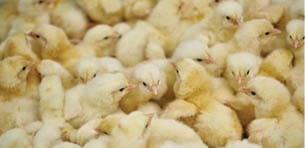
Nigeria could face egg shortage due to poultry farmers’ limited access to day-old chicks, called ‘pullet’ for layers.
The Nigerian poultry business has experienced several shocks since COVID-19, including feed, disease, egg glut and crisis in production costs that have negatively impacted producers.
Many farmers, including those producing grandparent and parent stock, were compelled to either shut down operation or scale back production.
Now, farmers who want to restock their farms are confronted with the challenges of access to pullets as prices have gone up significantly.

Some farmers told Weekend Trust that the current price for commercial layers pullet range from N2,500 to N3,000, while egg price is over N7,000 per crate in some places across the country.
Except “hatchable eggs,” importation of “table eggs” and chicken (live or frozen) is prohibited.
Stakeholders worry that egg production, which is already severely impacted by rising cost, will suffer due to the scarcity of pullets or point-of-lay (from 14 weeks to 16 weeks of age).
How it all started
The president, Poultry Association of Nigeria (PAN), Chief Ichie Sunday Ezeobiora, a breeder farmer, explained how the problem started and when the country may likely get out of it.
“What prompted this was two or three years ago when there was serious egg glut. Many farms closed down because they couldn’t cope. I still remember some of the farms in the South-West that buried over 100,000 crates of eggs and farmers stopped buying day-old chicks, which we normally call ‘pullets.’
“When the farmers stopped buying pullets or point-of-lay, the parent stock farmers started reducing their own parent stock because as they hatched the eggs, nobody was buying. Also, the parent stock farmers stopped buying, so the grandparent stock farmers reduced their stock too. So, you can see the chain reaction,” he explained.
Poultry has four levels: From pure line to grandparent stock, to parent stock, then the layers for production of either table eggs or broilers.
Pure line stocks are highly selected, inbred poultry maintained in secure facilities for genetic improvement. They are crossed to create grandparent (GP) stocks, which are specialized male and female lines used to produce parent stock (PS), which yields commercial broiler or layer birds.
Chief Ezeobiora said it would take some time to return to normalcy due to the disruption in the production line.
“It may take three or four years to get the pure line to start giving grandparents stock. It takes six months for the grandparent stock farmers to have eggs to hatch parent stock. Parent stock will now take another six months to hatch the eggs and have pullets. You can see the chain reaction line. It is not like something you can put in a machine and manufacture it,” he said.
Nanji Gambo-Oke, a former public relations officer of the Poultry Farmers Association in Plateau State, said the current pressure was largely linked to supply constraints in breeding stock, particularly the parent stock used by hatcheries to produce commercial chicks.
“Many upstream hatcheries have entered supply agreements with markets in other West African countries, which means that part of their production is directed outside the domestic market, reducing the number of chicks available locally.
“The situation is also partly an after-effect of the market disruption experienced in 2023 when many farms produced eggs but faced weak demand and were left with large unsold volumes. Because of that experience, several hatcheries downsized their parent stock operations to reduce financial risk,” he said.
Parent stock DOC hits N9, 000
Speaking on the prices, the PAN president said pullet prices were still affordable compared to the day-old-chick for parent stock, which goes up to N9, 000 per DOC. The price of pullets, according to reports, ranges between 2,000 and N3,000 from reputable hatcheries, if the farmer is willing to wait for up to four to six months.
He attributed the high prices of pullets to the activities of middlemen and farmers who are in a hurry.
“If I paid N2,000 and got it after four or six months and you want to buy what I paid to the hatchery because you don’t want to wait, I will give you my price. That is why prices are going up. N3, 000 or N4, 000 does not mean that the price is that high but because you are in a hurry. If they go and queue up, no hatchery operator can sell pullets beyond the N2, 000,” he noted.
Mrs Gloria Amurudu, a poultry farmer in Jos, told our correspondent that she had been waiting for supply since last year.
“I booked for pullets since November 3, 2025, but up to now, I have not been given any because of scarcity,” she said.
Broilers versus layers
Some farmers said the broiler industry attracted more investment than the egg production business.
Mr Idowu Asenuga, a co-founder of Mofa Poultry Farm in the South-West, told Weekend Trust that people need to understand the structure and value chain of egg production.
“Globally, the money is in meat production and not egg production; hence more investment is made in the broiler sector than the layer sector. Locally, in Nigeria, the investment follows the same trend; hence few hatcheries invest in layer parent stock. Also, indigenous investors put their money into the layer lower profit earner side of the poultry industry, foreign investors mostly do broiler. However, with the different tragedies that have plagued egg production business in Nigeria from 2020 to 2024, the business has depleted greatly, and the hatcheries have reduced their parent stock numbers to conform to the lower pullet DOC demands.
“But last year, the egg sector witnessed an unprecedented stability in price, coupled with lower feed cost; hence layer farmers suddenly want to ramp up their production to meet the growing demands from Nigerians and some other West African countries.
“Unfortunately, for DOC producers to meet their demand will take at least a year. This sudden spike in demand is currently responsible for the continuous hike in DOC price; and this trend will continue for the next few months until the hatcheries restock to meet the current DOC demands,” he said.
Farmers who spoke with Weekend Trust said the quality of some of the layers was dropping as they produce fewer eggs than what used to have. They attributed this challenge to poor quality pullets.
“I wouldn’t doubt this possibility because with the current scarcity, the quality of DOC will drop because hatchery operations are not regulated in Nigeria. Some operators might drag their spent PS on their farms and also set eggs from young PS, thereby producing poor-quality DOC,” Mr Asenuga said.
Idowu said that because of these challenges, commercial layer farmers would prefer to pay months in advance to those hatcheries that are reputable and play the waiting game.
On his part, Alhaji Umar Kibiyi, a commercial poultry farmer in Kano, said there were so many hatcheries that did not maintain the required standards to produce DOC, adding that there are other small hatcheries that are involved in selling low-quality to farmers, which results in the low egg productivity of those birds.
Alhaji Umar Kibiya further told Weekend Trust that the cost of production is one factor that would also create more impact in the egg supply gap in the country.
“There is high operational cost to raising laying birds, especially the high cost of DOC, feed, energy, medication, labour for farm attendants and equipment cost,” he said.
Sector on ‘life support’
Dr Usman Gwarzo, the current chairman of the Poultry Association of Nigeria, Kano chapter, said the poultry industry was on ‘life support’ and needed intervention. He explained that at the rate things were going in the sector, urgent action was needed to prevent total collapse.
“DOC price is soaring to N3,000 plus per chick, with 4-month average waiting period. These are factors crippling and stopping farmers from restocking. The impact of naira woes made farmers to have less than 30 per cent of their original capital, directly affecting production,” he stated.
Chief Ezeobiora and Mr Idowu Asenuga said the government could allow controlled importation of hatchable eggs for a few months’ window to ease the current DOC demand pressure.
Asenuga argued that with the current situation, “egg availability is going to be impacted and prices will equally go up; and Nigerians might need to bear the brunt of higher egg prices in the coming months.”
Chief Ezeobiora, however, kicked against any attempt to allow the importation of ‘table eggs’ as it would further worsen the industry’s woes.
Sources at the NASPRI said the institute had received a request for supply of 50,000 day-old-chicks (DOC) daily but had no capacity to meet such target.
The Minister of Livestock Development, Alhaji Idi Mukhtar Maiha, last week, during a meeting with a coalition of EU dairy companies, admitted the supply gap in the country, adding that the ministry was working with relevant stakeholders to address some of these problems. (Daily trust)
-

 News20 hours ago
IG Didn’t Order Officers To Shoot Criminals On Sight – Police
-
News20 hours ago
Jonathan, Osinbajo Met With Militants, Who Will Engage Boko Haram? – Gumi
-
News20 hours ago
North Has Lost Its Values – Ango Abdullahi
-
News19 hours ago
Mary Habila’s death in Umahi’s house suspicious — Southern Kaduna lawyers
-
Sports19 hours ago
Sports Commission defends N6.44bn World Cup qualifiers budget
-
Opinion20 hours ago
Crime And No Punishment
-
Metro20 hours ago
Delta: Suspected Cultist Allegedly Shoots Colleague Who Renounced Membership
-
News19 hours ago
Five govs to adopt security outfits as state police