Business
Banks raise N4.61tr in fresh capital, N1.2tr from foreign investors

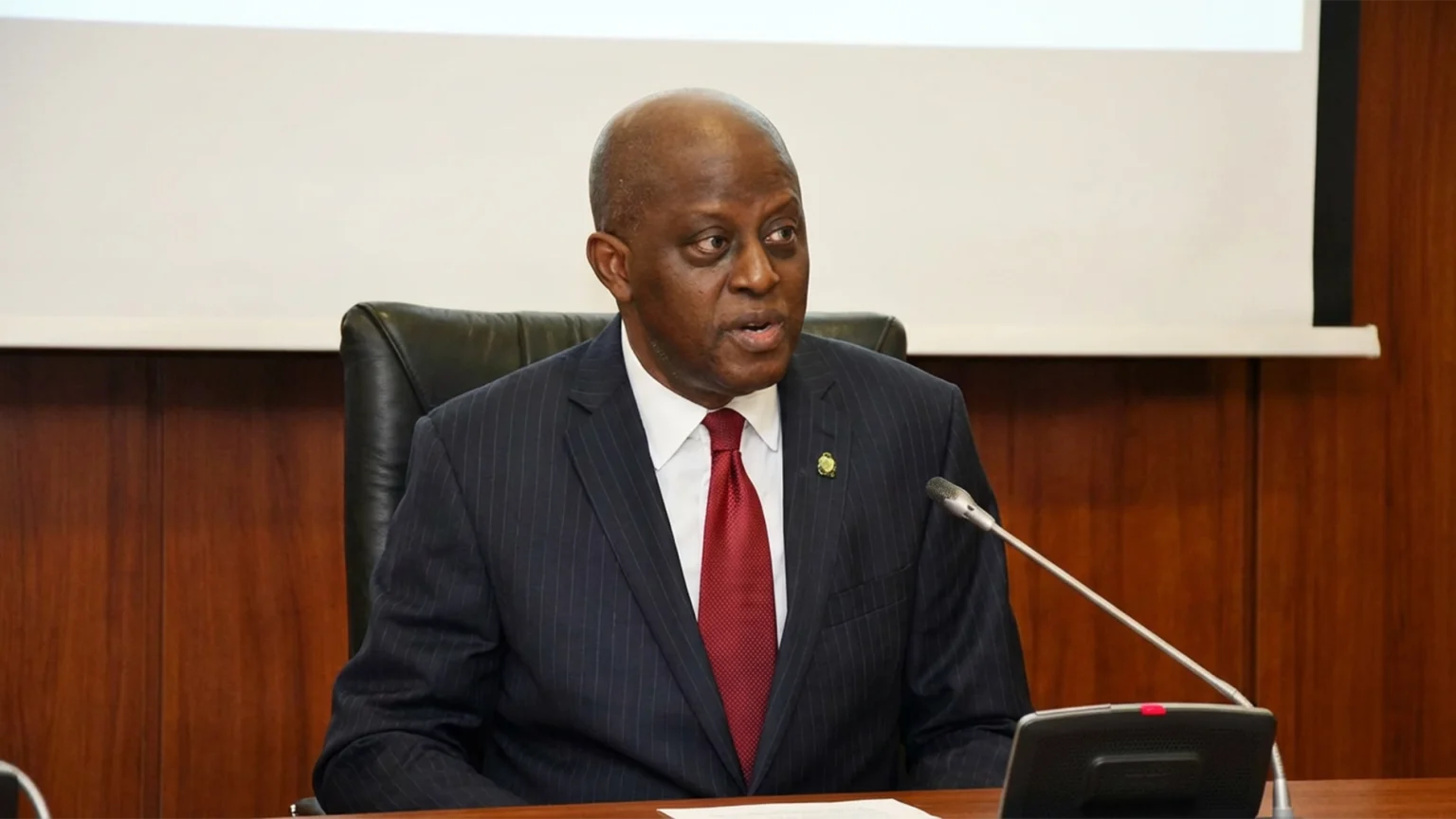
• Cardoso warns central banks against overburdened regulation, cross-border risks
Governor of the Central Bank of Nigeria (CBN), Olayemi Cardoso, said Nigerian banks raised about N4.61 trillion in fresh capital during the sector’s ambitious recapitalisation.
He disclosed this at the 4th yearly IMF/AFRITAC West 2 High-Level Executive Forum for Financial Sector Regulation and Supervision held at the CBN headquarters in Abuja on Tuesday.
About 27 per cent of the capital or N1.2 trillion inflow, according to the apex bank boss, was sourced from the foreign market by the banks.

The disclosure came less than a week before the end of the recapitalisation programme that started in 2024. The programme has seen almost all the banks raise the required tier-one capital to retain their brand identities.
The governor noted that the growing interconnectedness of African financial systems makes collaboration among regulators essential to safeguard stability and ensure shared prosperity.
He warned that African financial integration is advancing faster than regulatory coordination, raising concerns over cross-border risks.
In a statement, Cardoso noted that regional financial integration was outpacing political coordination, urging regulators to adopt shared prudential principles tailored to Africa’s realities.
According to him, such a framework would enable joint responses to emerging vulnerabilities while supporting inclusive growth.
The CBN governor pointed to Nigeria’s recent reforms as evidence of proactive leadership, recalling that the apex bank launched the Banking Sector Recapitalisation Programme in 2024 to strengthen the resilience of banks ahead of anticipated challenges.
He said the policy has influenced similar reforms across the continent, adding that Nigerian banks, despite navigating subsidy removal and exchange rate reforms, attracted about N4.61 trillion in new capital, with nearly 27 per cent coming from foreign investors, while also expanding their footprint across African markets.
Cardoso reaffirmed the bank’s commitment to strengthening corporate governance, stressing that regulatory leniency is no longer acceptable.
“Our stance on corporate governance is unequivocal: zero tolerance for violations. By ending years of regulatory forbearance, we have reinforced accountability, tightened supervision, and elevated compliance standards across the sector,” he said.
He added that the CBN has restricted access to banking services for non-performing large-ticket obligors as part of efforts to enforce credit discipline and protect the financial system.
Cardoso explained, “In line with this, we have implemented a restriction of banking services to non-performing large-ticket obligors. This decisive step underscores our commitment to credit discipline, financial integrity, and accountability.
By curbing access to banking services for chronic defaulters, we are reinforcing the culture of repayment, protecting depositors, and safeguarding the stability of the financial system.”
On monetary policy, he reiterated that the CBN remains committed to orthodox measures aimed at restoring price stability, strengthening policy credibility, and anchoring expectations through discipline and consistency.
He also highlighted the growing role of financial technology, noting that the apex bank is regulating fintech firms in a way that balances innovation with stability. He said the Fintech Policy Report and ongoing structural reforms are aimed at strengthening supervisory capacity in a rapidly evolving digital financial ecosystem.
Cardoso urged participants to sustain the forum as a platform for shared learning and coordinated action, where regulators can analyse common challenges, exchange insights, and develop collective responses to global financial trends. He expressed confidence that stronger collaboration would position Africa’s financial systems as drivers of sustainable growth and development.
The Director of IMF/AFRITAC West 2, Ivohasina Fizara Razafimahefa, said the forum provides a platform for dialogue between the International Monetary Fund (IMF) and national regulators, enabling the exchange of practical experiences, technical knowledge, and policy innovations.
He said discussions at this year’s forum focused on emerging risks to financial stability, particularly those linked to digital finance, fintech expansion, artificial intelligence, and climate-related challenges.
According to him, these risks require regional coordination, proactive regulation, and continuous engagement among stakeholders to preserve the resilience of Africa’s financial systems. (Guardian)
-

 Metro18 hours ago
Man threatens to release Kano governor’s nude videos, photographs
-
Sports19 hours ago
Harry Kane crowned 2026 Ballon d’Or winner
-
World News19 hours ago
Trump hits back at Obama over Saddam ‘Cheesecake Factory’ jab
-
News19 hours ago
OPHK troops destroy ISWAP enclaves in Lake Chad, kill 16 terrorists
-
Business19 hours ago
Microsoft offers voluntary exit packages to 60,000 staff
-
Politics18 hours ago
‘He was trained in sanitation’ — Shettima says Atiku can’t govern modern economy
-
Politics18 hours ago
FACT CHECK: How Tinubu’s Image On Bread Was Edited To Depict Obi
-
Politics17 hours ago
INEC uploads voters’ register online after outcry