News
Power Outage Bites Harder

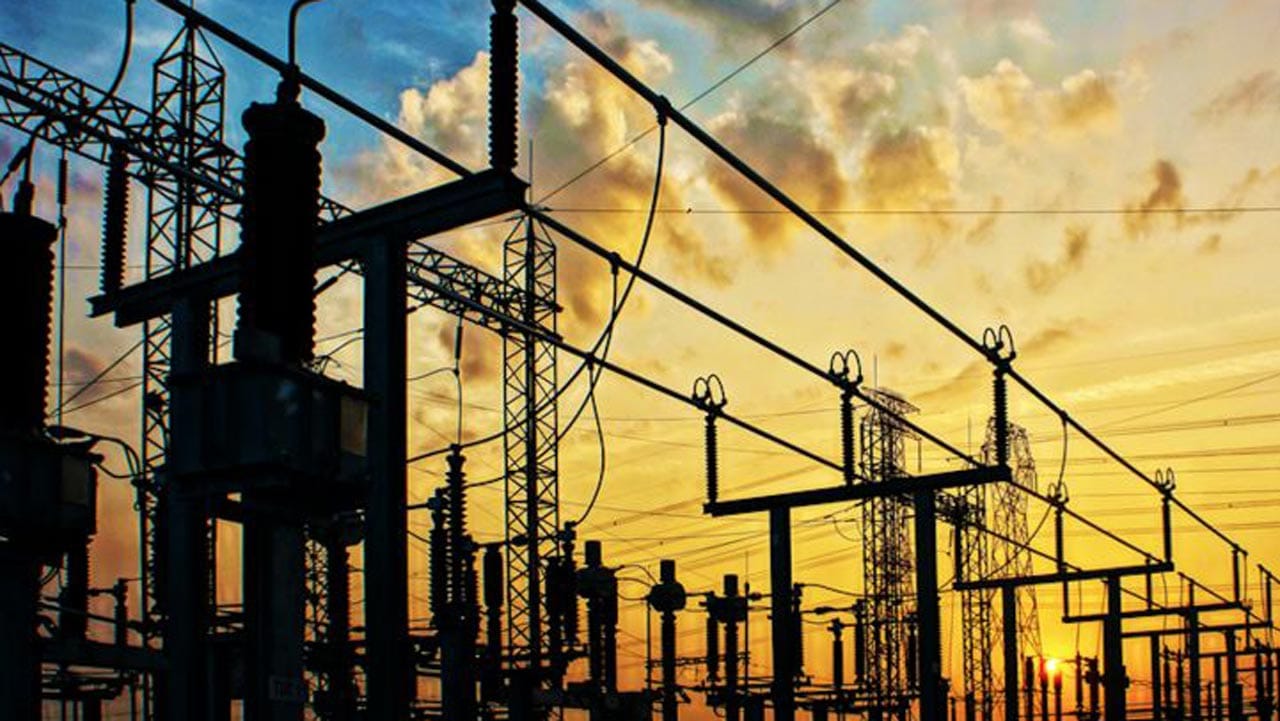
The impact of Nigeria’s persistent electricity crisis is deepening across households and businesses as rising fuel prices compound the burden of erratic power supply, leaving millions of citizens grappling with escalating living and operating costs, checks by Daily Trust have shown.
Across major cities including Kano, Kaduna,Lagos and Kwara, residents say the worsening electricity situation, coupled with the high cost of petrol and diesel is squeezing incomes, crippling small businesses and deepening economic hardship.
The crisis has once again come into sharp focus following the recent promise by the Minister of Power, Adebayo Adelabu, that electricity supply would improve significantly within two weeks—a pledge that has been met with widespread scepticism.
For many Nigerians, the reality on the ground tells a different story as power supply has significantly dropped, notwithstanding the band category of some consumers.

In Kano, residents say the electricity situation has deteriorated even further, with some describing the supply as nearly non-existent.
Zahradeen Isa, a dealer in second-hand electronics, said he had completely lost faith in public power supply.
“KEDCO officials came today (Thursday) to distribute bills before the month’s end. There was no supply in the last couple of days, yet they are expecting us to pay the bill at the end of the day,” he said, expressing doubt over the minister’s promise.
“I only pray it comes to fruition, but not optimistic of any improvement in power supply in the country unless a miracle happens,” he added.
Small business operators say the crisis is hitting them hardest, especially during the hot season when the demand for cooling services rises sharply.
Isyaku Mai Kanti, who sells soft drinks, lamented the devastating effect of erratic electricity on his business.
“We hardly get the supply when we need it most. People who can afford generators are selling cold drinks at exorbitant prices because others who rely on the public supply are out of business. I don’t really believe that there will be improvement as the minister promised,” he said.
Another trader, Kabiru Karaye, said he has resorted to buying ice daily to keep his business afloat.
“I just buy ice to run my business because I cannot rely on the public supply of electricity, which is non-existent as far as I am concerned,” said Karaye.
In Kaduna, similar complaints abound, with residents expressing anger over poor service delivery despite being placed on higher tariff bands.
Abdulganiyu Alabi, a resident of Kurmin Mashi in Kano, said electricity supply in his area remains grossly inadequate despite being classified under Band A.
“We don’t get up to five hours of electricity in a day, and the weather is very hot. Sometimes I feel very angry. We have complained, but they don’t listen.
“I just want them to put me in the band I belong to. If they cannot give me 20 hours, they should put me on Band Z,” he said.
Another resident, Mustapha Baban Sultan of Millennium City Estate, criticised the high tariffs charged under the Band A category despite minimal supply.
“We now pay more than N200 per unit for Band A, something we used to buy for about N54. Honestly, I cannot even say how many hours of electricity we get because power is rarely available.
“It would be better if they return me to Band B, which costs about N60 per unit, instead of Band A, which costs over N200 per unit,” Sultan said.
He stated that even with alternative power solutions, costs remain overwhelming, adding, “I spend almost N60,000 every month.”
In the heart of Lagos business districts and industrial areas, which used to enjoy a relatively stable electricity supply, many electricity users complain of getting less than five hours of power supply in recent times.
A resident, Adeolu Adegbaju, described the minister’s assurance as detached from the lived experiences of ordinary citizens who continue to endure prolonged outages.
“He wants to improve the power supply in two weeks? He couldn’t improve the power supply in almost three years after his appointment. With the greatest sense of responsibility, he is a joker,” he said.
“I feel the minister is apologising for manipulating the emotions of some unsuspecting and forgiving Nigerians. Rather than apologise, he should hit the ground running. We don’t have light; apologies cannot fix that.”
Adegbaju’s frustration echoes a broader sentiment among urban residents who rely heavily on alternative power sources to meet daily energy needs. For business owners, the stakes are even higher.
Moshood Adebola, who runs a cold-chain dependent enterprise, said erratic electricity supply is steadily destroying profitability and threatening the survival of small and medium-scale enterprises.
“As a businessman, I suffer intermittent outages and spend thousands of naira to fuel my generators. Two weeks cannot cure a decade of systemic decay in the power sector,” he said.
He painted a grim picture of the economic toll of power outage, particularly in sectors that require constant electricity.
“Every hour of darkness, my cold chain collapses. Small businesses haemorrhage capital. Manufacturers run on diesel. This is not just a national embarrassment—it is economic strangulation,” Adebola lamented.
He added that the increasing cost of diesel had worsened the situation, forcing many operators to scale down or shut operations entirely.
“Nigerians do not want promises. What the economy and ordinary Nigerians want is for the grid to work for 24 hours. Two weeks cannot restore what years of neglect have broken. But two weeks of visible, verifiable action, not a press release, will tell me if this minister is serious or simply rehearsing old songs,” he said.
Hike in fuel cost compound woes
The situation is further compounded by the hike in diesel and petrol prices, with a litre sold for N1,800 and N1,400 respectively.
Daily Trust reports that Nigerians have experienced unprecedented hikes in fuel prices since the deregulation of the downstream sector, worsened by the ongoing US-Israel war in Iran, which has pushed up crude oil prices.
From about $70 per barrel at the start of the war, Brent crude is currently priced at over $107 per barrel. And as the crude oil prices surge, the pump price of petroleum products has also been on the increase in Nigeria, shattering the purchasing power of millions of Nigerians.
Amidst the rising fuel prices, the electricity crisis in Nigeria has escalated in recent times, with many households enduring excruciating heat.
Minister of Power, Adelabu, apologised to Nigerians over the prolonged and severe electricity outage recorded in recent weeks, acknowledging the strain the situation had placed on households and key sectors of the economy.
Speaking at a press briefing in Abuja on Tuesday, the minister admitted that the ongoing blackout has worsened living conditions, particularly during the intense dry-season heat
“I want to apologise to Nigerians, officially now, coming from me as the Minister of Power, for this temporary issue that is leading to hardship being experienced, especially during this dry season, where there is so much heat everywhere,” Adelabu said.
“Businesses are being affected, schools have been affected, and industries have been affected. It is not our wish to find ourselves in this situation, but it is due to some factors that are actually beyond our control,” he added.
Despite the disruptions, Adelabu assured citizens that the situation would soon improve, offering a timeline of two weeks to restore an improved power supply.
‘Poor supply has terrible impact on economy’
Energy analysts say the combination of unreliable electricity and high fuel costs is creating a severe economic impact, particularly for small businesses that lack the capital to absorb rising operational expenses.
Reacting to the minister’s two-week promise, the National Coordinator of FairAction Nigeria, Dr. Tola Winjobi, described the pledge as unrealistic and disconnected from structural realities within the power sector.
“It’s laughable! Ask me what tense that is in the English Language. I will say it is a future-impossible tense. They should tell us how they are going to do it. If they do it, how is it sustainable? What is the gimmick they have not tried before that will now work in two weeks? Telling Nigerians this is an admittance of their palpable failure. Indeed systemic failure! This is clear evidence of executive incompetence and ineptitude of years past.
“Some communities in Ibadan or even Oyo State have not seen electricity for over 12 months. What difference will the promise of two weeks make to those people? They bandied consumers into different bands against their wishes and financial capacity. Where is that being done? Yet some areas with Band A are still suffering epileptic power supply, while those in Band C or even worse Band D have forgotten about electricity because theirs is Never Expect Power At All.
“Gencos and Discos are so adept at vacillating. Yesterday, there was too much water overflowing in Kainji, causing the surge. Today, there is insufficient gas to power the grid to supply light. Now it is the national grid that is collapsing. So they will raise the sleeping grid in two weeks! What happens thereafter? For how long are they going to be trading blame?
NECA laments rising energy costs
The Nigeria Employers’ Consultative Association (NECA) has raised concerns over the rising cost of energy in Nigeria, warning that increasing global oil prices are placing a significant strain on businesses and households.
Speaking in Lagos, the Director-General of NECA, Adewale-Smatt Oyerinde, said the surge in crude oil prices—driven largely by geopolitical tensions in the Middle East—is already translating into higher domestic fuel costs and worsening inflationary pressures across the country.
He noted that fuel prices have surged sharply in recent days, with petrol selling above N1,300 per litre in some areas, while diesel prices near N1,800 per litre. These increases, he explained, have had a ripple effect across key sectors of the economy.
Oyerinde emphasised that energy costs remain central to economic productivity, stressing that any increase in fuel prices immediately impacts transportation, food supply chains, and the general cost of doing business.
“Once fuel prices rise, the effects are immediate and widespread: transport costs increase, food prices rise, and the overall cost of doing business escalates,” he added.
He warned that sectors such as manufacturing, agriculture, and logistics are particularly vulnerable, as many firms depend heavily on diesel to power their operations. With current price levels, he said, profit margins are shrinking, forcing businesses to either transfer the burden to consumers or cut down operations.
Beyond global factors, Oyerinde pointed to structural weaknesses within Nigeria’s energy value chain, including infrastructure deficits, supply inefficiencies and underinvestment as key contributors to the crisis.
He cautioned that without urgent government intervention, the situation could lead to business closures, job losses, and a worsening cost-of-living crisis.
Calling for immediate action, NECA urged the government to stabilise the downstream petroleum sector, address supply constraints, and provide targeted support for vulnerable industries. (Daily trust)
-

 Metro19 hours ago
Man threatens to release Kano governor’s nude videos, photographs
-
World News19 hours ago
Trump hits back at Obama over Saddam ‘Cheesecake Factory’ jab
-
Sports19 hours ago
Harry Kane crowned 2026 Ballon d’Or winner
-
Business19 hours ago
Microsoft offers voluntary exit packages to 60,000 staff
-
Politics19 hours ago
‘He was trained in sanitation’ — Shettima says Atiku can’t govern modern economy
-
News19 hours ago
OPHK troops destroy ISWAP enclaves in Lake Chad, kill 16 terrorists
-
Politics19 hours ago
2027 Elections: 103m voters, 35m votes and the 68% who may decide the Presidency
-
Politics19 hours ago
FACT CHECK: How Tinubu’s Image On Bread Was Edited To Depict Obi