News
Nigeria’s heat crisis: Power failure, fuel costs trigger public health, financial crises

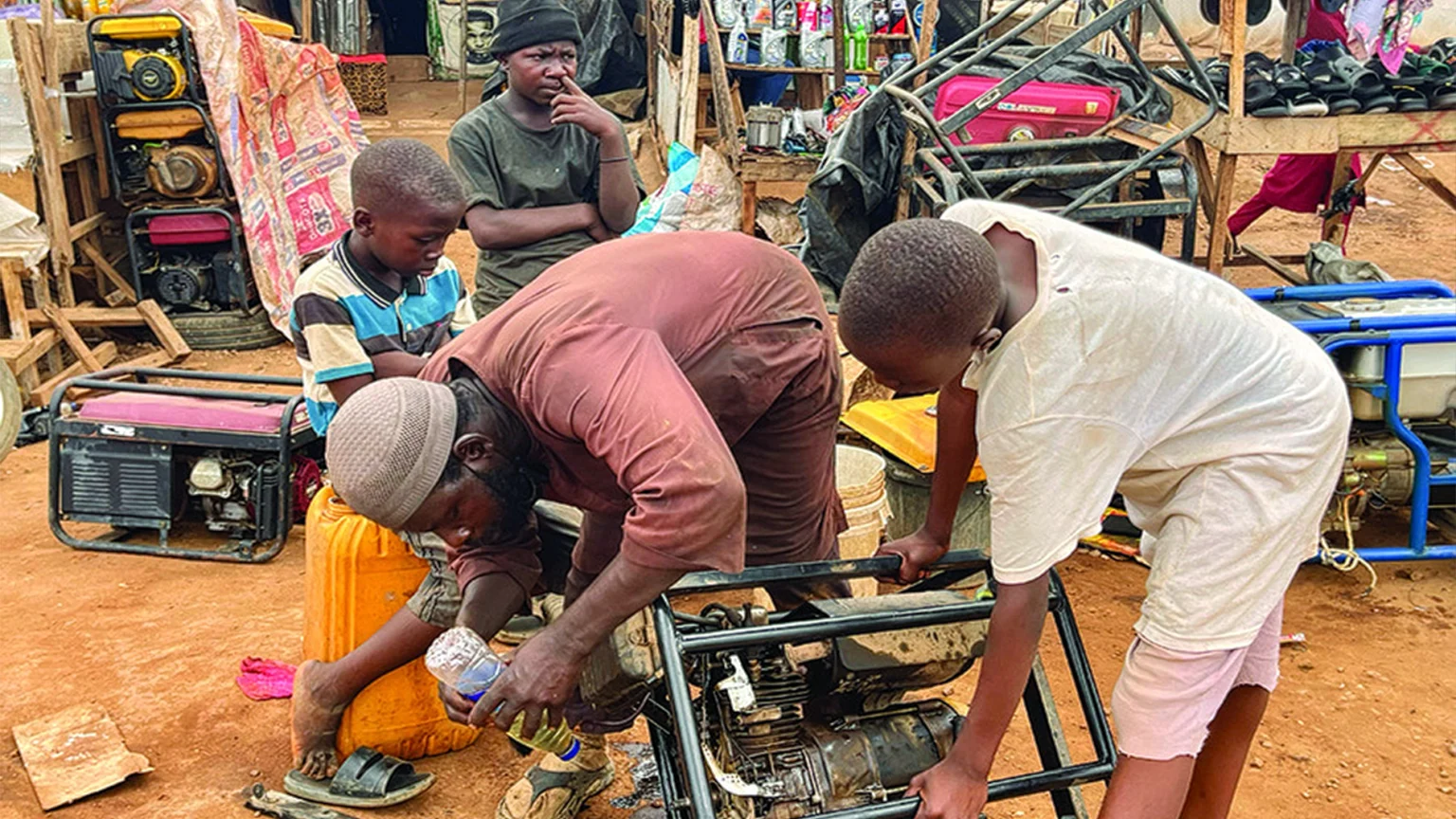
Nigeria is sliding into a dangerous heat trap where rising temperatures, unreliable electricity supply and worsening pollution converge to deepen economic hardship, particularly for low-income households. As temperature climb above 40°C in several states, millions are forced to depend on air conditioners, generators and refrigerators to survive, driving up energy bills while simultaneously increasing greenhouse gas emissions. This vicious cycle is reshaping daily life: families now spend a growing share of their income on cooling devices, businesses pass rising energy costs to consumers, and children and vulnerable groups face escalating health risks from heat stress and poor air quality. With power supply faltering and fuel prices surging, coping with extreme heat has become both a financial and public health crisis, KINGSLEY JEREMIAH reports.
Before dawn in Abuja, Kano, Lagos, Yenagoa and other parts of Nigeria, the heat is already awake.
During the day, it presses against zinc roofs and concrete walls, turning bedrooms into chambers of warm air.
If you survive the day, you may not escape fragmented sleep at night unless you’re ready to cope with the blasting roar of generators and keep air conditioners running on rising energy bills.

A litre of diesel has peaked at N1,750. A kilowatt-hour of electricity costs between N215 and N600.
After an ongoing caesarean section (C-section) in December last year, Inikpi Okpanachi, a civil servant with the Federal Airport Authority of Nigeria (FAAN), decried the impact of heatwaves on her recovery, especially the burden of dealing with heat rashes on her newborn.
“Infants and children are most vulnerable to heatwaves amid rising heat stroke, mental health problems and general low productivity, which can impact personal and national economy,” a public health expert, Dr Godswill Iboma, said.
Okpanachi’s survival strategy was to keep her air conditioners on. “As a band A electricity customer, it costs me a lot, but recovering and clearing the rashes on my baby bore a greater cost,” she said.
As the heat intensifies, business owners who sell refrigerators, generators, electricity units, diesel, petrol, and other goods are smiling at the bank at the expense of citizens and the economic impact on them.
While their activities, especially in the fossil fuel sector, are among the primary drivers of extreme weather, they are still the major beneficiaries of the crisis.
On Monday, March 9, 2026, Fatai Olawoyin, in the Dawaki area of Abuja, received a distress call from his daughter’s school that Sameerah was responding to an issue. She had developed heat rashes, which worsened during school hours. Rushed to the hospital, she was placed on medication and had to miss school for the rest of the week.
Olawoyin, a personal assistant at a haulage firm, has been fighting to manage his energy bills and ration the use of air conditioners; however, he still spends N85,000 to N100,000 monthly, a figure higher than Nigeria’s minimum wage.
“Recently, heat affected my daughter’s health. She developed a skin reaction and had to miss school, which required buying medication. Truly, the financial and health impacts of the heat waves are enormous,” he lamented.
In the Lekki area of Lagos, Lolade, a resident of a serviced estate with an independent power supply, noted that soaring temperatures have sharply increased her household energy costs.
According to her, what used to average between N150,000 and N200,000 monthly has now risen above N300,000, driven by the N600 per kWh tariff. She now runs air conditioners for longer hours and pumps more water for frequent bathing, while rising fuel prices further compound her financial woes.
As the heat wave affects residential spaces, it also affects commuters in public buses. Unless the fellow has the financial strength to use e-hailing services, most citizens are condemned to patronise rickety public vehicles that evince poverty.
Seeing a commercial bus with an air-conditioner in Nigerian cities is similar to seeing refrigerators in the city of Yakutsk during the winter. All passengers have mentally readjusted naturally to bear the heat during transits.
Speaking on her daily struggles, commuting around Abuja, Fedora Afa described public transportation in the city as exhausting and deeply uncomfortable.
She explained that the intense heat often turns vehicles into stifling spaces, with little relief even when windows are open, as hot air circulates within cramped interiors.
Overcrowding, she noted, further worsens the experience, with more passengers than the required capacity, forcing close physical contact in already sweaty and confined conditions.
Afa added that ride-hailing services such as Uber offer little improvement when air conditioning is unavailable. According to her, sitting in poorly ventilated cars, especially during traffic delays, can be overwhelming and draining.
Despite this, fares remain relatively high. She stressed that the mismatch between the cost of these services and the level of comfort provided is really frustrating.
On the afternoon of March 19 in Lokoja, Sule Ojotule sent her daughter to pump water from their borehole, which is their main alternative to unreliable public supply. What typically took 10 minutes stretched to nearly 30, raising concerns. Later, around 3.00 a.m., Ojotule tried to cool off with a shower, but the water turned dirty and suddenly stopped flowing.
By morning, she discovered the borehole had completely dried up. Although such shortages are common during the dry season, this was the first time it had failed despite efforts to deepen it. Now, Ojotule and her family of six are left searching for water elsewhere.
Authorities raise alarm over rising temperatures
The Nigerian Meteorological Agency (NiMet) warned in March 2026 that temperatures would rise above 40°C in several states, including Kebbi, Niger, Kwara, Oyo, Kogi, Nasarawa, Anambra, Abia, Ebonyi, and Cross River, as well as the Federal Capital Territory.
Earlier this week, the weather was 39 degrees Celsius in Abuja, 34 degrees in Ikeja, 40 degrees in Jalingo, 41 degrees in Sokoto and as high as 42 degrees in Maiduguri.
Head of Central Forecasting Office at NiMet, Dr Ibrahim Wasiu, said the weather is now common between February and March, but raised the alarm of rising humidity – a measure of water vapour in the air.
As the heat intensifies, more Nigerians install air conditioners and seek fossil-fuel generators to keep them running.
The Federal Government, in a joint report with the United Nations Environment Programme (UNEP), said that 35 million AC units are in Nigeria as of 2026. In 2010, there were over one million units. By 2020, it rose to eight million and would reach 71 million by 2050.
The data also showed that electricity consumption from air conditioners alone has risen from about 24,000 gigawatt-hours (GWh) in 2020 to roughly 62,000 GWh currently. Under a business-as-usual scenario, this could reach 110,000 GWh by 2035 and 176,000 GWh by 2050.
“The aftermath of running generators, air conditioning systems, and refrigerators is that we’re producing more Greenhouse gases, GHG (CO2, methane, etc), that are causing global warming. If we don’t reduce the emissions of greenhouse gases, the temperature rise will continue at unprecedented levels,” Wasiu told The Guardian.
With a rapidly growing population, the Nigerian Conservation Foundation (NCF) said 96 per cent of the country’s green forests, which once provided cover for humans and animals, have been depleted, leaving only four per cent forest cover.
According to the United Nations, Nigeria has the highest deforestation rate in the world, with an estimated 3.7 per cent of its forest lost every year.

In January, the European Centre for Medium-Range Weather Forecasts reported that 2025 was the hottest year on record, continuing a warming trend from 2023. The extreme heat over the 2023–2025 period was driven mainly by rising greenhouse gas emissions and reduced carbon absorption by natural sinks.
Exceptionally high sea-surface temperatures, linked to an El Niño event and ocean variability, further intensified warming, alongside changes in aerosols, cloud cover and atmospheric circulation.
Director of the Copernicus Climate Change Service, Carlo Buontempo, in a report obtained by The Guardian, added that the last 11 years were the warmest.
“The world is rapidly approaching the long-term temperature limit set by the Paris agreement. We are bound to pass it; the choice we now have is how to best manage the inevitable overshoot and its consequences on societies and natural systems,” Buontempo said.
How the heat digs financial hole in low-income households
For Blessing Ogah, the heatwave has quietly rewritten her finances.
“During the day, the heat is intense, and even at night, it feels impossible to sleep without running the AC,” she said, explaining that her electricity token purchases have surged as units are consumed faster than before.
She stated that when public supply fails, she turns to a generator, adding fuel costs to an already rising bill. Altogether, she estimates she now spends about N60,000 monthly just to cope with the heat in her studio apartment at the Wuse area of Nigeria’s capital city, Abuja.
Her experience reflects a growing reality across Nigeria, where extreme temperatures are pushing households into higher energy use, deeper financial strain and increased reliance on polluting fuels.
In Bayelsa State, Josephine Soye, a civil servant earning N101,000 monthly, said the heat has made life “extremely exhausting and stressful.” With unreliable electricity, her family uses a 4.5kVA generator, spending about N20,000 weekly, roughly N80,000 monthly on fuel alone.
While Nigeria has faced a prolonged energy crisis, it worsened earlier this year, forcing the Nigerian Independent System Operator (NISO) and distribution companies (DisCos) to issue repeated apologies over the declining electricity grid.
“Consequently, the current energy allocated to DisCos reflects the reduced supply available on the grid. And the cost of Premium Motor Spirit and diesel moved upward by about 43 per cent following the Middle East crisis.
In the Gwarimpa area of Abuja, Yinka Dina described similar pressures, noting that electricity, generator fuel, maintenance, and even medication for heat-related discomfort now consume a growing share of her income. “I can’t save. I just need to survive,” Dina said as she expressed her frustration.
For Kunle Odusola-Stevenson in Gbagada, Lagos, he spends about N50,000 every 10 days on electricity units for both his home and small office, while an unreliable grid supply forces additional daily spending of about N20,000 on generator fuel at home and N30,000 at his office.
In the Igando area of the city, Adeyemi Olaoluwa has adopted a hybrid coping strategy. He runs on solar energy during the day and generators at night, but even that has not shielded him from rising costs.
He now spends an additional N100,000 monthly on alternative energy to keep his one-horsepower AC on, while also dealing with health effects such as fatigue and heat rashes affecting his child, Fayo.

Nigeria faces a tripartite crisis as extreme heat worsens
Extreme heat is driving energy demand, while a weak electricity supply is forcing reliance on fossil fuels, and rising costs are pushing already burdened households into deeper poverty, while emissions continue to climb.
According to the Energy Commission of Nigeria, refrigeration and air conditioning appliances account for about 38 per cent of electricity consumption in residential households.
The Commission notes that these systems are also significant contributors to ozone depletion and climate change, through both direct refrigerant emissions and indirect emissions from electricity use.
With a striking growth in appliance ownership and fossil fuel use, government data indicates that greenhouse gas emissions from domestic air conditioners currently stand at about 40 metric tonnes, while refrigerators contribute an additional 15 metric tonnes, bringing total emissions from these appliances to around 55 metric tonnes. Projections suggest emissions from air conditioners alone could rise to 60 metric tonnes by 2035 and 133 metric tonnes by 2050 if current trends continue.
Much of this pollution is linked to Nigeria’s energy mix. With about 80 per cent of grid electricity generated by gas-fired plants, increased cooling demand directly translates into higher emissions. Where grid supply fails, widespread reliance on petrol and diesel generators further intensifies the problem.
These trends pose a direct challenge to achieving Nigeria’s international commitments. The country is a party to the Kigali Amendment, Montreal Protocol and the United Nations Framework Convention on Climate Change, which requires action to reduce emissions and phase out environmentally harmful substances. It also makes the realisation of Nigeria’s Nationally Determined Contribution (NDC) elusive.
Surge in price of ACs, refrigerators
To address these challenges, the government developed the Nigeria Cooling Action Plan (N-CAP) in collaboration with the United Nations Development Programme. The plan outlines a coordinated strategy to improve energy efficiency, manage cooling demand and reduce greenhouse gas emissions through policy, regulation and stakeholders’ engagement.
A central pillar of this effort is the introduction of new Minimum Energy Performance Standards (MEPS) for air conditioners by the Standards Organisation of Nigeria under NIS 943:2024.
A facilitator representing SON on the N-CAP implementation committee, Lawal Ismail, said the revised standard replaces older regulations and introduces the Nigerian Seasonal Energy Efficiency Ratio (NSEER), a metric designed to reflect real-world performance across varying temperatures.
Unlike the previous Energy Efficiency Ratio (EER), which measures efficiency under fixed conditions, NSEER captures seasonal variations and the benefits of modern inverter technology.
The MEPS framework will be implemented in phases. According to the Energy Commission of Nigeria, the United Nations Environment Programme United for Efficiency (U4E) initiative, and its Africa Office, the first phase will begin in December 2026, with different efficiency thresholds for fixed-speed and variable-speed air conditioners. Fixed-speed units will require NSEER levels of about 3.10 for smaller capacities, while inverter units will meet higher thresholds of up to 4.00.
By 2029, a unified and more stringent standard will apply to all air conditioners, raising efficiency levels to as high as NSEER 4.50 for smaller units. By 2031, Nigeria aims to align with international best practices, pushing efficiency requirements to NSEER 5.10 in some categories.
These changes are expected to gradually phase out inefficient models from the market. The energy labelling system will also evolve, with star ratings reflecting stricter efficiency thresholds and lower-rated products disappearing over time.
For consumers, the transition presents both opportunities and challenges. More efficient air conditioners are expected to reduce electricity consumption and long-term operating costs. However, the upfront cost of compliant units is likely to be higher, raising affordability concerns.
National Project Coordinator for U4E Nigeria, Etiosa Uyigue, said the approved standards will be rolled out gradually to give manufacturers and importers time to align with the new requirements. He explained that a phased approach is intended to avoid market disruption and allow proper transition.
Uyigue noted that a proposed ban on inefficient air conditioners and refrigerators has not yet taken effect, as authorities prioritise tightening standards to phase out substandard products organically.
To bridge the affordability gap, Uyigue said efforts are underway to design financial mechanisms that will enable consumers to spread costs. “We are looking at blended financing options involving both public and private sector participation,” he said.
He also highlighted enforcement challenges, including limited testing infrastructure and technical capacity, and noted that ongoing efforts aim to strengthen verification systems.
The Nigerian government is also proposing a consumer rebate scheme to offset the cost of efficient appliances and a potential ban on second-hand air conditioners and refrigerators, aimed at preventing the importation of inefficient units.
Nigeria faces looming e-waste from cooling appliances
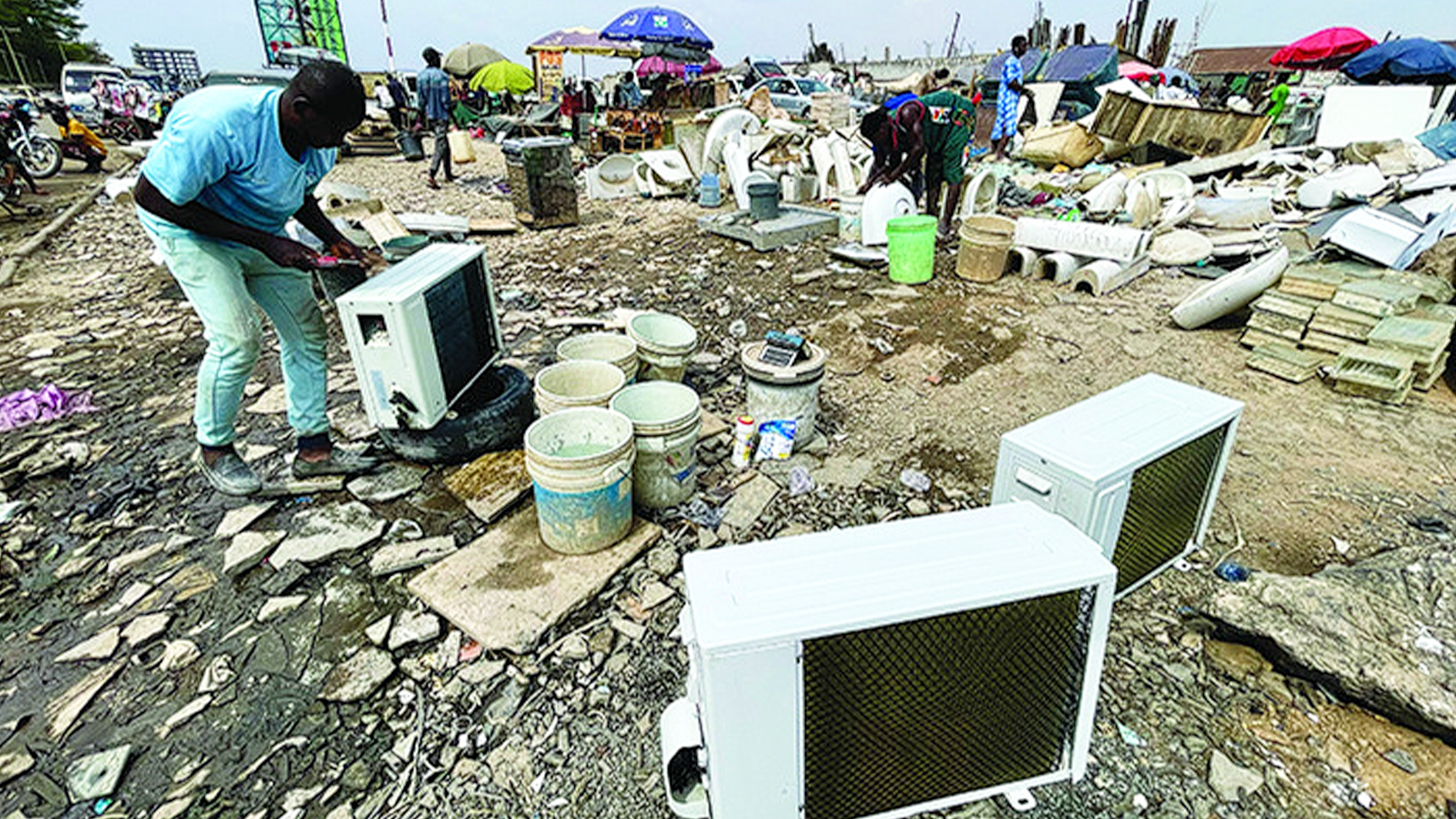
At the Jabi Motor Park in Abuja yesterday, air conditioners and refrigerators ranked among the most sought-after second-hand items, as buyers with limited purchasing power searched for affordable cooling options amid rising temperatures.
Despite concerns over the end-of-life handling of these appliances, the soaring cost of new units has fuelled demand for used alternatives. Traders say many customers are willing to overlook efficiency and environmental risks in favour of immediate relief from heat.
A simple online search revealed a flood of listings advertising imported “Tokunbo” air conditioners, many of which no longer meet regulatory standards in their countries of origin.
Already expected to be banned, these older units are often less energy-efficient and may contribute to higher electricity consumption and increased greenhouse gas emissions.
Speaking on the growing concern around air conditioner waste, Uyigue acknowledged that efforts to phase out inefficient cooling systems could unintentionally worsen Nigeria’s e-waste burden.
He noted that as the country pushes to adopt more energy-efficient air conditioners, older, inefficient units currently in use will gradually be discarded, creating a new waste management challenge.
“We are trying to solve one problem, which is encouraging people to adopt efficient air conditioning systems. But, of course, the old and inefficient ones will become a problem,” he said.
Uyigue explained that while there is growing awareness of the environmental risks, including hazardous components in discarded cooling equipment, Nigeria currently lacks comprehensive data on the volume of waste expected from the transition.
According to him, the waste stream will include both the physical components of air conditioners and harmful substances such as refrigerants, which pose environmental and health risks if not properly handled.
At a workshop in Abuja, International Recycling/Circular Economy Consultant, Jose Carbajosa Morales, warned that Nigeria faces a growing challenge in managing waste from air conditioners and refrigerators.
He noted that improper disposal releases harmful refrigerants that can contaminate soil and water, deplete the ozone layer, and worsen climate change. Morales called for stronger enforcement of extended producer responsibility, improved recycling systems, and better training for technicians. He said these measures could help mitigate environmental risks while creating jobs in the waste management sector.
As new refrigerant requirements are being introduced, limiting the global warming potential of refrigerants could help Nigeria avoid up to 27 million tonnes of carbon dioxide equivalent emissions, he said. Despite these policy efforts, the lived reality for many Nigerians remains defined by immediate survival rather than long-term efficiency gains.
Health implications and national economy
An executive member of Community Health Empowerment Foundation and a public health expert, Dr Godswill Iboma, linked temperatures and environmental degradation to increasing health risks, warning that the loss of green cover is worsening heat conditions and exposing populations to new threats.
Iboma explained that forest destruction also disrupts ecosystems, forcing animals out of their natural habitats and increasing human exposure to environmental risks. In many cases, wildlife is pushed into urban areas, further altering the ecological balance.
On health implications, he noted that extreme heat increases the risk of heat-related illnesses such as heat exhaustion and heat stroke. While these conditions were once more common in temperate regions, they are increasingly evident in Nigeria.
He, however, cautioned against attributing rising cases of cancer and other chronic diseases solely to heat, noting that lifestyle, diet, and exposure to pollutants also play significant roles.

Iboma stressed that children and infants are particularly vulnerable, as their immune systems are still developing, making them more susceptible to heat-related illnesses and infections.
He also highlighted the impact of heat on sleep patterns, warning that poor sleep can weaken the body, reduce cognitive function, and increase vulnerability to illness.
According to him, inadequate sleep can also affect productivity, with broader implications for economic output.
How to deal with heat stress
Heat stress, NIMET said, occurs when the body is unable to regulate its temperature due to prolonged exposure to heat, often worsened by dehydration, poor ventilation, and physical exertion.
Residents have been advised to prioritise hydration by drinking plenty of water and to remain in well-ventilated or air-conditioned environments where possible. Light, breathable clothing, hats, and sunscreen are also recommended for those who must go outdoors.
Special attention, the organisation said, must be given to vulnerable groups, particularly infants and children, who are more susceptible to heat-related illnesses. Authorities warn against leaving children in parked vehicles under any circumstances.
In addition, the public is encouraged to avoid strenuous activities during peak heat hours, typically between noon and 4:00 p.m. (Guardian)
-
News22 hours ago
Why I planned coup against Tinubu – Colonel Ma’aji
-

 Metro8 hours ago
How Female Student Died On Lagos Campus – Law School
-
News8 hours ago
Security Operatives Abandon Kebbi Highway Over Lakurawa Attacks
-
 News8 hours ago
BREAKING: NLC Disrupts Lagos Flight, Air Peace Passengers Stranded
-
Business8 hours ago
Dangote, NUPRC differ over Q2 crude supply
-
News8 hours ago
17 Bandits, 10 Police Officers Killed In Zamfara
-
News8 hours ago
PFIPC: Atiku raises concern over loopholes in Tinubu’s government
-
Metro8 hours ago
Uncertainty over Peller and Jarvis’ new N400m Abuja mansion as ‘original land owner’ storms court, petitions Tinubu, Wike