Business
Iran war reignites Nigeria’s cost-of-living crisis

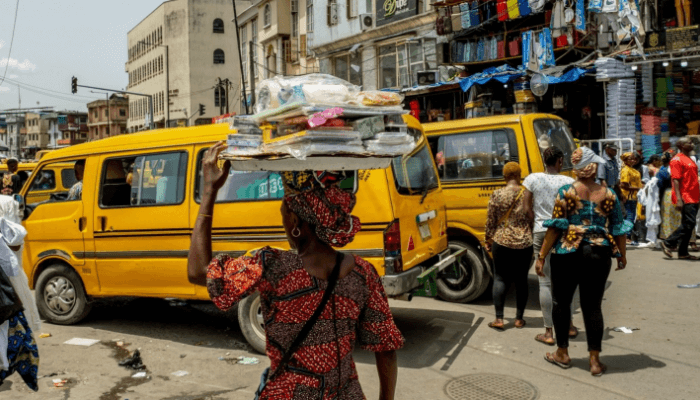
Yemi Dairo, a technician at an estate in Lekki, now sleeps overnight in his office, where he works, to avoid the prohibitive cost of commuting daily from Ikorodu to Lekki.
“I usually go home every two days, but I cannot afford to do that anymore because nothing will be left of my salary,” Dairo said.
“I now sleep in the office all through the week and go back home on Saturdays because of the high cost of transportation,” he added.
David Chibueze, a 45-year-old primary school teacher, walks 35 minutes to the school where he teaches daily, as he can no longer afford a bus.

“I usually spend N400 commuting to work daily. Now I need N700 for the same journey,” Chibueze said, noting that he would be left with nothing for this family at the end of the month.
The escalating Iran war is taking a toll on Nigeria’s economy, with oil prices skyrocketing and energy costs surging due to the closure of the Strait of Hormuz and attacks on oil and gas facilities in the Gulf region.
This has led to a renewed cost-of-living crisis, affecting millions of households across the country, including Dairo and Chibueze’s struggle.
The war has restricted around a fifth of global oil and LNG shipments, causing fuel and diesel price hikes in Africa’s most populous nation.
Nigeria’s fuel prices have surged 47 percent since the war started three weeks ago, from N839 per litre to N1,232. Prices of diesel also surged by 65 percent within the period, from N970 in January to N1,600 in Lagos.
The price increases are affecting transportation costs, food prices, and overall economic activity. The country’s food prices are surging again, and food inflation quickens to 12.1 percent in February from 8.8 percent in January.
“Energy costs have a strong multiplier effect in Nigeria’s inflation dynamics,” said Muda Yusuf, chief executive officer of the Centre for the Promotion of Private Enterprise (CPPE) in a March 9 note.
Yusuf explained that households spend over 60 percent of their income on food and transportation, noting that any increase in either squeezes spending.
“With purchasing power already fragile, sustained increases in fuel prices could intensify cost-of-living pressures and deepen poverty levels in the country,” Yusuf noted.
Bismarck Rewane, managing director of Financial Derivatives Company Ltd, in his keynote presentation at the Agrofood Nigeria conference, noted that the Iran war impact will pile pressure on households.
“The impact of the Iran war on the country’s cost of living is inevitable because the price of oil, fertiliser and gas have increased,” Rewane said.
“This means the ordinary man on the street is going to be paying more. So, the income of the ordinary man drops,” Rewane added while speaking recently at the Agrofood Nigeria conference.
Gideon Negedu, former executive secretary of the Fertiliser Producers Suppliers Association of Nigeria, noted that if the war persists, Nigeria will experience a new surge in prices, which will further exacerbate the country’s cost-of-living crisis and hunger levels.
“Petrol price surge, fertiliser jump, and increase in production cost all have a multiplier effect on food prices,” Negedu said.
No fewer than 133 million Nigerians live in multidimensional poverty, according to the National Bureau of Statistics. 35 million Nigerians are projected to face acute food insecurity in 2026 over worsening insecurity, economic hardship and climate shocks.
The renewed pressure is not only felt by households but also by businesses. The recent hike in fuel and diesel prices is already taking a toll and threatening to keep many out of business.
Reform gains to wait longer
In 2023, Nigeria implemented a difficult but necessary reform to drive macroeconomic stability, restore fiscal discipline and attract investments.
Economic fallout from the sweeping reforms – subsidy removal, naira devaluation, and the implementation of a value-added tax on diesel imports triggered a sharp rise in the country’s cost of living.
However, the reforms’ gains have started robbing off on the economy with the naira appreciating, rising foreign reserves, and investments. These gains are yet to positively impact the average Nigerian.
With the renewed cost-of-living crisis, experts say the reform might take longer to impact households. “It might take longer for households to start seeing the reform gains,” Yusuf said. (BusinessDay)
-

 Business17 hours ago
Job losses loom as N3.9trn debt may cripple 22 firms
-
News17 hours ago
Delta dep director’s killing: Police arrest commissioner, 3 others
-
Business17 hours ago
GTCO Plc Releases 2026 Half Year Audited Results
-
 Business17 hours ago
Fuel import: Abuja court ruling opens fresh battle
-
News17 hours ago
FG plans to lift 5 million Nigerians out of poverty with skills acquisition
-
Politics17 hours ago
Obi makes U-turn, says he’ll restore petrol subsidy after curbing corruption
-
Metro18 hours ago
Hospital seeks to stop inquest into Chimamanda son’s death
-
Metro17 hours ago
Why Nigerians should stop boiling eggs, rice together – Experts