Business
Nigerian Eurobonds to deliver double-digit returns in 2026 – Report

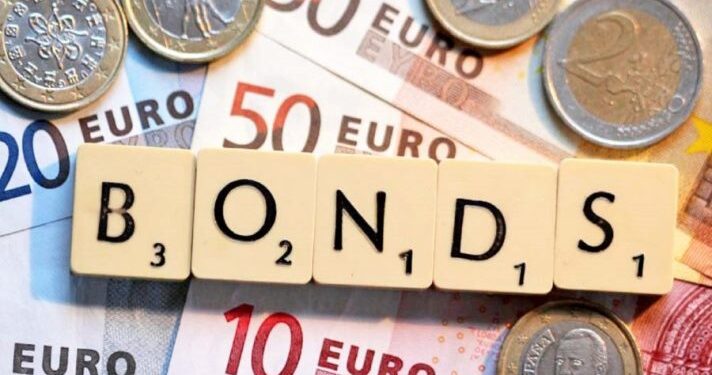
Nigerian Eurobonds have been projected to provide double-digit returns in 2026.
This is according to a recent report titled“Global Shocks and Market Opportunities: How to Invest in 2026,” released by VNL Capital Asset Management.
The report highlights Nigeria’s improving external buffers, a steady trend in disinflation, and sustained reform credibility as key factors driving this optimistic outlook.
What the report is saying
The report states that the continued rise in crude oil prices, which have surged above $95 per barrel amid heightened tensions in the Middle East, will likely keep inflationary pressures intact. This, in turn, is expected to reinforce a “higher-for-longer” interest rate environment, fueling a risk-off sentiment among investors.

- “Based on our base-case scenario, we expect Nigerian Eurobonds to deliver double-digit total returns in 2026, supported by an estimated 100bps yield compression,” the report explains.
It also notes that this positive outlook is further underpinned by Nigeria’s stronger external position and improving financial buffers, alongside its ongoing economic reforms.
The report draws a comparison to past energy shocks, noting that in 2022, yields rose by over 400bps due to similar factors. For the current cycle, the expectation is a more moderate widening of around 300bps.
Given this risk profile, the report recommends a strategic approach when investing in Nigerian Eurobonds, particularly focusing on the short-to-medium segment of the curve, where investors can benefit from attractive returns while ensuring better downside protection.
On the other hand, long-term bonds should be approached cautiously, with entry points considered only when there is a clear reversal in yields.
Get up to speed
In November 2025, Nigeria marked a significant achievement by raising $2.35 billion through a Eurobonds issuance, which garnered an overwhelming investor response of $13 billion in orders, making it the largest-ever orderbook in the nation’s history.
This issuance was described as a landmark success by the Debt Management Office (DMO), signaling robust global confidence in Nigeria’s economic reforms, fiscal discipline, and growth trajectory.
The Eurobonds were split into two tranches: a $1.25 billion 10-year note maturing in 2036 and a $1.10 billion 20-year note maturing in 2046.
These bonds were priced at 8.63% and 9.13%, respectively, with investor enthusiasm remaining strong despite geopolitical tensions and challenges such as the US threat of military action.
The offering was 477% oversubscribed, reflecting continued interest from global investors.
What you should know
However, Nigeria’s Eurobonds have faced some challenges recently. In the week ending March 13, 2026, the average yield on Nigerian Eurobonds rose by 0.08 basis points to 7.26%.
This increase came even as Nigeria’s domestic bond market saw stronger investor demand.
- Eurobonds trade data analysed by Nairametrics indicates a weekly price decline across several maturities, suggesting weaker demand from global investors who are now seeking higher yields.
- Geopolitical concerns, particularly related to the ongoing conflict in the Middle East, have dampened investor appetite for emerging market debt.
For example, short-dated instruments such as the 6.50% November 2027 bond saw its price fall from 100.8 to 100.57, while the 6.125% September 2028 Eurobond saw a sharper decline, dropping from 99.88 to 99.21. (Nairametrics)
-

 News23 hours ago
We Rejected ‘Phantom’ Council’s Request For Collaboration – Foreign Ministry
-
News23 hours ago
Herders Killed As Gunmen Raid Settlement In Anambra
-
Business18 hours ago
FCMB Healthcare Summit to Put Capital, Growth at Heart of Sector’s Future
-
News23 hours ago
Reps Order Probe Of Recovered Assets Since 1999
-
News23 hours ago
I will sue whoever said I resigned – Defence Minister, Musa
-
News23 hours ago
Insecurity: Tinubu Approves New Army Battalion For Kwara
-
News21 hours ago
Lagos doesn’t just have a housing shortage, it has a capital allocation problem
-
Politics23 hours ago
Christian-Christian ticket will win Nigeria’s presidential election one day – Governor Sule