Opinion
Prepare, heavy rains are coming

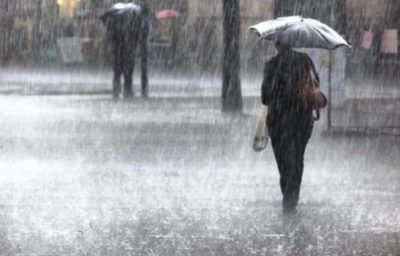
WATER is life, and rain is supposed to be a blessing. But sometimes, it comes with some devastating outcomes.
In an early warning, the Lagos State Government alerted residents to imminent heavy rainfall, flash flooding and strong winds that may cause havoc in the state.
Referring to the 2026 Seasonal Climate Prediction by the Nigerian Meteorological Agency, the state Commissioner for Environment and Water Resources, Tokunbo Wahab, said there would be an early normal onset of the rainy season, a longer-than-normal length and a delayed end of the season in Lagos.
According to him, the rainy season is expected to begin in the last week of March and end in the first week of December, with a predicted average annual rainfall of between 1,650mm and 3,030mm. Lagos is expected to record an average rainfall amount of about 1,965mm.

Even with this early warning, many residents will still be caught unawares. Usually, many people do not take proactive actions. There are no contingency plans.
Fundamental flaws in urban planning in many Nigerian cities contribute to devastating floods. Some developers build on drainage channels. Strangely, the town planning officials close their eyes to such infractions.
Some others dump waste into the drainage channels. Coastal areas like Lekki in Lagos are sand-filled to create new estates. But the question is, where does the water go?
Some residential areas do not even have a drainage system. They only rely on natural drainage channels. High urbanisation without the commensurate provision of amenities is a major problem in the country.
Consequently, flooding has caused enormous damage to Nigeria’s ecosystem. The 2012 devastating flood resulted in huge losses totalling about $16.9 billion.
Flooding is a global phenomenon. But advanced countries have elaborate defences to control it.
In the Canadian province of Manitoba, for instance, the government constructed dikes, diversions, and floodways, including the Red River Floodway and the Portage Diversion, to protect the city from floods.
In the United States, hundreds of miles of levees and flood gates protect the New Orleans Metropolitan Area.
Due to its low-lying landscapes, which subject it to high flooding, the Netherlands constructed elaborate flood defences, like natural dunes, dikes, and dams, to protect the country against storm surges from the sea.
The LASG has done well by coming out with the flood alert. But it should do something concrete to avert danger. Wahab had noted that the state government had intensified flood control measures to manage the anticipated deluge.
Part of these control measures is the state’s all-year-round drainage maintenance programme and the strengthening of solid waste management to ensure effective flood control and environmental hygiene.
Wahab said emergency response agencies and traffic management authorities had been placed on high alert to minimise the impact of the coming torrents.
However, the state needs to do more. It should modernise its drainage system.
If drainages are sealed, it will be difficult for people to dump waste there. The drainage channels should be regularly cleaned to ensure free flow of water. People should refrain from dumping refuse into the drains. Stiff penalties must be imposed for infractions.
Unfortunately, trees are scarce these days. Green areas are being sold for housing development. There must be green spaces to mitigate climate change.
The government must implement urban planning regulations and enforce laws against building on waterways or in flood-prone areas. If there are structures on drainage channels, they should be taken down.
The government should install flood barriers and construct dikes or levees, dams, lakes, and reservoirs to control water. It should protect mangroves and restore wetlands.
On their part, residents should protect their property against strong winds and floods by ensuring that their houses are well constructed to handle higher rainfall levels.
In case of flooding, people should have an emergency plan. Important documents should be put in waterproof containers.
Those who live in flood-prone areas should plan to relocate to safer environments. The government should assist such people in relocating. There should be centres where displaced people can be housed.
•Editorial By Punch Newspaper
-

 Politics23 hours ago
2027: Northern govs pledge total support for Tinubu
-
Opinion23 hours ago
Nigeria’s jobless growth: The 800m job deficit warning
-
Politics23 hours ago
APC’s internal contradictions scare me more than Atiku, Obi – Shettima
-
Metro23 hours ago
Gunmen kill two policemen, set station, operation van ablaze in Abia
-
News23 hours ago
Tinubu scraps recruitment waiver requirement for federal universities
-
News23 hours ago
How my mother was kidnapped over $2.4bn subsidy fraud — Okonjo-Iweala
-
News23 hours ago
‘A costly mistake’ — Suspended Niger state NSCDC commandant says deaths of ’37 miners’ were avoidable
-
Politics23 hours ago
2027: Kaduna targets three million votes for Tinubu, says Gov. Sani