Business
Strait Of Hormuz Blockade: US Fuel Price Rises To Highest In 4 Years

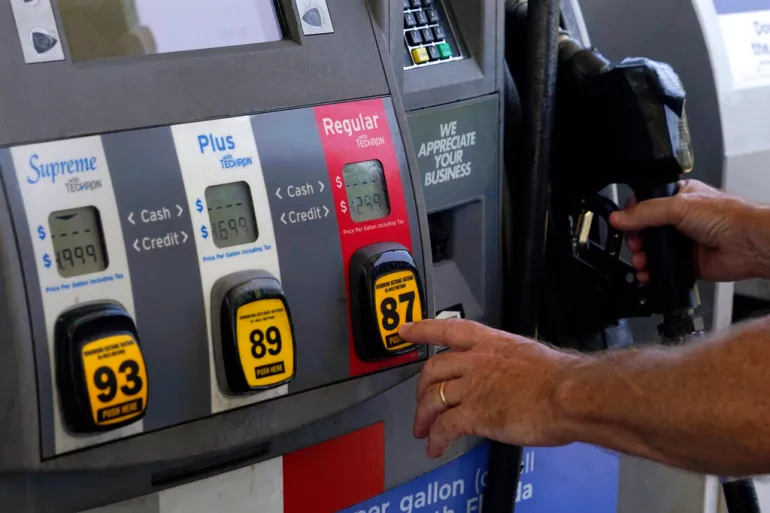
Gasoline prices in the United States have surged past $4 per gallon for the first time in nearly four years.
The development, according to data, is driven by escalating tensions linked to the Iran conflict and renewed fears over global oil supply disruptions.
Data released by the American Automobile Association on Tuesday showed the national average price reaching $4.018 per gallon, marking a sharp rise from less than $3 recorded at the end of February.
The spike represents the highest level since August 2022, when fuel prices last crossed the $4 mark, according to the US Energy Information Administration.

The surge comes amid intensifying geopolitical tensions following military actions ordered by President Donald Trump against Iran.
The move has since unsettled global energy markets and raised concerns about broader economic fallout.
The situation has been compounded by disruptions around the Strait of Hormuz, a critical global energy corridor through which roughly a fifth of the world’s oil and liquefied natural gas passes.
Iran’s actions in effectively restricting access to the strategic waterway have heightened fears of supply constraints and pushed oil prices above $100 per barrel despite slight declines recorded on Tuesday.
Across the United States, the impact has been uneven but severe in key markets
California recorded the highest average price at $5.88 per gallon, followed by Hawaii at $5.45 and Washington at $5.34.
The rapid increase in fuel costs is expected to place additional financial pressure on American households, particularly as the summer travel season approaches.
Analysts warn that the surge could worsen inflationary pressures and dampen consumer spending, even though the United States relies largely on imports from Canada and Mexico rather than the Middle East.
However, the globally interconnected nature of energy markets means that disruptions in one region quickly translate into price increases worldwide.
The development also carries significant political implications for Trump, as rising fuel prices have historically influenced public sentiment ahead of elections.
While the US president has expressed optimism about a possible negotiated settlement, he has also issued strong warnings, stating that failure to resolve the crisis could trigger further military escalation targeting Iran’s oil infrastructure.
Despite a slight dip in oil prices on Tuesday as investors reacted to signals of a potential deal, uncertainty remains high, with energy markets continuing to respond sharply to developments in the region.
For millions of Americans, however, the immediate reality is already clear-a return to high fuel prices not seen since the peak of global energy disruptions triggered by the COVID-19 pandemic and the Russia-Ukraine war.
-

 News19 hours ago
Tinubu extends 3-week vacation
-
Metro19 hours ago
Protest as hoodlums break into female hostel, rape student
-
Politics19 hours ago
I’ll never support Uzodimma to be senate president, says Wike
-
World News19 hours ago
US TV networks suspend Trump coverage after White House’s ban on three media outlets
-
News19 hours ago
‘They’ve tasted its money’ — Umar Bago says boys are abandoning schools for mining in Niger state
-
News19 hours ago
FG Threatens To Shut Lagos-Calabar Coastal Road In Two Weeks
-
Metro19 hours ago
Darkness hits Lagos-Ibadan Longbridge as more streetlights disappear
-
Business19 hours ago
Nigerian stock market valuation hits all-time high of N162.39trn