News
Ghost towns of Kwara: How banditry emptied thriving communities

Once bubbling with life and sustained by farming, several communities across Kwara have now fallen silent, emptied by relentless attacks, kidnappings and fear. In this gripping feature, DARE AKOGUN traces the human cost of insecurity as residents recount how they fled their ancestral homes, the harsh realities of displacement, and the uncertainty surrounding their return
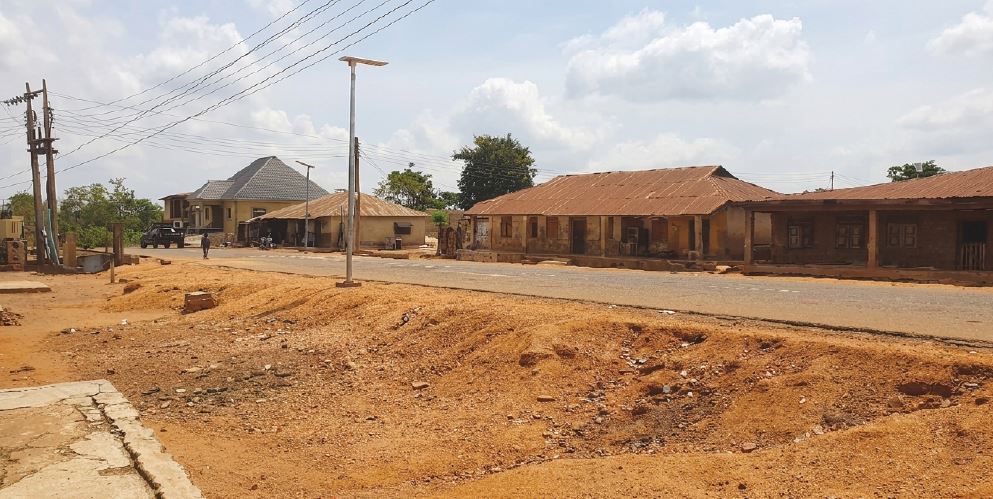
In the early hours of a December morning, the silence in Motokun village is unnerving. There is no laughter of children racing to school, no rhythmic pounding of yams in compound kitchens, no early chatter of farmers heading to the fields.
Once a thriving agrarian settlement in Patigi Local Government Area of Kwara State, Motokun today is a ghost of itself, one among several communities emptied by the creeping wave of insecurity tightening its grip on Kwara’s rural belt.
Across Kwara North and parts of Kwara South, villages that once thrummed with life have been deserted, their residents fleeing attacks by suspected bandits and armed groups.

What were once clusters of vibrant farming communities are now quiet, fractured landscapes, haunted not by spirits but by fear.
Motokun is not alone. In Lata Nna, also in Patigi, homes sit with doors ajar, cooking pots abandoned on stoves, as though residents had stepped out briefly and never returned.
In Gada village in Edu Local Government Area, farmlands that once yielded yams, maize, and cassava now lie fallow, overtaken by weeds.
Partially deserted communities such as Ndanaku, Essanti, Kokodo, and Lata Woro tell a similar story, a gradual exodus of families in waves, until only a handful of elderly residents remain, clutching memories and an enduring, fragile hope.
For decades, these communities formed the backbone of Kwara’s food system. Farming was not just an occupation; it was a way of life. Men tilled the land from dawn till dusk, while women processed produce and traded in local markets. Children walked miles to attend school, their futures rooted in the soil their parents cultivated.
Today, those same farmlands have become danger zones.
Saturday PUNCH estimates, based on community data, show that at least 20,000 people have been displaced since April 2024. Many now live in Ilorin with relatives, in unfinished buildings, or in overcrowded rented rooms, while others have found refuge in Minna, Niger State, and Lagos.
“We used to harvest more than 50 bags of yams every season,” recalled 52-year-old farmer Musa Sanni, now displaced in Minna. “But now, nobody can even go near the farm. If you try, you may not come back.”
Sanni, who fled with his eight children and two wives in the dead of night, left practically everything behind, unsure of what the future held.
“I am doing menial jobs helping people clear farm lands, and sometimes I ride a commercial motorcycle to fend for myself and my family, hoping to gather enough money to start a small business,” he said.
‘We ran for our lives’
For many residents, the exodus was sudden and violent.
Aisha Abdullahi, a mother of four now living in Ilorin, recounted fleeing Motokun after repeated attacks.
“They came at night, shooting. We didn’t even carry anything. We just ran. We left our house, our food, everything. Up till now, I don’t know what has happened to our home. My children ask when we’re going home, but there’s no home anymore,” she said.
In Lagos, where he now works as a security guard, 34-year-old Mohammed Audu from Gada village described how fear slowly consumed his community.
“At first, it was rumours, people hearing gunshots in neighbouring villages. Then the attacks started coming closer. Kidnappings began. Before we knew it, people started leaving one by one. It got to a point where staying became more dangerous than leaving,” he said.
Another displaced resident, Zainab Mohammed from Lata Nna, now in Minna, said women and children bore the brunt of the attacks.
“We couldn’t sleep at night. Every sound made us jump. We were always afraid they would come. When they attacked a nearby village and kidnapped people, we knew it was time to go,” she said.
A slow collapse
The displacement did not happen overnight. It was a slow, creeping collapse, one that many residents believe could have been prevented.
The concern was highlighted on Sunday during the release of a communiqué in Lagos by a local forum.
Signed by its Convener, Obashola Ayomide Ridwan, the statement expressed deep concern about the alleged plan by armed herders to dominate communities in the region.
According to the forum, more than 20 communities in Kwara South have already been deserted due to repeated attacks and kidnappings, including the hometown of the Deputy Governor of Kwara State.
The group also revealed that the Baale of Alasoro was forced to abandon his community and relocate to Lagos following incessant attacks by armed groups.
The statement noted that the absence of meaningful development, industries, and government presence in the region has created fertile ground for banditry and organised crime.
The forum described the vast stretches of largely uninhabited land across parts of the senatorial district as a major security risk, allowing armed groups to study the terrain and operate freely.
“Underdevelopment with no sign of industries gives room for banditry in Kwara South. Everything is concentrated in the central areas. Our forests have been occupied by Fulani herders who pretended to be rearing cows; they have positioned themselves where our resources are located,” the communiqué read.
“From Oke-Ero to Babanla, Oreke, and Oro-Ago, more than 70 kilometres can be travelled without encountering a community. This gives the Fulani intimate knowledge of our region and allows them to position themselves in our forests and communities, from where they launch attacks, kill, and kidnap people,” the forum added.
It further lamented that thousands of residents have been forced to flee their ancestral lands due to repeated raids by suspected bandits, leaving behind farmlands, homes, and properties.
The group also criticised traditional rulers in the region, accusing some of failing to confront the growing security crisis.
According to the statement, the alleged silence of these authorities has emboldened criminal elements operating in the area.
“For peace to return to our region and to stop the killings and kidnappings, our traditional rulers must, by all means, find a way to halt the influx of Fulani in their communities and review the security situation in every market and town in Kwara South,” the group insisted.
The forum also highlighted the developmental imbalance in the state, noting that the concentration of projects in the central part of Kwara has left the southern region vulnerable to insecurity and economic stagnation.
“If there were massive development projects in Kwara South and stronger presence of government institutions, it would be difficult for terrorists to operate in our region,” the forum said.
It stressed that the establishment of industries, improved infrastructure, and stronger security architecture would stabilise the area and discourage criminal activity.
The group warned that unless urgent measures are taken to address both security challenges and developmental imbalance, the displacement of indigenous communities may worsen in the coming months.
They, therefore, urged the state government, security agencies, and traditional leaders to collaborate in restoring peace and ensuring that residents can safely return to their homes and farmlands.
Broken communities, broken lives
For displaced residents, life in exile has been anything but easy. In Ilorin, many now live in overcrowded conditions with relatives or in single-room rentals. Jobs are scarce, and survival is a daily struggle.
“I used to farm and feed my family,” said Ibrahim Salihu, who fled from Ndanaku and now works as a labourer in Ilorin. “Now I depend on daily jobs. Sometimes there is work, sometimes there is none, but we thank Allah we are still alive and surviving.”
Women have had to adapt quickly, often taking up petty trading to support their families.
“I sell small things now, groundnuts, sachet water. But it is not enough. Life is hard,” said Aisha.
In Minna and Lagos, the story is similar: displacement, uncertainty, and longing for home.
Will they return?
Despite the hardship, many displaced residents say they would return if security conditions improve.
Musa said he misses home and would go back immediately if peace were restored. “That is my home. That is where my life is.”
Zainab echoed the same sentiment. “We want to return, but who will protect us? We cannot go back to die,” she said.
For Audu, returning is no longer a certainty. “I don’t know if I can go back. Everything we built is gone. We have to start all over again,” he said.
The Kwara State Police Command insists progress is being made.
“We are working closely with the Army, DSS, and Office of the NSA,” said spokesperson SP Adetoun Ejire-Adeyemi. “Calm will be restored.”
The situation has raised serious concerns among stakeholders, who warn that continued displacement could have far-reaching consequences not only for Kwara but for the wider region.
With farming activities disrupted, food production is likely to decline, worsening inflation and economic hardship.
Social structures are also breaking down, as communities that once thrived together are scattered across cities.
The Kwara South Development Forum has called on the state government, security agencies, and traditional leaders to act urgently, stressing that both security and development must go hand in hand.
“We need more than promises,” the group said. “We need action, security presence, infrastructure, and investment in our communities.”
As Kwara grapples with the growing challenge of insecurity, the fate of its ghost towns hangs in the balance, waiting for a return that may not come unless decisive action is taken.
Until then, the wind will continue to blow through empty homes, carrying with it the echoes of communities that once lived, worked, and thrived. (Punch)
-
News19 hours ago
Why I planned coup against Tinubu – Colonel Ma’aji
-

 News5 hours ago
Security Operatives Abandon Kebbi Highway Over Lakurawa Attacks
-
Metro5 hours ago
How Female Student Died On Lagos Campus – Law School
-
 News5 hours ago
BREAKING: NLC Disrupts Lagos Flight, Air Peace Passengers Stranded
-
Business5 hours ago
Dangote, NUPRC differ over Q2 crude supply
-
News5 hours ago
17 Bandits, 10 Police Officers Killed In Zamfara
-
News5 hours ago
PFIPC: Atiku raises concern over loopholes in Tinubu’s government
-
Metro4 hours ago
Uncertainty over Peller and Jarvis’ new N400m Abuja mansion as ‘original land owner’ storms court, petitions Tinubu, Wike