News
Leaked Memo: FG Directs Universities To Fund Lecturers’ Allowances Through Internal Revenue, Sparks Tuition Hike Fears

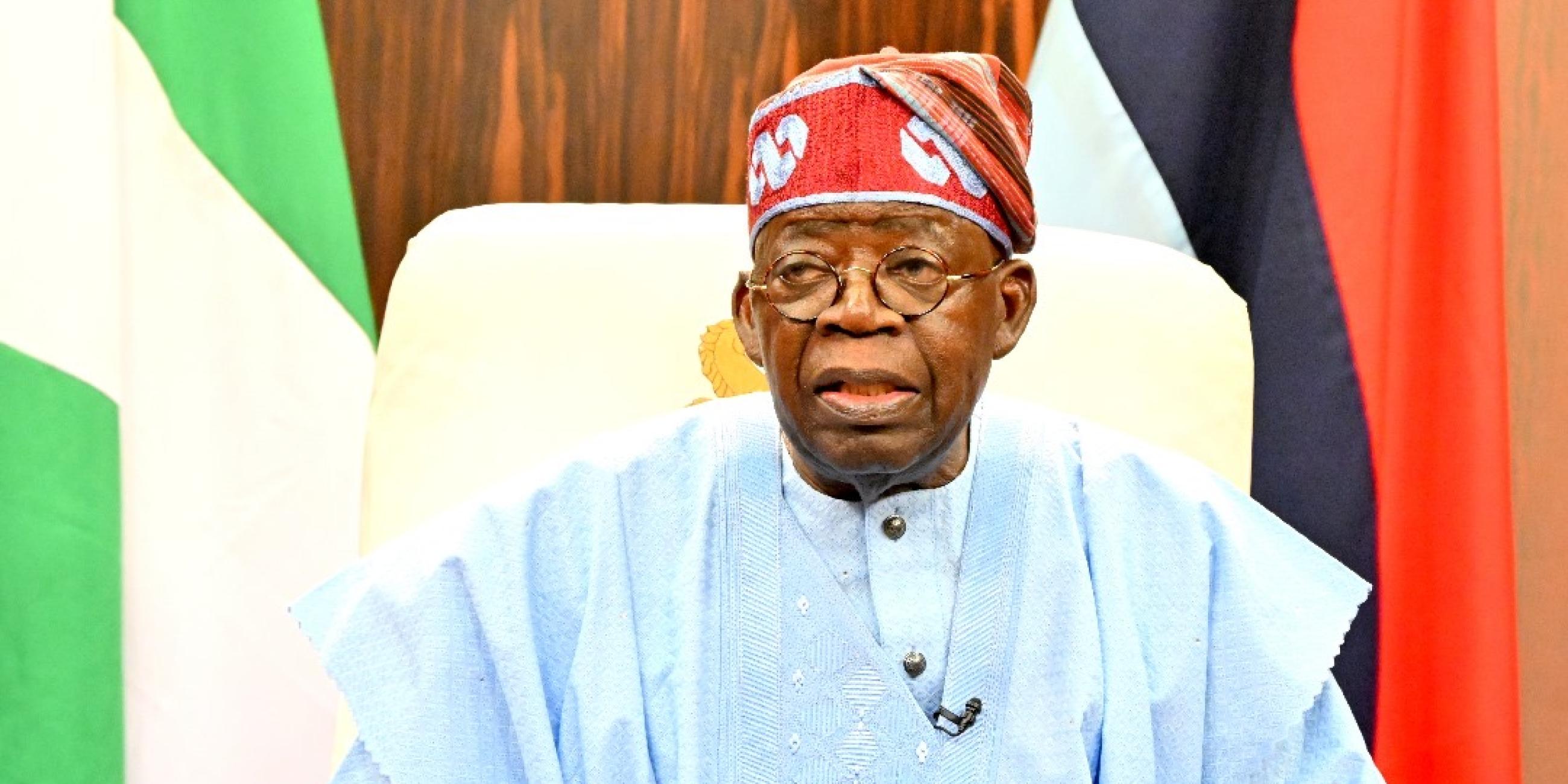
The Nigerian government under President Bola Ahmed Tinubu has directed public universities across the country to begin funding lecturers’ allowances through internally generated revenue (IGR), a move that could trigger fresh tuition increases nationwide, SaharaReporters has learnt.
This is according to an internal memo obtained by SaharaReporters from Modibbo Adama University, Yola, which revealed that the Federal Ministry of Education instructed vice-chancellors to source funds internally to pay the Consequential Adjustment and Transport Allowance (CATA) for academic staff.
The memo, dated May 18, 2026 and signed by the university’s bursar, Hanien N. Ayuka, disclosed that the institution had already been implementing payment of the allowance from its internally generated revenue since January 2026 but could no longer sustain the arrangement because the Federal Government had failed to provide financial backing.
“It could be recalled that the Minister of Education in a letter addressed to ALL Vice Chancellors directing them to source funds from their respective IGR and immediately implement the payment of CATA allowance to ALL deserving Academic staff with effect from January 2026,” the circular read.

“You are aware, this University has been paying the CATA allowance as directed with effect from January 2026 from its Internally Generated Revenue (IGR). The cash backing however has not been made available up till this moment.”

The memo further announced the suspension of the allowance due to the university’s worsening financial situation.
“Consequently, the University is unable to sustain the continued payment of the CATA allowance and will henceforth suspend the payment until the Federal Government of Nigeria sends the necessary cash backing. The suspension takes effect this May 2026,” the statement added.
Copies of the memo were sent to the Vice Chancellor, Deputy Vice Chancellors, Provost, Registrar, Internal Auditor, University Librarian, Deans, ASUU Chairman and Head of Payroll.
A lecturer at the university who spoke to SaharaReporters on condition of anonymity said the Federal Government’s directive has thrown many universities into financial crisis, with managements now considering increases in tuition and service charges to survive.
According to the source, lecturers are becoming increasingly frustrated as universities struggle to pay statutory allowances without federal support.
“The lecturers are stranded because universities cannot continue to sustain these payments from IGR alone,” the lecturer said.
“The reality now is that many universities will increase tuition fees by next session because the government has practically told them to fund themselves.”
The source further disclosed that recent discussions within the university management indicated that fee increases may become inevitable in the next academic session.
“In a recent meeting, the school resolved that fees may go up next session so the university can continue funding itself since the government is not willing to help them,” the source added.
SaharaReporters gathered that the development has triggered anxiety among students and lecturers who fear that another round of tuition hikes could worsen the economic hardship already facing Nigerian families.
Over the past few years, several federal universities have increased tuition and other fees, sparking protests from students and labour unions who accuse the government of gradually commercialising public education.
The Academic Staff Union of Universities (ASUU) has also repeatedly warned that inadequate funding for public universities could lead to worsening conditions in the tertiary education sector, including industrial action and declining educational standards.
ASUU Nsukka Zone had also accused the Federal Government of compelling it to shut down universities by deliberately failing to implement the 2025 ASUU/FGN Agreement.
The union made its position known on Thursday during a press conference held at Benue State University (BSU), Makurdi, where it said government actions since the signing of the agreement showed a pattern of neglect, warning that the development could trigger another industrial crisis in Nigeria’s university system.
Addressing journalists, the Zonal Coordinator of ASUU Nsukka Zone, Comrade Christian Opata, flanked by other leaders of the union, said the government was once again taking the route that had previously led to prolonged strike actions in public universities.
“The Federal Government is taking the unproductive route that it is used to. Before the signing of the 2025 ASUU/FGN Agreement, the FGN forced our members to embark on strike actions over the 2009 Agreement. As it currently stands, the FGN is at it again trying to force us to embark on another round of actions over the 2025 Agreement,” he said.
Opata lamented that although the agreement was signed on January 14, 2026, its implementation had remained “partial, distorted and largely abandoned.”
He particularly faulted the Federal Government for failing to inaugurate the Implementation Monitoring Committee (IMC), which was expected to ensure proper execution of the agreement and prevent bureaucratic bottlenecks.
The union also accused the government of sidelining ASUU in the proposed establishment of the National Research and Innovation Development Fund (NRIDF), announced by the Minister of Education, Dr. Maruf Alausa, after a Federal Executive Council meeting on April 7, 2026.
According to Opata, the move breached the agreement reached with the union.
“ASUU, one of the parties to the agreement, was not involved whatsoever, a clear sign of breach of the said agreement through deliberate attempts to sideline the union,” he stated.
ASUU further rejected the proposed funding arrangement for the research fund, insisting that it contradicted the agreement, which stipulated that at least one per cent of Nigeria’s Gross Domestic Product (GDP) should be dedicated to research, innovation and development.
“One wonders how the Minister came about the $500 million he mentioned as being benchmarked for the fund,” the union queried. (SaharaReporters)








-

 News23 hours ago
Court Orders Wike’s Son Jordan to Produce American Passport in $2.1m Abuja Land Suit
-
Politics22 hours ago
Pantami wins PDP repeat governorship primary in Gombe
-
News22 hours ago
NEMA deploys rescue teams as floods ravage states
-
News21 hours ago
After 68 Days Vacation, Lawmakers Embark On Another Recess
-
Metro22 hours ago
Lagos teen detained over slippers freed after four years
-
Politics21 hours ago
2027: Which running mate brings the most votes – Shettima, Amaechi or Kwankwaso?
-
News22 hours ago
Mixed reactions as FG demarcates First Niger Bridge
-
Sports22 hours ago
AFCON Qualifier: Guinea-Bissau Humble Super Eagles 3-0