Business
Sallah: Households groan as tomatoes turn stew into luxury

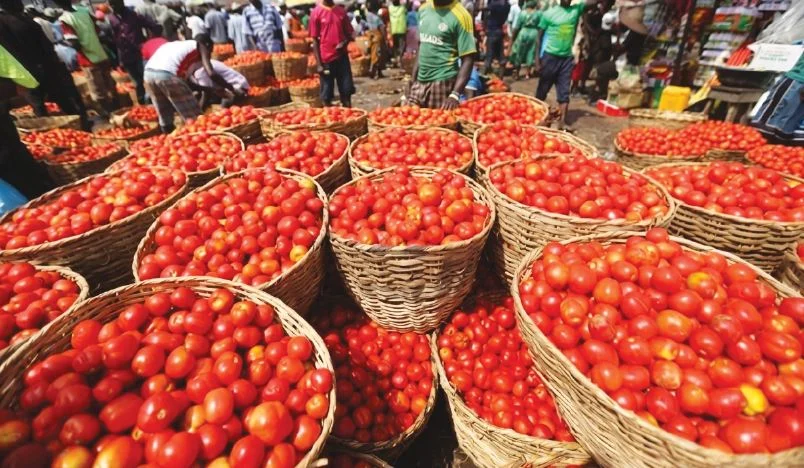
As Nigerians prepare for the Sallah celebration amid worsening economic hardship, the soaring prices of tomatoes and peppers are placing fresh financial pressure on households, food vendors, and traders across the country. Once regarded as basic kitchen staples, the ingredients have become increasingly expensive, forcing many families to either buy in smaller quantities or turn to cheaper alternatives to survive, AYOOLA OLASUPO report
A few days before the Sallah celebration, Mile 12 Market bustled with buyers and traders haggling over prices across crowded stalls.
Amid the noise, Rukayat Bello stood quietly, repeatedly adjusting the edge of her scarf as she counted the N1,000 notes in her purse.
“One, two, three, four…,” she murmured, staring at the tomatoes displayed in plastic bowls of various sizes.

After counting her money, she pulled out N7,000 and quietly reduced the quantity of tomatoes she intended to buy.
Bello had arrived at the market hoping to buy enough foodstuffs, including tomatoes and pepper, ahead of the forthcoming Sallah celebration. But after asking for the prices, her plans changed instantly. What once cost a few thousand naira now consumes almost half of her budget for food.
“I could not believe that just five pieces of tomatoes would cost N1,000. Before, I used to buy baskets during festive periods without thinking too much about it, but now everything is too expensive. We are just managing to cook what we can afford,” she said in an exasperated tone.
Not too long ago, tomatoes and peppers were among the cheapest items most households could afford. But today, they are bought in tiny portions, or abandoned altogether as soaring prices continue to strain household budgets.
Shift to cheaper tomatoes, pepper
For Esther Inyang, survival now means mixing fresh tomatoes and peppers with cheaper, partially spoiled ones to cut costs.
According to her, the strategy allows her to save some money for other household needs instead of spending everything on cooking ingredients alone.
The mother of four said she had hoped to prepare a proper meal for her children during Sallah, but the rising cost of tomatoes and pepper forced her to reduce the quantity of food she planned to cook.
“I intended to cook well for my children during this Sallah, but had to reduce the quantity because tomatoes alone consumed most of my budget,” Inyang lamented.
She lamented that the rising prices of tomatoes and peppers have become increasingly unbearable for households already struggling under the weight of the country’s harsh economic realities.
According to her, some food ingredients once regarded as ordinary kitchen essentials have now become luxury items for many families.
“Buying tomatoes and peppers now feels like buying gold. Before, with N3,000, I could prepare a decent pot of stew for my family, but now the same money can barely buy enough ingredients. Sometimes, I reduce the quantity of food I cook because everything in the market has become too expensive.”
As it stands, across major markets in Lagos, Ogun, Oyo, and other states, consumers and food vendors are grappling with soaring food prices, worsened by increased demand as the festive period approaches.
In a survey conducted by our correspondent, a small plate containing about five tomatoes now sells for between N500 and N1,000, while a paint bucket of tomatoes costs as much as N10,000 to N15,000, depending on the quality and location of the market.
For instance, a Lagos resident, Queeneth Ojogbile, who regularly shops at Mile 12 Market, said tomato and pepper prices have risen sharply within the last two months, making basic food preparation significantly more expensive for many households.
We now buy in portions
She explained that a crate of tomatoes, which previously sold for about N10,000 and could sometimes be negotiated down to N9,000, now goes for as high as N30,000.
According to her, even smaller measurements in bowls and miniature buckets have recorded similar increases.
Ojogbile noted that many buyers now resort to pooled or shared buying arrangements because of the soaring prices.
She, however, lamented that her N5,000 contribution in one of such arrangements yielded far less than what the same amount used to buy in the past.
“For instance, a crate of tomatoes, which is typically the standard measure for bulk buying, used to sell for about N10,000 and could sometimes be negotiated down to N9,000. However, during my last visit to the market, I was shocked to find the same crate selling for as high as N35,000.
“I do not usually buy the basket size, but even that has also changed. Earlier, baskets sold at much lower prices, but when I got to the market recently, one cost about N8,000. It was only then that I fully understood the scale of the increase, as I could no longer afford the quantity I used to buy with N10,000. Because of the high prices, I had no choice but to join others in what we call shared buying.
“People now pool money together, some contribute N10,000 or N30,000, to buy in bulk and then share among themselves. I contributed N5,000 so I could be included in the sharing, but what I received was very small compared to what that same amount used to fetch. Before, when we pooled money like this, sellers often added extra portions after sharing, but this time there was nothing extra at all,” she lamented.
The housewife added that food items which previously lasted several days, now finish within a day, forcing many families to make repeated trips to the market for restocking.
“It has really affected the cost of living because we now spend more just to cook basic meals. Whatever is prepared only lasts for a day, and the cycle continues. The situation is becoming very difficult, and it feels like both the rich and the poor are under pressure,” she added.
Household realities
Findings by Sunday PUNCH showed that many households have scaled down their consumption of tomatoes and peppers, now purchasing them in much smaller and more carefully rationed quantities.
A small plate containing about five tomatoes, which previously sold for between N200 and N250, now sells for as high as N1,000. A paint bucket of tomatoes now goes for between N12,000 and N15,000, compared to its previous price of about N5,000.
Similarly, the price of pepper has risen from about N3,500 per paint bucket to N8,000.
Traders also disclosed that a crate of tomatoes, which previously sold for between N8,000 and N15,000 depending on quality and season, now sells for between N25,000 and N35,000 in several urban markets.
Traders battle rising costs
Traders across different markets also lamented that rising wholesale prices have forced them to increase retail prices.
According to them, the situation is being driven by supply shortages and high demand due to Sallah.
One of the traders, Musa Yahaya, explained that while prices continue to rise at the wholesale level, customers often accuse retailers of making excessive profits, a claim he strongly denied.
He said, “I sell according to the amount I buy them. They are already expensive when we buy them wholesale, and because they are perishable, we cannot afford to sell them cheaply. If they spoil, we lose money.
“A month before Sallah, these items were cheaper, but every time we go to the market, prices increase. Before this festive period, we used to buy a crate of tomatoes for between N25,000 and N30,000, but now it sells for between N80,000 and N90,000.”
Yahaya said the soaring prices have placed both traders and consumers under severe pressure ahead of the Sallah celebration.
“For pepper, we used to buy a sack for between N40,000 and N60,000, but now it sells for between N180,000 and N190,000. The one I bought recently cost N150,000 only because part of it had already spoiled. Right now, onions are cheaper than all of them.
“Ata sombo (red chilli pepper) now costs about N100,000 per sack, compared to N20,000 before, while a sack of tatashe (bell pepper) sells for between N70,000 and N80,000 instead of the former N20,000 to N30,000. Fresh produce is always more expensive.
“I now sell a paint bucket of tomatoes for about N12,000, pepper for N14,000, and red chilli pepper for N10,000. The tomatoes I sell for N3,000 now used to sell for N2,150. The N2,000 portion also used to be N1,000, while the paint bucket size was around N5,000 before,” he explained.
Another trader, Mustapha Abdulkadir, attributed the crisis to poor harvests, rising farming costs, and high transportation expenses from northern states to the South-West.
He lamented that transporters have significantly increased their charges due to rising fuel costs and logistics challenges.
Abdulkadir explained that tomatoes and peppers are usually cheaper and more abundant during the harmattan season, but current off-season production challenges and transportation difficulties have worsened scarcity across markets nationwide.
According to him, farmers now spend heavily on manure and irrigation to sustain crops outside the normal harvest period.
A tomato trader, Mrs Kudirat Afolabi, also said many sellers now incur heavy losses before produce even reaches the markets due to the highly perishable nature of the goods.
“Sometimes, drivers spend days on the road because of insecurity and poor road conditions. By the time the goods arrive, several baskets have already spoiled, and we have no choice but to increase prices to survive,” she said.
Although tomatoes and peppers are cultivated across Nigeria’s 36 states for local consumption, large-scale commercial farming remains concentrated in the northern region, particularly in Kaduna, Kano, Katsina, and Jigawa states.
Nigerians seek alternatives
During a similar price surge in 2024, many Nigerians turned to alternative stew recipes using cheaper vegetables and ingredients.
Several households resorted to carrots, cucumbers, garden eggs, cabbage, and other substitutes as tomato and pepper prices skyrocketed.
Videos showcasing these alternatives circulated widely on social media at the time.
Earlier this year, the Kaduna State Chairman of the Tomatoes Growers and Processors Association of Nigeria, Mr Rabiu Zuntu, warned of a possible rise in tomato prices between May and June 2026 due to seasonal production challenges.
He explained that output and quality are often affected by changing weather conditions, particularly the intense heat experienced during this period, adding that it reduces yields and triggers supply shortages that eventually push up market prices.
The inflation effects
Generally, inflation plays a significant role in the pricing of goods and commodities.
In Nigeria, inflation rose to 15.69 per cent in April 2026, continuing a steady upward trend from the beginning of the year.
This followed rates of 15.10 per cent in January, 15.06 per cent in February, and 15.38 per cent in March 2026.
The National Bureau of Statistics noted that the consistent month-on-month increase reflects a persistent rise in the country’s cost of living.
Although the 15.69 per cent recorded in April 2026 represents a decline from the 26.82 per cent reported in April 2025, this was largely attributed to the 2024 rebasing of the Consumer Price Index and improved macroeconomic conditions.
While 2025 recorded much higher annual averages estimated at 23.33 per cent, with peaks approaching 35 per cent before technical adjustments, the first quarter of 2026 has remained relatively lower, though still showing a slight upward drift between 15.06 per cent and 15.69 per cent.
Despite the year-on-year reduction, the 2026 data indicate renewed pressure from global energy shocks and rising food costs, whereas the 2025 surge was driven largely by post-reform volatility and naira instability.
However, the latest Consumer Price Index report from the NBS shows that food inflation, which includes vegetables such as tomatoes, pepper, carrots, onions, and other farm produce, stood at 16.06 per cent year-on-year in April 2026.
Financial pressure on families
The NBS said rising prices of several food items contributed to increases in the cost of fresh pepper, tomatoes, carrots, Irish potatoes, beans, plantain, yam tubers, and cassava products.
It added that the impact has reduced household purchasing power and raised the cost of daily meals for consumers.
As prices of essential commodities continue to rise, many families are now forced to buy smaller quantities, substitute nutritious foods with cheaper alternatives, or skip balanced meals altogether.
The situation has further intensified financial pressure on low- and middle-income earners, worsened food insecurity, and made it increasingly difficult for households to maintain healthy diets amid broader increases in transportation and living costs.
Restaurant owners struggles
A restaurant operator in Osun State, Bimpe Olowosibi, said the rising cost of tomatoes and pepper has severely affected her business operations, making it difficult to buy ingredients in bulk and prepare sufficient meals for customers.
The woman explained that she now reduces the quantity of stew prepared daily and sometimes mixes fresh tomatoes with smaller amounts of pepper to cut costs. Despite these adjustments, she said, customers still complain whenever food prices are slightly increased, noting that the business is now being run strictly for survival.
“Many customers still complain whenever we slightly increase food prices. We are only trying to survive because if we continue the old way, the business may collapse,” she said.
A roadside food vendor in Mowe, Obafemi-Owode Local Government Area of Ogun State, Opeyemi Atilola, also said the rising cost of tomatoes and pepper has made it difficult for small food sellers to sustain their businesses.
She said what she previously bought with N5,000 now barely lasts a day.
According to her, she now carefully rations ingredients and sometimes reduces portion sizes to avoid waste and manage limited supplies.
While Atilola occasionally substitutes fresh pepper with dried pepper or reduces quantities entirely, she noted that customers still expect affordable meals even as prices continue to rise weekly.
“Cooking has become very difficult for small food sellers like us. The amount of pepper and tomatoes I used to buy with N5,000 can no longer last two days. Now, I ration ingredients carefully and sometimes prepare smaller portions to avoid waste. Customers want cheap food, but the market prices keep rising every week,” she said gloomily.
‘People must consume 400 grams of fruits, vegetables daily’
Tomatoes and peppers are not just cooking ingredients; they are important sources of vitamins, minerals, and dietary fibre that support healthy diets, disease prevention, and overall nutrition.
They also contain antioxidants essential for human health.
The World Health Organisation recommends a daily intake of at least 400 grams of fruits and vegetables to help prevent malnutrition and reduce the risk of non-communicable diseases such as heart disease, stroke, diabetes, and certain cancers.
According to the WHO, low consumption of fruits and vegetables is a major global risk factor for mortality.
Tomatoes and peppers are particularly valued for their high vitamin C, vitamin A, potassium contents, and antioxidants that support immune function and overall well-being.
The United Nations Children’s Fund Nutrition Resources also notes that good nutrition is fundamental to child survival and development, warning that poor diets lacking nutrient-rich foods contribute significantly to malnutrition, stunting, and weakened immunity in children.
Similarly, the Food and Agriculture Organisation emphasises that such food items are essential in tackling hunger, improving dietary diversity, and supporting rural livelihoods through farming, transportation, and market trade.
The FAO adds that these crops also serve as economic drivers, providing income for millions of farmers, traders, transporters, and food vendors across Africa. However, when they become scarce or expensive, households are left to adjust to difficult living conditions.
Expert warn about health risk
As individuals, families, and food vendors resort to slightly spoiled tomatoes and peppers as cheaper alternatives, a health expert has warned that such practices may expose consumers to serious health risks.
Commenting on the development, an Epidemiologist and Consultant Public Health Physician at the University of Ilorin Teaching Hospital, Kwara State, Prof Tanimola Akande, said rotten tomatoes and peppers can harbour harmful bacteria and fungi that may cause food contamination and infections when consumed.
According to him, toxins produced by these microorganisms are particularly dangerous and can trigger illnesses affecting the gastrointestinal system.
“Tomatoes and peppers can be preserved through proper storage in cool and dry places, including refrigeration.
“They should be properly inspected before use for cooking. Tomatoes and peppers should be thoroughly washed before cooking, and kitchen utensils should also be properly cleaned to ensure that rotten produce does not contaminate other foods,” he advised.
Transporters blame fuel cost, insecurity
Meanwhile, a driver, Aliu Adamu, told our correspondent that transporting tomatoes and peppers from northern parts of the country to the South has become risky due to worsening insecurity on major highways.
He explained that fear of bandit attacks, robbery, and prolonged delays now play a major role in determining transport fares.
“Drivers often factor safety risks into long-distance haulage decisions,” Adamu lamented.
According to him, the movement of goods used to be relatively smooth, but drivers now take longer routes or travel in convoys for protection.
The truck driver added that transport fares have risen from about N500,000 to over N800,000, as no driver is willing to risk his life without adequate compensation.
He said, “Transporting tomatoes and peppers from the North to the South has become very risky because of insecurity on the roads. We now consider attacks, robbery, and delays when calculating fares. Before, we used to charge N500,000, but now it is N800,000 because we are risking our lives, and we also have to factor in informal payments at some checkpoints.”
Another driver, Bala Terkura, pointed to the rising cost of petrol and diesel as a major challenge affecting haulage operations.
He explained that fuel prices have made long-distance transportation using 18-seater buses and similar vehicles increasingly unsustainable.
According to him, even when transporters attempt to maintain old rates, they still operate at a loss because fuel consumption takes up a significant portion of their earnings.
“The major challenge we face now is the cost of fuel. Diesel and petrol prices have gone up so much that running an 18-seater bus for long-distance haulage is no longer the same business. Even when we try to maintain old transport rates, we end up running at a loss because fuel alone takes a large part of the money. That is why transport fares increase, and that also affects the prices of tomatoes and pepper,” Terkura said.
Storage failure on food security
On his part, a Professor of Agricultural Economics at the University of Ilorin, Kwara State, Matthew Adewumi, said weak storage and processing infrastructure remains a key driver of instability in tomato and pepper prices.
He explained that during peak harvest periods, inadequate storage facilities often lead to wastage and forced sales of surplus produce, worsening post-harvest losses.
According to him, “This is a long-standing issue that has persisted for years. It is not just about rising prices alone, but also about instability. Prices fluctuate, rising and falling within short periods. Some of this is linked to demand pressures, environmental conditions, and in some cases, a lack of effective intervention to stabilise the market.
“During the dry season, production improves in some northern areas where irrigation farming is practised, leading to higher output. However, price volatility remains high because supply depends heavily on when trucks arrive from the North. One day prices may be low; the next day they rise significantly, depending on availability.”
The professor added that, unlike advanced economies where processing and value addition help stabilise supply throughout the year, Nigeria still struggles with limited storage infrastructure, worsening seasonal shortages and price spikes.
“A major challenge is the absence of adequate storage facilities. At peak harvest periods, there is often nowhere to preserve surplus produce, leading to waste and forced sales. In more developed countries, value addition through processing and storage helps stabilise supply throughout the year, but this is still limited locally,” he said.
Evasion in policy implementation
The don further noted that the problem is not necessarily the absence of agricultural policies, but weaknesses in implementation and monitoring.
He lamented that several policies and programmes exist within the sector but often fail to deliver sustained impact due to poor execution and lack of continuity.
Adewumi said this gap between policy formulation and implementation continues to undermine efforts to stabilise food supply and reduce seasonal inflation.
“Institutions responsible for implementation and monitoring often lack consistency, and this affects outcomes. Until policy execution becomes stronger and more coordinated, the cycle of seasonal food inflation is likely to continue,” he added.
Meanwhile, when contacted for comment on efforts by the Federal Government to address issues raised by market women, consumers, drivers and consumers over the rising cost of tomato and pepper nationwide, the spokesperson for the Federal Ministry of Agriculture, Ezeaga Ikemefuna, declined to comment, but asked our correspondent to submit an official request to the Permanent Secretary of the ministry. (Punch)
-

 Politics11 hours ago
2027: ADC campaign accuses Kwankwaso of working for Tinubu
-
News23 hours ago
Tragedy Averted As Private Jet Loses Door Mid-Air
-
Metro22 hours ago
Anglican Church suspends Archbishop ‘with immediate effect’ over alleged misappropriation of N2 billion
-
News11 hours ago
DSS arrests fleeing Maina’s son in Abuja
-
Business23 hours ago
Importation, Insecurity Threaten Nigeria’s Food Sufficiency
-
Politics11 hours ago
2027: Tinubu afraid to face Nigerians – ADC
-
Politics10 hours ago
Buhari considered it distasteful for Osinbajo to contest against Tinubu – Babachir Lawal
-
Politics7 hours ago
‘Tinubu Must Go’ Vs ‘Tinubu Must Stay’: Forces Behind Campaigns