News
Senate moves to expand appellate, federal courts amid backlog concerns

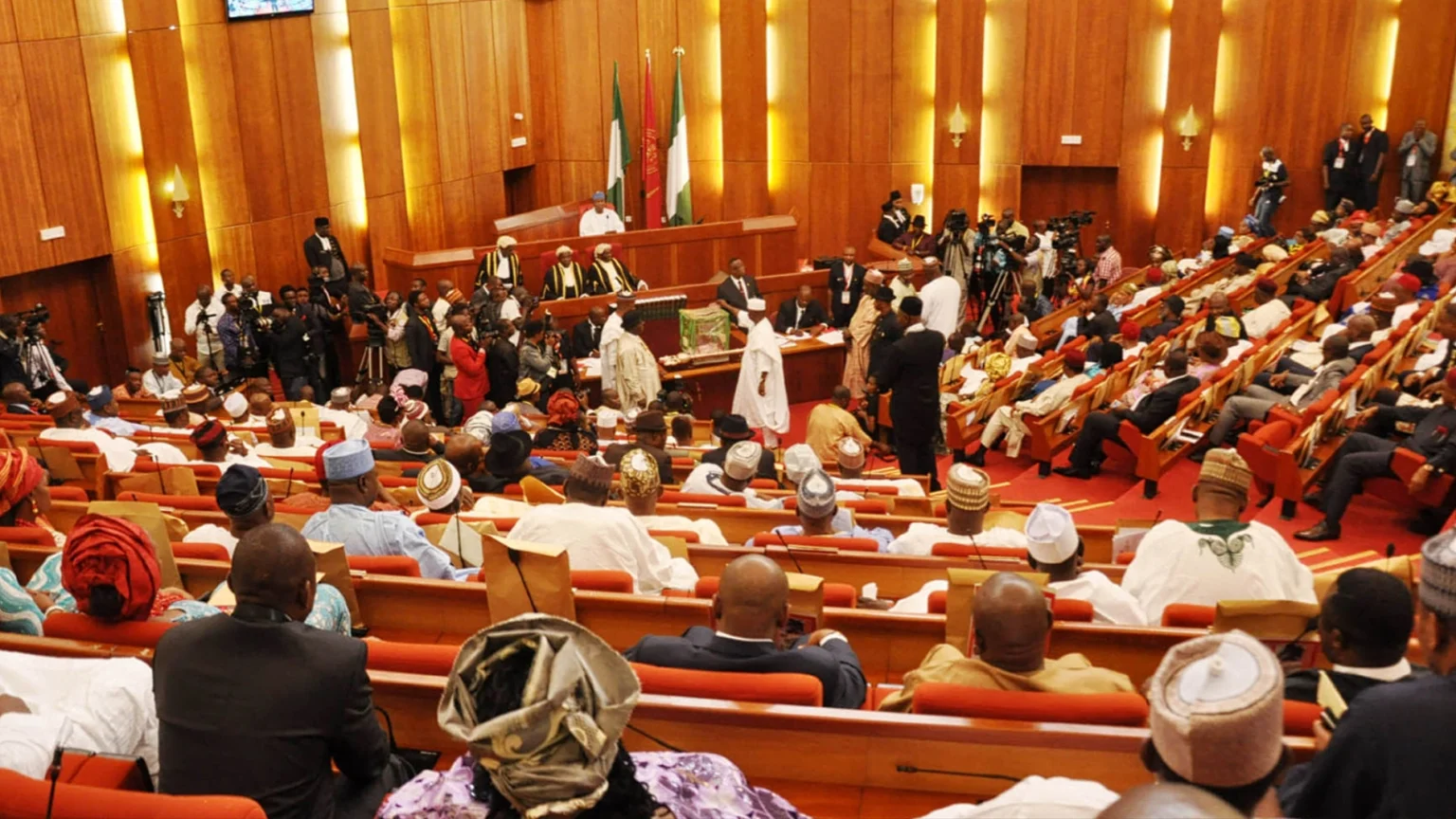
Nigerian Senate yesterday moved to confront growing pressure on the nation’s judiciary with far-reaching legislative proposals.
The proposals aim to expand the capacity of two of the country’s most critical courts.
The upper chamber is considering amendments that would increase the number of Justices of the Court of Appeal from 70 to 110, and expand the Federal High Court from 70 to 90 judges, in what lawmakers describe as an urgent response to an increasingly overburdened justice system.
The proposals, contained in two separate bills sponsored by the Senate Leader, Senator Opeyemi Bamidele, scaled second reading during plenary with unanimous support, marking a rare bipartisan agreement on judicial reform.

Leading debate on the Court of Appeal (Amendment) Bill, 2026 (SB. 991), Bamidele painted a picture of a judiciary struggling to keep pace with Nigeria’s expanding legal landscape.
He told colleagues that the Court of Appeal—established under Section 237 of the 1999 Constitution (as amended) as the pivotal link between trial courts and the Supreme Court—was facing a workload that had grown beyond its structural capacity.
The appellate court, which handles appeals from the Federal High Court, State High Courts, National Industrial Court, election tribunals, Sharia Courts of Appeal and Customary Courts, has in recent years become the central battleground for Nigeria’s most consequential disputes.
According to Bamidele, the surge in cases is driven by a combination of population growth, expanding economic activity, rising electoral litigation, constitutional disputes, and increasingly complex commercial transactions.
He warned that without urgent intervention, the delays in appellate justice would deepen, undermining public confidence in the legal system and slowing down the final resolution of critical national disputes.
If passed into law, the bills would increase the Court of Appeal bench to 110 justices, adding 40 new judicial officers, while the Federal High Court would receive an additional 20 judges, bringing its strength to 90.
MEANWHILE, the Federal High Court will commence its 2026 yearly vacation across all its divisions from July 27 to September 11, 2026, with special vacation courts designated in four key judicial divisions to hear urgent and time-sensitive matters during the recess.
This was disclosed in a statement yesterday by the Director of Information of the Federal High Court, Dr Catherine Oby Christopher, on behalf of the Chief Judge, Hon. Justice John Terhemba Tsoho.
The statement said the yearly break was approved pursuant to Order 46, Rule 4(d) of the Federal High Court (Civil Procedure) Rules, 2019. It added that despite the vacation, judicial services would continue for cases requiring immediate attention through designated vacation courts in Abuja, Lagos, Port Harcourt and Enugu.
-

 Metro22 hours ago
Govt Bans ‘After-Party’ At Weddings
-
African News22 hours ago
Chad moves to withdraw from ICC over alleged bias against Africa
-
News22 hours ago
20th Funso Williams memorial: Bode George, Doherty renew call for truth, justice
-
Business22 hours ago
‘The Odyssey’ soars to another dominant weekend at box office
-
News22 hours ago
BREAKING: Kidnappers demand N200m to free abducted Kebbi High Court Judge
-
Politics22 hours ago
Osun governorship poll can’t be rigged – Gov. Adeleke
-
Metro13 hours ago
Woman cuts off boyfriend’s private part in Kano hotel
-
Politics5 hours ago
Fubara has corrected his mistakes – Wike