News
Kidnap fears shut Nigerian schools as abductions top 2,400 in 12 years

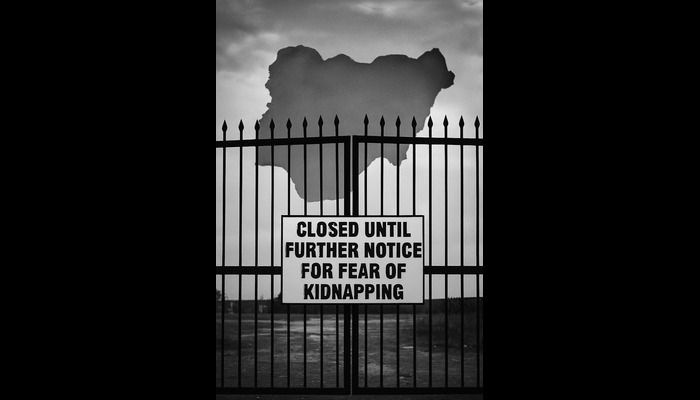
Rising fears of child abductions have forced several schools to suspend academic activities, triggering panic among parents and guardians.
Last week, the Edo State government temporarily shut down three secondary schools in Akoko-Edo Local Government Area after a Department of State Services (DSS) intelligence report warned of a planned mass abduction of schoolchildren.
Similarly, panic swept through Minna recently after speculation spread that armed bandits on motorcycles were moving toward the state capital, which forced schools to shut down, with parents abandoning workplaces to retrieve their children.
Busayo Aderounmu, a senior lecturer at Covenant University, Ota, described the situation as very worrisome.

“Virtually everywhere is unsafe, and you can’t predict the next target. Insecurity in the country will increase the number of out-of-school children and make the Sustainable Development Goals (SDGs) unachievable, especially SDG 4.
“The issue of abduction of school children will lead to absenteeism, reduce academic performance, increase the cost of education, and cause psychological trauma for both students and children,” she said.
Aderounmu emphasised that the situation requires urgent attention and intervention of both government and individuals if the country aims to build the future education and Nigerian children, because no parent will want their children to be kidnapped.
Jessica Osuere, CEO at RubiesHub Educational Services, narrated a story of a woman who said she can’t allow her children to go to school because she is scared.
Osuere said, “When parents are scared to release their children to go to school, are we not already a conquered nation? Has Boko Haram (education is forbidden) not won?
“The recurring abduction of schoolchildren and the closure of schools due to insecurity pose a serious threat to the future of education in Nigeria. Schools are meant to be safe spaces for learning, growth, and development, but when children, parents, and teachers live in constant fear, education becomes disrupted.”
She noted that some parents may choose to keep their children at home, while some children who have experienced such traumatic events may struggle to concentrate and learn effectively.
“This situation increases school absenteeism, dropout rates, and learning losses, particularly among already vulnerable children,” she said.
According to the Armed Conflict Location and Event Data (ACLED), Nigeria recorded 26 major school attacks between April 2014 and May 2026, with at least 2,416 students abducted.
Gift Osikoya, a teacher, said the rising cases of abduction and insecurity around schools pose a serious threat to the future of education in Nigeria. “When parents no longer feel confident that their children are safe in school, school attendance may decline, leading to increased absenteeism, dropouts, and a growing number of out-of-school children.
“Frequent school closures also disrupt academic activities, affect pupils’ learning outcomes, and widen educational inequalities, especially for children in vulnerable communities. Beyond academics, many children may develop fear, anxiety, and trauma, which can negatively affect their emotional and psychological development,” she said.
Osikoya expressed concerns that if this trend continues, Nigeria risks producing a generation with learning gaps, reduced human capital, and limited opportunities for social and economic advancement.
“Education thrives in a safe and secure environment; therefore, government, security agencies, school owners, communities, and parents must work together to strengthen school security and restore public confidence in the education system,” she noted.
Ayodeji Ajibade, a senior lecturer at Babcock University, said that it is highly unfortunate that the extent of fear that parents now entertain.
“Some have resulted in homeschooling, while others just drop their kids off at school in faith that they will be available to be picked up after closing.
“Our government appears to be clueless, but we all know they are only politicking with the lives of Nigerians,” he said.
Ibikunle Ganiyu, senior lecturer at Lagos State University, emphasised that there can be no success without safety, and when security is politicised, Nigeria’s future becomes an illusion.
“When schools shut down, and parents take their children home, they learn that ‘school is not safe’, ‘life is negotiable’ and ‘dreams can be kidnapped’. That’s a psychological trauma that outlasts any syllabus.
“Insecurity doesn’t hit all schools equally. Ivy League private schools in metropolitan areas that can afford fences, sophisticated guards, CCTV, and monitored school buses will be safer than rural public schools, hence creating a two-tier future: children of the wealthy learn without fear, children of the poor learn in fear or not at all, breeding learning inequality,” he said.
Not less than 603 students and teachers have been kidnapped in seven mass abductions across schools in Nigeria between March 2024 and May 2026 under President Bola Tinubu, despite the N145 billion Safe Schools Initiative to protect pupils from attacks.
In May 2026 alone, gunmen abducted 42 students in Borno State, 39 students and seven teachers in Oyo State, with two people already reported dead and the remaining abductees still in captivity.
When gunmen attacked the Government Girls Secondary School in Chibok on the night of April 14, 2014, and kidnapped over 276 students, they set off a crisis that would come to define a generation of Nigerian students. More than a decade later, the attacks have not stopped.
Save the Children report, in November 2025, indicates that at least 10 school kidnappings had taken place across Nigeria in less than two years, affecting about 670 children.
A total of 303 schoolchildren and 12 teachers were abducted by gunmen during an attack on St. Mary’s Catholic School in Niger State, that same month.
However, the period between 2020 and 2021 represents the most intense wave of mass abductions in Nigeria’s history. Over 300 students were taken from the Government Science Secondary School in Kankara, Katsina State, in December 2020. In February 2021, the vicious cycle continued with the abduction of 27 students from Government Science College in Kagara, Niger State.
In the same month, gunmen abducted over 300 girls from Government Girls Secondary School in Jangebe, Zamfara State.
Nubi Achebo, director of academic planning at Nigerian University of Technology and Management (NUTM), said the way forward is that there must be security for schoolchildren and the populace.
“The government must identify schools in high-risk corridors and prioritise them. The Safe Schools Initiative and NSCDC Safe Schools Corps is already doing this in some states.
“Besides, there must be perimeter fencing, controlled gates, lighting, panic buttons linked to local police/NSCDC. Community vigilantes and NSCDC officers stationed at schools, not just police far away,” he said. (BusinessDay)
-

 News18 hours ago
FACT CHECK: Is Uganda Govt Right About Nationality Of Nigeria’s First Ebola Patient?
-
 News16 hours ago
Hardship: Nationwide labour action looms as talks deadlock
-
Politics23 hours ago
2027: El-Rufai betrayed us – Ex-Chief of Staff
-
News24 hours ago
Ebola: UN expresses confidence in Nigeria’s containment efforts
-
News18 hours ago
Bandits kill teacher, two others in Sokoto ambush
-
Politics24 hours ago
Sowore claps back after Senator Ajibola called him ‘skit maker’
-
Sports24 hours ago
Maradona doctor was made ‘scapegoat’ for his death, court told
-
Politics24 hours ago
How Tinubu, Matawalle Returned 8 Aggrieved Zamfara Lawmakers To APC