News
Death Of A General: The Untold Story

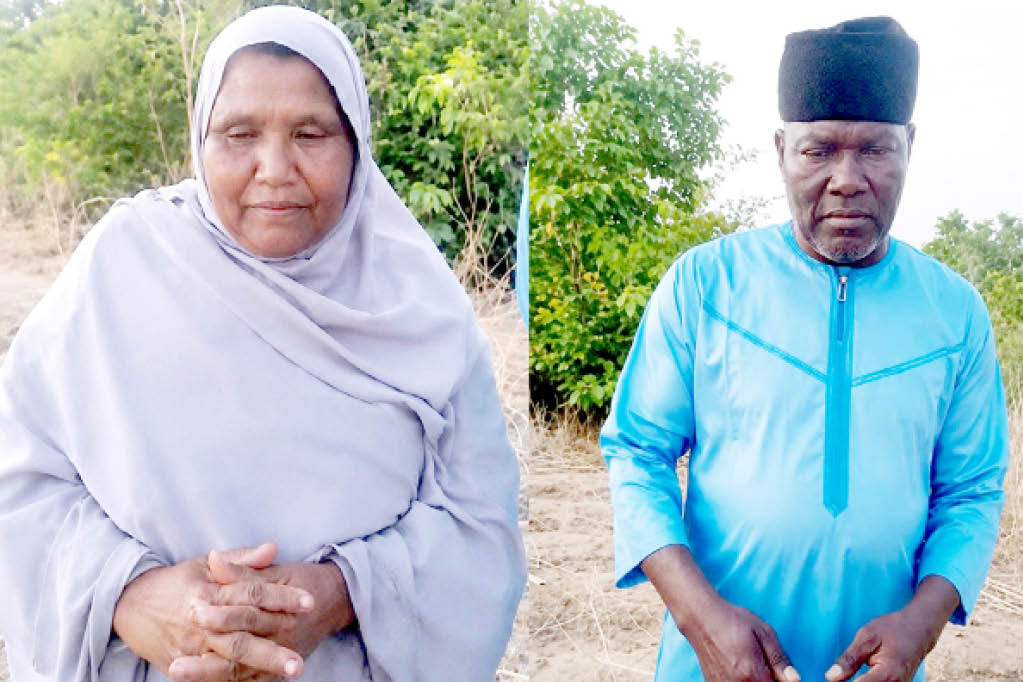
Fresh facts have emerged on the harrowing experiences endured by the former Director of Defence Information, Major General Rabe Abubakar (rtd), and his wife, Amina, while in the bush following their abduction by bandits in Katsina State.
There have been contradictory accounts regarding the circumstances surrounding their abduction, what happened to them while in captivity, how General Rabe died, and how his wife was rescued.
The wife, who survived gunshot wounds, has yet to grant an official interview to give a vivid account of their ordeal in captivity.

She regained her freedom shortly after the death of her husband.
The death of General Rabe sparked widespread condemnation from millions of Nigerians, even as the federal and Katsina State governments, as well as the military high command, struggled to keep Nigerians updated on what they were doing to address the situation.
Until Thursday, June 18, 2026, when she was transferred to Abuja for further medical attention, Weekend Trust gathered that the General’s widow, Hajiya Amina, had been receiving treatment at the Federal Medical Centre (FMC), Katsina.
It was learnt that the section of the hospital where she was attended to while in Katsina,was highly restricted, as only her doctors, nurses, immediate family members, close acquaintances and top government officials had access to her.
However, two credible sources who had access to her said that, after initial treatment and regaining some strength, she gave them an account of what happened to her and her late husband while in the hands of their abductors.
The two sources, who separately spoke in confidence because they were not authorised to speak on the matter, said that, based on what she told them, Hajiya Amina was extremely lucky to be alive.
‘Troops picked Gen Rabe’s widow after bandits dumped her’
One of those who spoke to Weekend Trust, said Hajiya Amina told them that she had earlier given up any chance of survival because of all that she passed through, including the loss of blood from the gunshot wound she sustained.
The source said: “She told us that shortly after the death of her husband, the bandits who held them hostage became extremely jittery and agitated.
“They soon brought their motorcycles and made emergency preparations to flee. They mounted her on one of the motorcycles and fled the location where they had been holding her and her husband in a convoy. From all indications, they were more interested in her than the other captives because they did not make any effort to evacuate their other victims.
“According to her, while the bandits were speeding through the bush on their motorcycles with a view to evading confrontation with troops, they began to hear sounds of gunfire from a distance.
“She told us that the development disoriented the fleeing bandits and they all went in different directions instead of riding together.
“She also told us that the man who was riding with her on his motorcycle soon became frustrated and stopped midway. He forced her to alight from the motorcycle and, probably out of frustration, shot her in the thigh before fleeing the scene.”
The source said the General’s wife bled profusely as she reeled in pain.
“There was no way she could stand or walk because of the bullet wound. It was in that state that someone approached her from a nearby hamlet,” the source recounted, based on what she told them.
He added: “According to Hajiya Amina, the man asked her what had happened and she narrated her ordeal to him. She was in a state of fear, panting and sweating profusely.
“Or are you the wife of General Rabe,” the man asked her and she answered in the affirmative.
“She told us that while the man was trying to assist her, they both heard the sound of gunfire, apparently from approaching military operatives who were combing the area in search of her.
“So, the good Samaritan fled for his life. She told us that within a few minutes, the soldiers arrived at the scene and found her lying in a pool of blood,” the source said.
The source said the scene quickly turned celebratory when the soldiers discovered that the woman was the wife of General Rabe.
He said Hajiya Amina told them that this was when the man who first discovered her returned to the scene.
“We were told that the soldiers only had their rifles, so they asked the man to bring a plank, which they used to convey the General’s wife to their vehicle and thereafter to a hospital in a neighbouring town, where she received first aid before she was moved to the FMC in Katsina,” he said.
It was gathered that the gunshot wound suffered by Hajiya Amina was not life-threatening, as the bullet did not break the bone in her thigh.
“The bullet pierced the flesh of the upper leg between the hip and knee. But then, it could have been fatal because she was bleeding heavily,” the source said.
General Rabe died in Hajia Amina’s hands — Another source
Another source, who also said he spoke with Mrs Rabe, while she was on her hospital bed in Katsina, said the widow told them that her husband died in her arms while in the bush.
“Contrary to what the Katsina State Government said, which was widely circulated in both the social and conventional media, she told us that her husband did not have diabetes or hypertension. He was hale and hearty when they were abducted,” the source said.
According to the source, “She told us that there was a likelihood that he was bitten by a snake because when she noticed that his leg was swollen, she drew the attention of the bandits, who reluctantly told her that he had been bitten by a snake.
“They brought some mashed leaves and applied them to the swollen leg, but there was no improvement as the General’s health deteriorated within a short time.
“She told us that he died in her arms. It was a very difficult moment for her,” the source said.
Weekend Trust had earlier gathered that while General Rabe was alive, the bandits wanted to release his wife, but she declined, insisting that she wanted to regain freedom alongside her husband.
Reacting to General Rabe’s death, the military high command had said it deliberately refrained from public comment on his abduction in deference to rescue efforts by the Armed Forces of Nigeria and other security agencies.
The Director, Defence Information, Samaila Uba, a Brigadier-General, explained that the military high command expended every resource in securing his safe rescue before his death.
Uba described late Rabe as a committed officer who contributed immensely to counter-insurgency operations and professional development of the Armed Forces of Nigeria.
“Maj Gen Abubakar served the nation with distinction and held many appointments, including spokesperson of various military formations as well as spokesman for the Armed Forces of Nigeria as Director Defence Information.
“He made immense contributions to counter-insurgency operations, professional development of the Armed Forces and numerous other commendable and outstanding impacts.
“His commitment to duty and to the unity of Nigeria remains a shining example for all personnel of the Armed forces,” the statement said.
Leaked information on impending offensive on hideout?
A security source confided in Weekend Trust that an investigation was ongoing to unravel how the bandits got to know that there was a plan to invade their enclave with a view to rescuing Mrs Rabe.
“Before the troops were dispatched, the location was carefully mapped and all the coordinates sorted out.
“Of course, we know some of the bandits have access to the internet and information. It remains curious why they attempted to flee the location where they kept the General, his wife and others hostage for days.
“Like in many other operations, there is no way the government will dismiss the possibility of sabotage in this situation. Only time will tell,” the officer said.
How Gen Rabe, wife were abducted
Weekend Trust recalls that General Rabe, his wife and driver were ambushed and abducted on May 30, 2026, along the Marabar Musawa–Kafinsoli Road in Matazu Local Government Area of Katsina State.
Their driver, who escaped with gunshot injuries, was also treated at the FMC, Katsina, and thereafter transferred to a referral hospital outside the state for further treatment.
The couple was held in a forest hideout by bandits for days, and a video later surfaced showing both of them appealing for compliance with the kidnappers’ demands.
The abductors reportedly demanded prisoner releases and other concessions.
Government sources later said their abduction was planned and targeted, with the victims allegedly tracked from Kaduna before the attack.
The Katsina State Government, which confirmed that General Rabe died while still in captivity, said in a statement: “The deceased retired General died a natural death from complications of diabetes and hypertension.”
It also said: “Despite the relentless and concerted efforts of the State Government and various security agencies to secure his safe release, the situation ended in this tragedy.”
The government further described his death as a “tragic loss”.
On the recovery of Mrs Rabe, the Defence Headquarters said on Monday, June 15, that the operation followed intensified search-and-rescue efforts by troops of Operation Fansan Yamma.
A statement signed by the Director of Defence Information, Maj Gen Samaila Uba, said troops made contact with the kidnappers at Tunga Village during sustained offensive operations against criminal elements in the area.
“…In the course of the encounter, the bandits shot Mrs Abubakar before abandoning her and fleeing due to the overwhelming pressure from advancing troops,” the statement said.
“Mrs Abubakar was immediately evacuated and is currently receiving medical attention at a military hospital, where she is responding to treatment,” Uba stated.
“The leadership of the Armed Forces of Nigeria remains committed to ensuring her full recovery and is providing all necessary support to her family during this difficult period,” the statement added.
The military also vowed to sustain operations aimed at apprehending those responsible for the abduction and other criminal activities.
Weekend Trust gathered that General Rabe and his wife were abducted by a ring connected to Kachalla Muhammad Fulani, a notorious bandit kingpin and kidnapper who operates across the North-West and specifically terrorises communities in Matazu, Musawa, Kankia and Charanchi local government areas of Katsina State, as well as parts of Kano State. His criminal network is known for orchestrating mass abductions and demanding huge ransoms.
Killing of Rabe outrageous level of terrorism — Gen Olukolade
Since the incident which shocked not a few Nigerians, there have been reactions with groups and individuals calling on the government to do everything within its power to end the insecurity situation which has spread across the country in different forms.
Speaking, a former Director of Defence Information, Major General Chris Olukolade (rtd), described the death of retired Major General Rabe Abubakar in the custody of bandits as a tragic reflection of the worsening insecurity confronting the country.
Speaking with our correspondent yesterday, Olukolade said the incident demonstrated the “outrageous level of terrorism” that has taken root in Nigeria and called for greater national commitment to tackling insecurity.
“It’s unfortunate indeed,” he said. “This sad development is another clear statement on the extent of the evil that has befallen our country in the form of an outrageous level of terrorism.”
According to him, the circumstances surrounding the death of the retired senior military officer showed the determination of criminal elements and their backers to inflict pain on the country.
“The terrorists and their sponsors have shown that they will go to any extent in demonstrating their beastly and inhuman disposition,” he said.
Olukolade urged both government and citizens to respond with greater resolve, saying the tragedy should serve as a wake-up call for collective action against insecurity.
“This should spur us as a nation to be more concerned and committed to terminating this evil with all our resources,” he said.
“While urging those directly involved in dealing with this problem not to be deterred, we all as a society and government should tackle this insecurity with more collaboration and seriousness.”
The retired General described Abubakar’s death as a painful loss not only to his family and colleagues but also to the nation.
“The loss of Rabe is a very sad dimension to the trauma of our nation’s problem of insecurity,” he said.
Recalling his personal relationship with the deceased, Olukolade said: “Being an officer well known to me, I feel a particular sense of loss of a pleasant subordinate and colleague. I handed over to him as Director of Defence Information when I was retiring.”
He added: “He did not deserve this terrible experience and eventual demise.”
Offering prayers for the late officer, Olukolade said, “May his soul rest in peace and may God comfort the family, colleagues and the nation as a whole.”
Speaking further on the matter, retired Army Generals maintained that the government must be proactive in the fight against insecurity. They also insisted that the fight must be treated as a collective battle which affects everyone and not a particular region. In a press conference in Kaduna on Thursday, the group insisted that terrorism, banditry and kidnapping have become a national challenge affecting every region.
Speaking on behalf of the retired officers, Brig.Gen. Ismaila Abdullahi (rtd) said the insecurity across the country should not be viewed through an ethnic or regional lens.
Those present at the briefing were; Ambassador A. Mohammed Musawa, Air Commodore Yusuf Anas (rtd), Brig.Gen. Maharazu Tsiga (rtd), Ambassador Ibrahim Usman Gafai and Brig.Gen. Abdulkadir Abubakar (rtd).
Brig General Abdullahi lamented that some commentators had continued to attribute Nigeria’s security challenges to the northern region, describing such narratives as divisive and counterproductive.
“These incidents of insecurity have attracted not only condemnation but also taken ethnic colouration, with some commentators blaming the northern region for all the ills of the Nigerian state,” he said.
The officers said the death of General Abubakar was a painful reminder of the deteriorating security situation in the country and the inability of the system to adequately protect citizens.
According to them, the killing of the retired General in captivity was not merely another headline but a reflection of a system struggling to guarantee safety for Nigerians.
They urged governments at all levels to provide prompt support to families of serving and retired security personnel affected by terrorism and kidnapping, while intensifying efforts to secure the release of all Nigerians still in captivity.
‘Attack on a General is attack on the state’
The Chairman of Beacon Security and Intelligence Limited, Kabiru Adamu, said the incident underscored the rising threat of non-state actors.
“The tragic circumstances surrounding the death of retired Major General Rabe Abubakar while in the custody of a bandit commander, Kachallah Mahe Muhamman, is an undeniable blow to the nation,” Adamu said.
According to him, “when a figure of such high military stature is abducted and dies in captivity, in addition to being a loss of a respected officer, it is also a glaring indicator of the brazenness of armed non-state actors and the vulnerabilities within Nigeria’s national security apparatus.”
He noted that in many countries, the killing of a serving or retired military General would be treated as “a direct assault on the sovereignty and authority of the state itself.”
“The response is usually characterised by swift, severe and highly coordinated actions, including the heavy and ruthless deployment of overwhelming force to achieve the total dismantling of the specific group responsible,” he said.
Adamu added that such countries would launch “a massive intelligence surge” aimed at tracking communications, financial flows and logistics networks linked to the perpetrators “from the foot soldiers to the masterminds and financiers of the operation.”
He said authorities would also undertake “a complete systemic audit and internal inquiry” to determine whether there were intelligence failures, security leaks or weaknesses in protection protocols.
“The wider society will see public reaction of unified outrage, leading to immense and immediate pressure on the government to deliver results,” he said.
He added that citizens and civil society groups would view such an incident “not as an isolated crime but as a catastrophic failure of the state’s primary duty of protecting its citizens.”
According to him, there would also be “intense media scrutiny” and “swift legislative action,” with lawmakers summoning security chiefs, demanding strategic reviews and, where necessary, calling for the resignation of officials found negligent.
Drawing lessons for Nigeria, Adamu urged a shift “from reactive sweeps to proactive intelligence,” stressing that “penetrating bandit networks before they execute high-profile abductions is far more effective than post-incident recovery efforts.”
“There must be transparent, independent investigations into the failures that allowed a senior military figure to be targeted, abducted and held captive for weeks,” he said.
He also called for the decentralisation of the country’s security architecture, saying, “This tragedy bolsters the argument for implementing state and community policing models, where local personnel who deeply understand the terrain and language are empowered and equipped to act swiftly.”
Adamu further argued that “an attack on a General is an attack on the flag,” adding that banditry must be treated as a national security threat requiring “a unified political will that sets aside ethnic, regional or political differences to permanently neutralise these criminal enterprises.”
“The beginning point is to evolve a codified counter-banditry strategy,” he said, while also calling for regular national security and defence meetings “to ensure the Commander-in-Chief is in direct control of the security and defence sectors.”
Senior officers who have fallen victims to insecurity
Before the abduction of Major-General Rabe and his wife that led to his eventual death, other top military officers have been victims of the insecurity challenges.
Both serving and retired senior military officers had either fallen victims of terrorism, banditry, kidnapping, among many other criminalities across the country.
On September 3, 2018, while travelling from Abuja to Bauchi State, Mohammed Idris Alkali, a retired Major-General, who was a former Chief of Administration at the Army Headquarters, was declared missing. He was attacked during a violent protest in Jos South Local Government Area of Plateau State.
Following weeks of military search operations, his remains were recovered from an abandoned well in October 2018. Several suspects were later arrested.
Former Chief of Defence Staff, Air Chief Marshal Alex Badeh (rtd.), was shot dead by gunmen on December 18, 2018, along the Abuja–Keffi Expressway while returning from his farm. He was travelling with his driver when the attackers struck.
Similarly, Muhammad Maisaka, a retired Air Vice Marshal, was killed alongside his grandchild when gunmen invaded his residence in Rigasa, Kaduna State, on November 8, 2021. He was the former Director of Medical Training and Operations at Defence Headquarters.
Bandits abducted retired Colonel Rabi’u Garba Yandoto and his two children on the Gusau–Tsafe Road in Zamfara State on January 1, 2023.
The kidnappers initially demanded N50 million but reportedly accepted about N10 million after negotiations. The victims were released on January 10, 2023.
Retired Major-General Richard C. Duru was kidnapped in Owerri, Imo State, in September 2023. His vehicle was stolen during the attack.
Despite reports that ransom was paid, he was later said to have been killed by his abductors. Police subsequently arrested suspects linked to the crime.
Retired Brigadier-General Uwem Harold Udokwere was stabbed to death by armed robbers who invaded his residence in an estate in Lokogoma area of Abuja, on June 22, 2024. The police arrested four suspects who allegedly confessed to the killing.
Former NYSC Director-General, Brigadier General Maharazu Tsiga (retd.), was abducted on February 5, 2025, in Tsiga, Katsina State, alongside nine other residents. He regained freedom on April 3, 2025, after spending 56 days in captivity.
In January 2026, retired Colonel Joseph Ajanaku was abducted from his residence in Plateau State.
His kidnappers reportedly demanded N200 million and threatened to kill him. However, security forces rescued him the same day during an operation in Bassa Local Government Area.
Boko Haram terrorists killed the Brigade Commander of the 29 Task Force Brigade in Benisheikh, Borno State, Brigadier General Oseni Braimah and 17 soldiers during an attack that occurred on the night of April 9, 2026.
The insurgents reportedly invaded the three military formations with heavy gunfire and explosives, killing at least 18 soldiers and officers, including the General, and leaving several others injured. (Daily trust)
-

 News24 hours ago
University of Ibadan confirms abduction of female student
-
News24 hours ago
How UK probe destroyed my reputation — Alison-Madueke
-
News24 hours ago
Terrorism: Bandit kingpin’s mum, sister bag 40-year jail terms
-
News11 hours ago
199 security operatives reported killed as terrorists go on rampage
-
African News11 hours ago
Xenophobia: Hundreds Of Nigerians Stranded In South Africa
-
Business10 hours ago
Football viewing centres struggle for survival as streaming platforms take over
-
News22 hours ago
Repentant bandits kill district head’s grandson, abduct nine in Kaduna
-
Sports24 hours ago
TV host quits after she falsely reported Messi’s father died during World Cup