News
How We Grew Budget From N700bn To N4.3trn In 7 Years – Sanwo-Olu

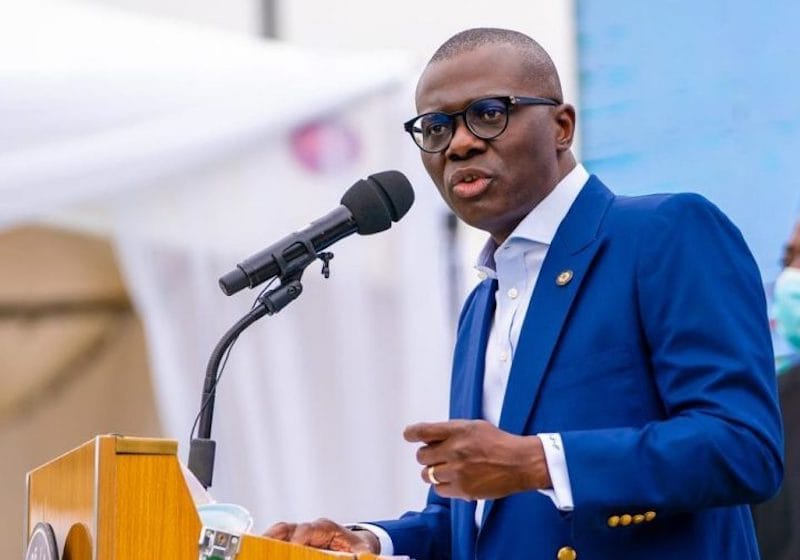
Lagos State Governor, Babajide Sanwo-Olu has disclosed that his administration was able to grow the budget from over N700billion in 2019 to N4.4trillion in 2026, saying the budget performance has improved year in, year out.
The governor who reflected on his stewardship of the state stated that Lagos occupies a unique position in Nigeria and Africa, describing it as a sub-national economy carrying the weight and responsibilities of a sovereign nation.
Sanwo-Olu spoke at the weekend while delivering the keynote address at the Geo-Economic Optimization Summit 2026 organised by the Citadel School of Government founded by the serving Overseer of the Citadel Global Community Church, Pastor Tunde Bakare.
Speaking on the theme, “From South-West Nigeria to the Globe: Lagos State as a Geoeconomic Hub,” the governor said Lagos contributes roughly one-third of Nigeria’s Gross Domestic Product (GDP) and has emerged as Africa’s second-largest metropolitan economy after Cairo, Egypt.

“Lagos is a sub-national economy that carries the weight of a nation. We contribute roughly a third of Nigeria’s Gross Domestic Product and we are Africa’s second-largest metropolitan economy behind only Cairo,” he said.
He noted that Lagos’ economic strength is built on a diversified base, with finance, technology, logistics, trade, creative industries and the blue economy serving as key drivers of growth.
The governor argued that Lagos’ strategic location on the Atlantic coast has historically positioned it as Nigeria’s gateway to global commerce, adding that the state continues to play a pivotal role in regional and continental trade.
Sanwo-Olu stressed that Lagos’ development cannot be separated from the fortunes of the South-West region, reiterating the state’s readiness to work closely with neighbouring states to promote regional economic integration.
He pointed to Lagos’ participation in the Odu’a Group, the Development Agenda for Western Nigeria (DAWN) Commission and the South-West Development Commission as evidence of its commitment to collective growth.
According to him, “when Lagos works, Nigeria works the better for it,” noting that the state carries responsibilities that extend far beyond its territorial boundaries.
The governor highlighted several landmark projects that he said have strengthened Lagos’ status as a geoeconomic hub. These include the Lekki Deep Sea Port, the Dangote Refinery, the Lekki Free Zone, the Blue and Red Rail Lines, and ongoing investments in road infrastructure and power reforms.
Despite the achievements, the governor acknowledged that Lagos continues to face significant challenges arising from rapid urbanisation and population growth.
He disclosed that the state’s population has grown from less than one million people in 1960 to over 24 million today, placing enormous pressure on housing, transportation and public infrastructure despite the growing budgets.
Sanwo-Olu renewed his call for a constitutional special status for Lagos, arguing that the state deserves additional support because of its strategic importance to the national economy and the heavy burden it bears as home to millions of Nigerians from every part of the country.
“We continue to press the case for a special status designation for Lagos. We believe Lagos deserves that recognition and we will continue to seek a constitutional provision to guarantee it,” he stated.
Pastor Bakare described Lagos State as a model for other states in Nigeria, saying its development trajectory offers valuable lessons on how strategic leadership, institutional continuity and economic planning can transform a sub-national entity into a globally relevant economic hub.
Bakare said Lagos provides a compelling framework for national reflection and dialogue on governance, economic growth and development.
According to him, the state’s success demonstrates what is possible when leadership is guided by long-term vision, policy consistency and strategic investments.
“Lagos State provides the context for our engagement. Lagos State is a pointer to what works—a model of what could be emulated, a demonstration of what is possible and what could be improved upon,” Bakare said.
“As Nigeria’s most economically viable state and a model of progressive continuity in development planning and execution throughout the Fourth Republic, Lagos State offers a compelling basis for national reflection and dialogue,” he stated.(Daily trust)
-

 African News20 hours ago
Meet Ngizwe Mchunu the former radio star, leading the movement to expel immigrants from South Africa
-
Business3 hours ago
Dangote imported 1.46bn litres blended gasoline – NMDPRA
-
News22 hours ago
Bello Turji’s fighters undergoing weapons training in Sokoto – Report
-
Business3 hours ago
-
 Opinion3 hours ago
N2.42tn VAT revenue: Tax reforms begin to yield results
-
News3 hours ago
Ex-OGTV broadcaster, guard found dead inside Ogun apartment
-
Opinion22 hours ago
Pray, is insecurity insurmountable?
-
News3 hours ago
Retirement bombshell: Five DCGs to lead 1,516 officers out of Customs