Business
FLNG Boom: Floating LNG Capacity Set to Triple by 2030

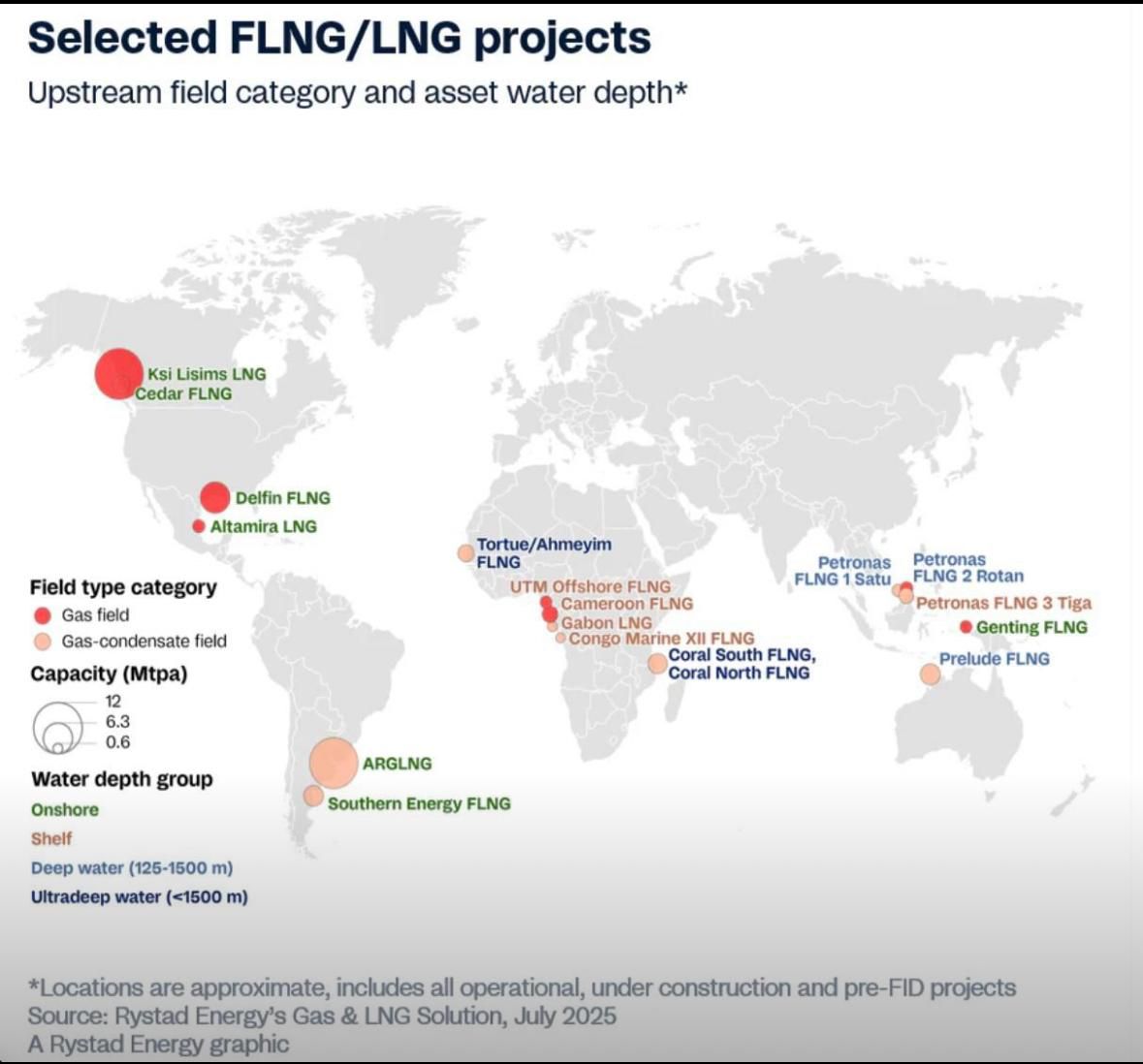
Floating LNG terminals (FLNG) are gaining momentum in the global LNG market, and according to research by Rystad Energy, their capacity is expected to triple by 2030. Analysts note that FLNG units can be delivered much faster than onshore liquefaction plants, enabling more flexible project execution.
On average, new FLNG projects are completed in around three years, compared to roughly 4.5 years (adjusted for capacity) for existing onshore facilities. For FLNG vessels currently under construction, the average forecasted build time is even shorter — just 2.85 years.
This acceleration is a key factor behind FLNG’s growing appeal, as developers seek to minimise risks and speed up returns on investment. Additionally, in the event of a project shutdown, an FLNG vessel can be relocated or sold, showcasing the mobility and adaptability of FLNG assets.
-

 News12 hours ago
Ebola: Don’t panic – FG tells Nigerians
-
News12 hours ago
Italy rejects 2,220 Nigerians seeking asylum
-
 Politics13 hours ago
Imam Removed After Campaigning For Tinubu At Bauchi Mosque
-
News12 hours ago
Gas leak: Ogun schools shut, over 100 pupils hospitalised
-
Sports12 hours ago
Como Humiliates Manchester United 4-1, Osimhen Scores In Galatasaray UCL Win
-
News12 hours ago
State Police: Ekiti, Kebbi endorse bill, tally hits 15
-
Business12 hours ago
Guinness Nigeria profit jumps 53% to N40.69bn
-
Business12 hours ago
Nigerian billionaire Aliko Dangote eyes Egypt oil refining in $15 billion plan