Opinion
Rebuilding the Nigerian church for national renewal

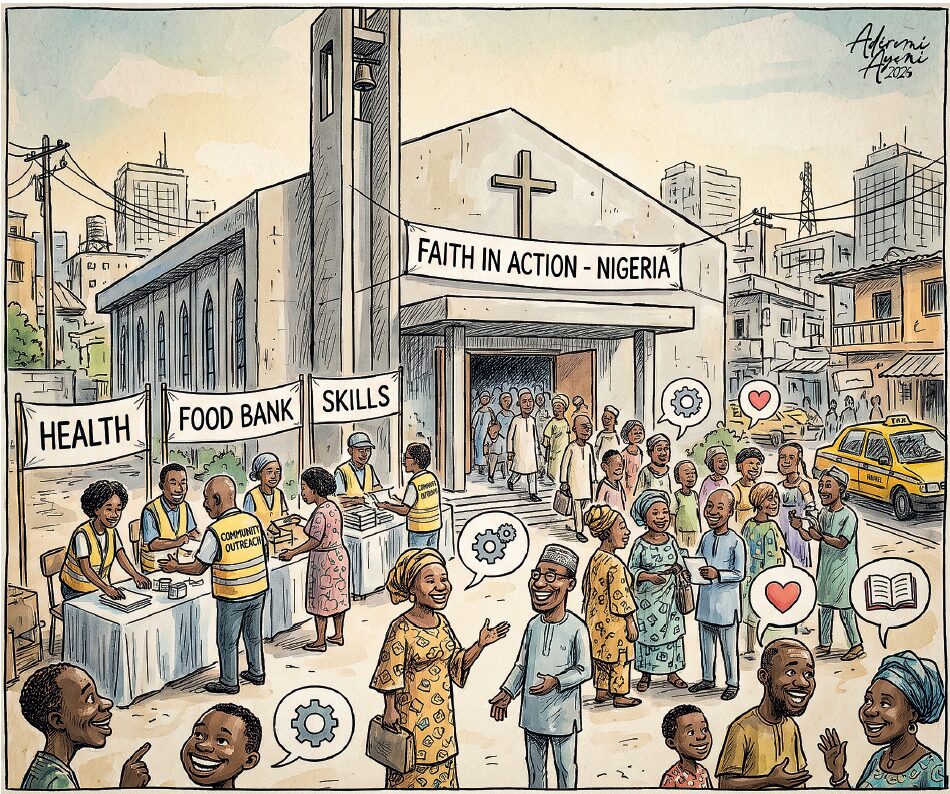
However, despite religion’s enormous demographic presence and moral influence, the Nigerian Church finds itself at a moment of profound questioning. In recent years, widespread insecurity, the displacement of Christian communities, attacks on churches, killings, kidnappings, and the suffering of countless Christians have generated difficult questions about the Church’s role in public life. Many believers increasingly ask: Who speaks for the Nigerian Church? Why does such a large and influential community often appear fragmented in moments of national crisis? Why does the Church seem more capable of mobilising crowds than establishing consequential institutions?
The challenge facing Nigerian Christianity is now beyond the reality of insecurity and persecution. The church is now confronted with the challenges of translating moral concern into coordinated institutional action. Church leaders, denominations, and Christian organisations frequently issue statements to condemn violence of any kind. But the broader response, in reality, often remains fragmented, reactive, and uneven. The result is a troubling contradiction: everyone appears to be speaking, yet most ordinary Christians feel that no one is truly speaking for them.
Throughout history, Christianity has periodically faced moments when it needed to recover its bearings and rediscover its public vocation. One of the most important intellectual traditions that has helped Christianity do this is the tradition of Christian Humanism.

Every human being bears the image of God. Human dignity is not conferred by ethnicity, class, religion, political affiliation, or social status. It is intrinsic to the human person. Christian Humanism rests upon a profound theological conviction, that in Jesus Christ, God took on human flesh and thereby affirmed the dignity, worth, and sacred value of human life.
This understanding shaped some of Christianity’s most significant contributions to civilization. It inspired the founding of schools, universities, hospitals, charitable institutions, social reform movements, and campaigns for justice. It encouraged Christians not merely to save souls but also to build institutions capable of serving humanity. It informs why Christian schools are usually opened to ALL persons irrespective of religious orientation.
At its best, Christian Humanism has reminded the Church that faithfulness is not measured solely by the size of congregations or the success of religious events. Faithfulness is also measured by the Church’s capacity to defend human dignity, promote justice, strengthen communities, and build institutions that outlast individual leaders. This reminder is urgently needed in contemporary Nigeria.
For decades, much of Nigerian Christianity has become increasingly event driven. Churches have become highly effective at organising huge conferences, crusades, big conventions, prayer gatherings, retreats, and revival meetings. These events often attract enormous participation and generate considerable enthusiasm. Yet once the event concludes, little institutional capacity remains.
Event-based Christianity measures success by attendance, visibility, emotional intensity, and immediate impact. Institutional Christianity is different. What structures have been built? What problems have been solved? What systems have been strengthened or established? What legacy remains when the crowds disperse? The future relevance of the Nigerian Church may depend upon its willingness to make the transition from an event culture to an institution-building culture.
The Church cannot effectively advocate for suffering communities without the capacity to collect, verify, analyse, and communicate credible data. In an age shaped by evidence and policy, moral outrage alone is insufficient. The Church must build professional systems for documenting violence, monitoring trends, providing early warning, and producing research that informs public debate and influences decision-makers.
Across Nigeria, churches often respond to crises independently, duplicating efforts and stretching limited resources. A coordinated structure for relief, trauma care, legal support, rehabilitation, and community rebuilding would serve victims more effectively while demonstrating the institutional maturity needed for national leadership.
In times of national tragedy, fragmented messaging weakens credibility. The Church must be able to speak quickly, clearly, and collectively, presenting a unified Christian witness whenever communities face attack or significant threats.
Leadership development must extend beyond preaching and administration. Nigeria needs Christians equipped to serve as policymakers, journalists, lawyers, researchers, educators, peacebuilders, and public intellectuals, engaging the challenges of governance, conflict, human rights, public policy, and national development.
Finally, the Church must strengthen governance, accountability, succession planning, impact measurement, and long-term strategic thinking, moving from episodic activity to sustained institutional influence.
Taken together, these reforms represent more than administrative improvements. They embody the conviction that Christian faith is not merely a private spiritual experience but also a public responsibility. They reflect the belief that defending human dignity requires prayer, certainly; it also requires institutions capable of translating compassion into action and conviction into social transformation.
The future and impact of Christianity in Nigeria will not be determined solely by the number of churches, the size of congregations, or the scale of religious gatherings. It will depend increasingly on whether the Church can build institutions strong enough to protect the vulnerable, speak credibly to power, nurture a new generation of public leaders, and contribute meaningfully to peace and national renewal.
•Written By Richard Ikiebe
-

 News19 hours ago
UK universities withdraw admission offers to Nigerians over visa crackdown
-
News19 hours ago
Benue: Suspected herdsmen kill nine in fresh Ukum attacks
-
News19 hours ago
Why kidnappers target NYSC members — Security experts
-
Politics19 hours ago
2027: Protest, relief as INEC releases final candidates’ list
-
Politics19 hours ago
2027: Opposition, APC clash over campaign funding
-
World News19 hours ago
US gunman shoots dead 7 relatives, family friend
-
Opinion19 hours ago
Did Obi actually win in 2023?
-
Business19 hours ago
Fitch revises Nigeria’s outlook to positive, affirms ‘B’ rating