Metro
How Nigerian Women Trade Fertility Eggs For Wigs, Food

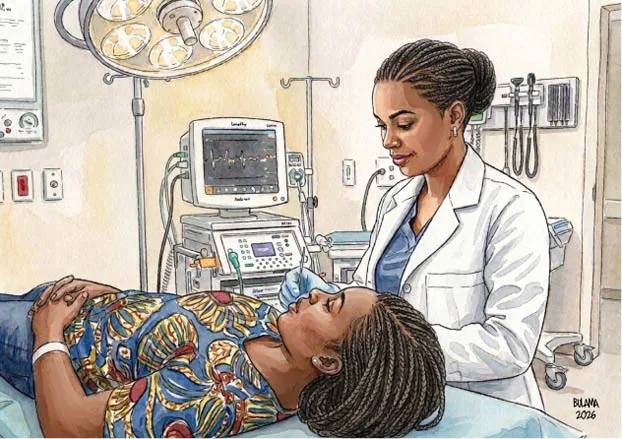
Across Nigeria, an increasing number of young women are making a decision that is capable of altering their future; exchanging their eggs for money.
Weekend Trust gathered that fertility clinics have quietly become a destination for young women, especially students. Some who spoke to our correspondent claimed they sold their eggs to pay tuition fees, just as they are others who embarked on it to buy wigs, clothes among others. There are also among them single mothers who said they sell their eggs to feed their children.
What was once viewed primarily as an act of reproductive altruism is, for many, becoming an economic lifeline. Behind the promise of payments ranging from tens of thousands to hundreds of thousands of naira lies a little-discussed industry where financial desperation, medical intervention and ethical questions increasingly intersect.
The practice, popularly known as “egg selling,” involves stimulating a woman’s ovaries with fertility drugs before retrieving multiple eggs for use in assisted reproduction. Fertility specialists maintain that the procedure is generally safe when carried out under proper medical supervision. However, like any medical intervention, it carries recognised risks, including ovarian hyperstimulation syndrome (OHSS), bleeding and infection, making thorough counselling, informed consent and post-procedure monitoring essential.

Yet interviews conducted by Weekend Trust with egg sellers, women considering the procedure, fertility specialists, legal practitioners, psychologists and gender advocates suggest that many young women embark on the enterprise with little understanding of the potential complications. While some described the experience as a worthwhile means of earning income and helping families struggling with infertility, others recounted severe physical complications, emotional distress and unanswered questions about the information they received before agreeing to participate.
The issue first came to this newspaper’s attention during a conversation at a salon in Abuja, where discussions about egg selling and surrogacy had become surprisingly commonplace. Salon owner Hussaina Yusuf said economic hardship has made both options increasingly attractive to young women.
Those conversations led to interviews that reveal an industry operating largely out of public view, one where the pursuit of parenthood for some increasingly depends on the economic vulnerability of others.
“I sold my eggs to pay my school fees” — A seller’s story
For many young women participating in egg-selling programmes, financial need remains a major motivating factor. One seller, who spoke about her experience, said she first learned about egg selling through a friend and eventually decided to participate to raise money for her education.
“I needed money to pay my school tuition fees, and that was what prompted me to do it,” she said.
According to her, the screening process begins shortly after the onset of menstruation. Prospective sellers are required to undergo a series of medical tests, including blood tests to determine their genotype, blood group, and overall health status.
She explained that many fertility centres prefer sellers with the AA genotype, while some hospitals have specific blood group requirements, often favouring O+ donors. Potential sellers also undergo ultrasound scans to determine whether they have a sufficient number of eggs available for retrieval.
“If the doctors discover that you do not have enough eggs or if your test results do not meet their requirements, you may be disqualified from the programme,” she said.
Once approved, sellers begin a course of fertility injections designed to stimulate egg production. The injections, administered in the abdomen, are typically taken for between 10 and 14 days, depending on how the ovaries respond to treatment.
Throughout the process, doctors conduct regular scans, usually every two or three days, to monitor egg development. According to the seller, women whose eggs fail to develop adequately may be removed from the programme before completion.
As the treatment progresses, sellers receive what is known as a “trigger injection,” which prepares the eggs for retrieval. The following day is usually designated as a rest period, during which participants are instructed not to eat or drink after a specified time.
The egg retrieval procedure itself is carried out under anaesthesia.
“On the day of collection, they put you to sleep so you do not feel any pain. The procedure takes about 30 to 45 minutes,” she said.
While she described the overall process as manageable, she acknowledged experiencing some discomfort after the procedure.
“After I woke up, I felt a little pain in my private area. The doctors gave me medications, including suppositories and oral drugs. The pain felt similar to menstrual cramps,” she recalled.
The seller said she has undergone the procedure twice, once last year and again in April this year. For each cycle, she received approximately N300,000 (about $210) following successful egg retrieval.
Despite still receiving support from her parents, she said she chose not to rely entirely on them because they also have other children to care for.
“I wanted to contribute towards my own education,” she said.
Although she does not currently plan to sell her eggs again, she noted that participants are generally advised not to exceed six egg-selling cycles during their lifetime.
Reflecting on her experience, she said she has no regrets about her decision, saying she considers her action as a service to women struggling to naturally conceive.
“Sometimes I think about them and wonder how they are doing because it is natural to be curious. However, I do not regret my decision. I sold my eggs to help someone achieve their dream of becoming a parent, and that gives me peace of mind,” she said.
‘Girls sell egg cell for N120,000 in Plateau’
Recently, the Plateau State Gender and Equal Opportunity Commission (PLASGEOC) lamented that young women in the state were selling their egg cells for N120, 000.
The commission said the practice was rampant among women including tertiary students, in the state. Nene Dung, Head of Information Unit at the Commission, disclosed this on a Hausa programme “Mutattauna” on Unity FM, Jos.
According to Mrs Dung, the commission discovered a fertility hospital where women go to sell their ova (egg cell) , describing the practice as exploitative and gender-based violence.
“People who want children go to this facility and are charged higher fees. Young girls now sell their ova to buy expensive phones or fund their lifestyles. If they remove your ovum, they give you either N120,000 or N150,000,” she said.
The commission said they had commenced awareness campaign against the practice in communities and schools to ensure women are protected.
“We are creating awareness on the need for people to stop that. We going to meet the Vice Chancellor of the University of Jos on the issue. We have already talked to the Rector of Polytechnic Barkin Ladi, College of Education Gindiri and University of Education Pankshin.
“We told students the danger of such practice and warned them to stop selling their Ova. The problem is rampant not only in communities but in schools, “ she added.
She called on parents and other stakeholders to monitor the movement of their female children, blaming poor upbringing for rising cases of Sexual and Gender-Based Violence in various communities.
She urged parents to be responsible for their children, warning that whoever found guilty would be made to face the consequences.
“I received N60,000 per donation”
Still recounting their experiences, 29-year-old “Jennifer John” (not her real name), a mother of three from Plateau State who now resides in Karu, Abuja, egg selling was not a career choice but a survival strategy.
Jennifer said worsening economic conditions pushed her into an industry she knew little about.
“I sold my eggs two times three years ago,” she said. “At the time, the payment was not much. I received N60,000 (about $40) for each donation.”
“When I went to a medical centre in Abuja, I met many young girls there,” she added. “Most of the girls they prefer are between 20 and 28 years of age.”
She said prospective participants are required to undergo extensive medical screening before they can be accepted into the programme.
“If they find an infection during the tests, they will give you medication and ask you to come back after treatment,” she explained.
Jennifer explained that payment is made in stages throughout the process. In her case, she received N20,000 upon admission into the programme, another N20,000 during treatment, and N20,000 after the egg retrieval procedure was completed.
Although doctors repeatedly assured participants that the process was safe, she said women were often advised against repeated procedures.
“Most times, after doing the procedure two or three times, they advise you to stop, especially if you are young and have not had children yet, so that it does not affect your future plans of having a family,” she said.
She further disclosed that after participating twice, a nurse suggested she consider becoming a surrogate mother.
“Usually, egg selling and surrogacy go hand in hand,” she said. “After selling your eggs two times, they may advise you to become a surrogate if you are willing.”
One of the first things she bought with her earnings was a mattress.
“I was sleeping on the floor before then,” she said. “The money helped me buy a mattress and take care of some needs at home.”
For Jemimah John, a hairstylist and single mother of two daughters, the decision remains under consideration.
“Last year, things became very difficult for me,” she said. “I don’t have a shop. I only survive when clients call me to make their hair.”
“Sometimes I had no one to ask for help, and there were days when my children and I went to bed hungry,” she recalled.
She said following then hardship she was experiencing, Jemimah visited a fertility facility to inquire about becoming an egg seller.
However, she said she was told that her age could reduce her chances of being selected.
“They told me my fertility level might not be as high as that of the younger girls they usually prefer,” she said. “Instead, they advised me to consider surrogacy.”
Jumoke Adeyemi, a university student, said she and some of her friends do it to “keep up”.
“Even after collecting money from my parents, I still need more to meet up with my schoolmates. I need to buy wigs, good phones and good clothes. The last time I got money, I used it to buy a very nice wig. I don’t see anything wrong with selling my eggs as long as I get the money to take care of my needs. The first time I sold my eggs, I was paid N150,000. When it finished, I went back to the clinic to sell again, but the nurse said it was too soon, that I had to wait for at least six months. I have no regrets at all”.
On how to access the clinics, she said most of the clinics are suspicious of first timers.
“Some of the clinics will ask you who referred you or how you heard about them to be sure of your intentions before admitting you for the procedure”, she said.
Inside the programmes — promise, pressure, and pain
Across Abuja, Lagos, and other urban centres, fertility clinics have quietly become points of convergence for young women. The promise is straightforward: undergo a medically supervised cycle of hormone stimulation, retrieve multiple eggs, and receive payment ranging from modest sums to several hundred thousand naira. But beneath that promise, multiple participants interviewed describe uneven counselling, variable monitoring standards, and post-procedure complications that left them searching for answers.
For one donor, the physical process appeared manageable at first. The routine was clearly structured: hormonal injections administered over roughly two weeks, periodic ultrasound scans, and eventual egg retrieval under anaesthesia. The clinic, she recalls, emphasized reassurance.
But shortly after the procedure, her condition changed dramatically.
“I started feeling extremely sick,” she said. “My stomach was swelling, my legs were swollen, and I felt like I was pregnant.”
Her symptoms worsened quickly.
“I genuinely thought I was going to die,” she said.
When she returned to the hospital, she said she was not given a clear explanation. Instead, she was treated and discharged after observation, without being told what had triggered her condition.
Only later, after searching online, did she come across a possible explanation: Ovarian Hyperstimulation Syndrome (OHSS), a known complication of fertility medication used to stimulate egg production.
“I wasn’t informed that something like that could happen,” she said.
OHSS can range from mild discomfort to severe, life-threatening complications. It is a recognised risk in assisted reproduction, but specialists stress that early detection, careful dosing of hormones, and post-retrieval monitoring significantly reduce severity.
In her case, she believes those safeguards were insufficient.
“I think they should have kept me under observation,” she added. “Instead, I was sent home too early.”
A recurring concern among several participants is what they describe as a gap between clinical procedure and post-care communication. While consent forms are signed before treatment, some participants say the depth of explanation did not match the complexity of risks they later experienced.
One donor described reviewing her documentation only after complications arose.
“It didn’t explain the likelihood of OHSS or how serious it could be,” she said.
Another said she relied on informal online searches to understand her symptoms after discharge.
“I had to look everything up myself,” she said. “No one explained it clearly at the hospital.”
Medical professionals acknowledge that OHSS is a known risk but stress that proper counselling and follow-up care are critical components of ethical fertility practice.
Despite these concerns, many donors continue to participate in multiple cycles, often citing financial necessity.
The emotional aftermath
Beyond physical risks, some donors describe emotional complexity that emerges only after the procedure.
One participant said she initially rationalised her decision as an act of helping infertile couples.
“I told myself I was helping another family have a child,” she said.
But she also admitted to moments of curiosity and reflection.
“Sometimes I wonder about the families who received the eggs,” she said. “It’s natural to think about it.”
While she expressed no regret, others interviewed described more conflicted emotions, particularly when complications occurred or when they felt inadequately informed.
Clinical psychologist, Fame Ikorhishor, said such reactions are not unusual.
He explained that hormonal stimulation combined with invasive procedures can produce psychological effects, particularly when participants feel financially pressured or insufficiently informed.
“Some donors experience anxiety, mood changes, and regret,” he said.
He added that some also struggle with the long-term emotional implications of genetic contribution without knowledge of outcomes.
‘Regulatory gaps raise concerns’
Medical experts consulted by Weekend Trust stressed that women considering participation in fertility programmes should receive comprehensive information about potential risks, proper medical supervision and adequate counselling before making a decision.
In an interview, Ali Nafisatu Mohammed, a Senior Registrar in Obstetrics and Gynaecology and member of the West African College of Surgeons, explained that fertility injections administered to egg donors are generally regarded as safe and have been used for decades in assisted reproductive treatments, she stressed that the medications play a critical role in the egg donation process by preventing premature ovulation and supporting the maturation of eggs before they are retrieved for fertility procedures.
Also speaking with this newspaper, fertility specialist, Dr. Akinnagbe Akinbola Fernandez said the growing demand for donor eggs is largely driven by delayed marriage and childbearing, which reduce both the quantity and quality of a woman’s eggs over time. He explained that women with severely diminished ovarian reserve are often advised to use donor eggs to improve their chances of successful in vitro fertilisation (IVF).
According to him, egg donors are carefully selected using strict medical criteria. Eligible donors are typically healthy women aged 18 to 28 with regular menstrual cycles who undergo extensive screening for infectious diseases, genetic disorders, and underlying health conditions. Many clinics also prefer donors with the AA genotype to reduce the risk of sickle cell disease transmission.
Dr. Fernandez, a Consultant Obstetrician and Gynaecologist, explained that the donation process begins with counselling and informed consent, followed by hormone treatment to stimulate the ovaries. Donors are closely monitored before eggs are retrieved through a minimally invasive procedure under anaesthesia and transferred to the laboratory for fertilisation.
Although egg donation is considered a routine fertility procedure, he noted that it carries risks, particularly Ovarian Hyperstimulation Syndrome (OHSS), a potentially serious reaction to fertility drugs. To minimise long-term health risks, professional guidelines recommend that women donate eggs no more than twice in their lifetime.
He also emphasised donor anonymity as an important ethical safeguard but expressed concern that Nigeria lacks a centralised database to monitor donations across fertility clinics. The absence of such a system, he said, makes it possible for women to donate repeatedly at different facilities without detection.
While professional bodies such as the Association for Fertility and Reproductive Health in Nigeria (AFRH) have established practice guidelines, Dr. Fernandez stressed that enforcement remains weak due to the lack of a national regulatory and monitoring framework, underscoring the need for stronger oversight as the country’s fertility industry continues to expand.
The legal grey area of egg selling
Legal practitioner, Redzie D. Jugo noted that while the National Health Act (2014) permits donation of human tissues and reproductive cells, it prohibits commercial sale, creating a legal grey area around compensation in practice.
“Payments exceeding reasonable expenses may conflict with existing legal provisions,” he said.
He added that outside Lagos State guidelines, there are no uniform national standards governing donor recruitment, counselling, compensation, medical protection, or post-procedure welfare.
“This creates inconsistency and potential for exploitation,” he warned.
He called for urgent legislative reform to establish a clear national framework regulating fertility practices. (Daily trust)
-

 Metro13 hours ago
Child trafficking suspect admits receiving ₦250,000 per child
-
News13 hours ago
Ebola: Uganda seeks Nigerian woman’s travel history from FG
-
Politics13 hours ago
2027: Tinubu campaign council creates new directorate, reshuffles teams
-
News13 hours ago
Abuja bizman arrested over alleged $120m fraud
-
Business13 hours ago
Transport, petrol prices soar in S’East amid fuel discount
-
News23 hours ago
BREAKING: FG confirms Ebola case in FCT, identifies 44 contacts
-
Politics13 hours ago
Ebola case: Atiku urges calm, backs contact tracing
-
Business13 hours ago
Senate Summons Olam Nigeria, MD, Eight Other Executives Over Alleged $15Billion Forex Transactions