Opinion
Investor confidence, institutional credibility, and why silence from Tinubu on Adeniyi and Gbajabiamila carries risk

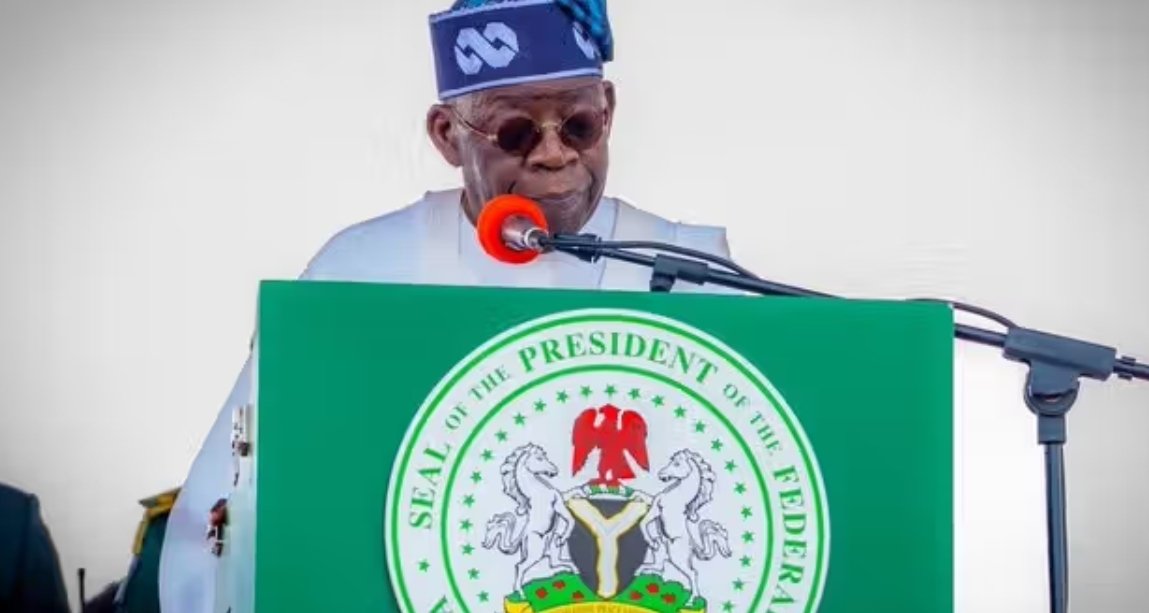
Markets do not require perfect governments; they require credible institutions. The Presidency’s handling of allegations surrounding a so-called “ghost agency” – the Presidential Foreign Investment Promotion Council – and its self-styled Director-General, Prince Adeniyi Adeyemi Matthew, now risks undermining that credibility. The matter is further complicated by the reported involvement of President Bola Tinubu’s Chief of Staff, Femi Gbajabiamila, a former Speaker of Nigeria’s House of Representatives. Left unaddressed, the controversy risks becoming less about the substance of the allegations and more about a deeper governance problem: the erosion of institutional trust. This issue risks creating a governance problem larger than the allegations themselves.
The defining issue before President Tinubu is no longer whether the allegations made by Adeniyi against Gbajabiamila are true. That question belongs to investigators and, ultimately, the courts. The more immediate question is whether Nigeria’s institutions are sufficiently independent to establish the truth without political interference.
That distinction matters because confidence, which is the currency upon which both democracy and investment depend is built less on official denials than on the credibility of the institutions issuing them. By moving swiftly to publicly discredit the accuser while simultaneously exonerating one of the most powerful officials in government, the Presidency has inadvertently transformed what could have remained a criminal investigation into a broader test of Nigeria’s governance architecture.
To be clear, neither Gbajabiamila nor Adeyemi should be convicted in the court of public opinion. The Chief of Staff is entitled to the presumption of innocence. So too is Adeyemi until the judicial process reaches its conclusion. Yet the Presidency occupies a fundamentally different constitutional position. It is neither investigator nor prosecutor. Its obligation is not merely to defend its officials but to protect the integrity of the institutions that command public confidence.

That is why an independent inquiry has become imperative. Not because guilt has been established, but because confidence has not.
History offers sobering lessons about how governance failures translate into market consequences. In Malaysia, the 1MDB scandal, which unfolded from the early 2010s under then Prime Minister Najib Razak and culminated in global enforcement actions by 2018, involved the misappropriation of roughly US$4.5 billion, according to U.S. Department of Justice filings. Subsequent settlements and asset recovery efforts have reached several billions of dollars, though full restitution remains incomplete. The broader economic damage was less tidy but no less material: during the peak of the crisis, Malaysia faced episodes of capital outflows, ringgit depreciation, and a sustained repricing of sovereign risk as investors discounted institutional credibility well before any final legal resolution.
Likewise, in South Africa, the years of “state capture” associated with the Jacob Zuma administration, particularly from the mid-2010s to his resignation in 2018, left a more diffuse but still substantial economic footprint. The Zondo Commission documented extensive procurement irregularities across state-owned enterprises, with losses and value leakage at entities such as Eskom and Transnet running into tens of billions of rand. Independent estimates of the combined direct fiscal and SOE impact vary, but commonly place the order of magnitude in the tens to over 100 billion rand range (roughly US$5–10+ billion, depending on exchange rates and scope). The wider cost, however, was larger still: persistently elevated sovereign risk premia, weaker investment inflows, and slower growth as institutions were perceived to be compromised.
The common thread is not the scale of the initial wrongdoing but the market’s response to weakened institutional credibility. Investors price governance as rigorously as they price macroeconomic fundamentals and often earlier.
Nigeria can learn valuable lessons from this and cannot afford to go on with a governance approach that care less about investors’ confidence.
The Presidency has vigorously argued that Adeyemi operated a fictitious government agency, forged appointment letters, maintained dozens of bank accounts and impersonated public officials. It says the Office of the Chief of Staff itself petitioned security agencies in 2025 after discovering the alleged scheme, and that criminal proceedings are already before the Federal High Court. Those allegations may well be substantiated in court.
Yet these official explanations have not answered the broader governance questions now being asked by legal practitioners, opposition figures and sections of civil society. If the agency was fictitious, how did it reportedly interact with government institutions? If forged documents circulated across multiple ministries, where did institutional controls fail? If concerns reached several agencies before the alleged fraud was uncovered, what does that reveal about weaknesses inside the Nigerian state? These are questions that transcend the criminal liability of one individual.
Human rights lawyer Femi Falana captured the constitutional issue succinctly when he argued that the Presidency has no authority to clear anyone accused of corruption. That responsibility belongs to independent investigative agencies operating without executive influence. Whether one agrees with Falana or not, his intervention shifts the debate from personalities to institutions—the terrain upon which international investors invariably assess political risk.
President Tinubu has invested enormous political capital in presenting Nigeria as a destination for global investment. His administration has removed fuel subsidies, liberalised exchange-rate policy and repeatedly assured international markets that difficult reforms are laying the foundation for long-term growth. Those reforms deserve recognition. But economic reforms alone cannot compensate for perceived weaknesses in governance. Investors routinely absorb inflation, currency volatility and fiscal deficits. They are considerably less tolerant of uncertainty surrounding institutional integrity.
Indeed, political risk is often not created by allegations themselves but by the perception that governments are unwilling to subject senior officials to the same standards expected of ordinary citizens. In mature democracies, temporary recusal from office pending investigation is not necessarily an admission of guilt. It is frequently a demonstration that public office exists to protect institutions rather than individuals.
President Tinubu therefore has an opportunity to convert a potentially damaging controversy into a powerful demonstration of democratic maturity.
He should establish an independent panel chaired by retired jurists and supported by forensic accountants, respected anti-corruption practitioners and experienced public administrators. Its mandate should extend beyond the allegations against the Chief of Staff to include the apparent institutional failures that allowed the controversy to emerge. Every relevant document, financial record, appointment process and budgetary trail should be examined. Its findings should be published without alteration.
If Gbajabiamila is entirely vindicated, no presidential press statement could restore his reputation as effectively as an independent report accepted across political divides. If wrongdoing is established, decisive accountability would send an equally important message that no official occupies a position above constitutional scrutiny.
At the start of our new democracy in 1999, Salisu Buhari was the Speaker of the Nigerian House of Representatives. He was caught in a forgery scandal for forging a Bachelor’s degree from the University of Toronto and falsifying his age to meet the constitutional minimum requirement of 30 years old to serve in the House. He was just 49 days into his role as a speaker of the House. In tars, he resigned on July 22, 1999 and was convicted. This is an example of how to clean the Augean stable, build investors’ confidence and genuinely renew hope in a democratic governance that presents nightmares.
That is ultimately the choice confronting the Presidency. It can seek to win today’s media cycle, or it can strengthen the institutions upon which tomorrow’s investment depends. Only one of those choices will persuade both Nigerians and international markets that the country’s reform agenda rests not merely on ambitious economic policy but on the rule of law itself.
Adeola Akinremi, a policy strategist, is the founder and chief executive officer of Hintells, a cross-corridor, AI-powered intelligence infrastructure for businesses and African diplomatic missions in Washington, D.C. He can be reached via email: adeola@hintells.com
-

 World News23 hours ago
I’ll Be Impeached If I Lose The Midterms- Trump
-
News23 hours ago
Even Enemies Will Testify Lagos-Calabar Highway Is Tinubu’s Best Gift — Umahi
-
Politics14 hours ago
Why Tinubu Pulled Back Campaign Council List
-
Politics23 hours ago
2027: If ADC Can’t Perform, Don’t Vote For Us – Amaechi Tells Nigerians
-
Politics23 hours ago
“We Won’t Beg Govt Again, They’ll Know Our Stand At Election” – Ekiti Commuters
-
News23 hours ago
You can’t Impeach someone who resigned – Lawyers blast Edo Assembly
-
Politics6 hours ago
APC reopens membership registration exercise August 31
-
Celebrity Gist6 hours ago
London court confirms Poco Lee to appear for assault trial September 15