Opinion
An open letter to Mr President

BY YINKA OGUNSANYA
Mr. President,
I have consistently maintained that Nigeria cannot spend its way out of an insurgency. Buying more weapons, procuring sophisticated equipment, and increasing security budgets alone will not defeat terrorism. History has repeatedly shown that wars are won by strategy, leadership, intelligence, and coordination, not by hardware alone.
Nigeria has invested billions of naira in military hardware over the years, yet communities continue to experience attacks, kidnappings, and banditry. This should compel us to ask a fundamental question: Are we fighting the enemy the right way?


The battle against insurgency demands a true combined arms strategy supported by unity of command. Every successful counterinsurgency campaign has one thing in common: a single command structure with complete visibility over the operational environment, capable of synchronizing intelligence, planning, logistics, air assets, ground forces, special operations, police, intelligence agencies, civil authorities, and local partners toward one common objective.
Today, our efforts are too often fragmented. Different agencies work hard, but too frequently they work in parallel rather than in concert. Intelligence is collected in one place but not shared in time.
Operations are planned without complete situational awareness. Different organizations sometimes pursue separate priorities in the same theatre. The result is duplication of effort, delayed decision-making, missed opportunities, and, in some cases, preventable casualties.
Modern counterinsurgency is an intelligence-driven fight. It is not about chasing terrorists after they strike. It is about preventing them from striking in the first place.
That begins with Intelligence Preparation of the Operational Environment (IPOE). Before launching any operation, commanders should have a detailed understanding of the terrain, population centers, local power structures, communication routes, likely enemy avenues of approach, supply networks, financing channels, recruitment patterns, safe havens, and potential escape routes. Every operation should be based on facts, not assumptions.
Technology should support this process, not replace it. Drones, satellites, aircraft, armored vehicles, and surveillance systems are invaluable tools, but they are only as effective as the intelligence guiding their employment. A drone without actionable intelligence simply observes. An aircraft without precise targeting information burns fuel. An armored vehicle without a clear operational plan merely transports soldiers into uncertainty.
Military history offers valuable lessons. During operations in Iraq and Afghanistan, coalition forces gradually shifted away from relying solely on overwhelming firepower. Success increasingly depended on intelligence fusion, joint planning, special operations integration, persistent surveillance, financial tracking, and close cooperation between military units, intelligence agencies, police, and local communities. The lesson was clear: success came not from possessing the most equipment, but from integrating every available capability under a unified strategy.
Nigeria can adopt these principles while tailoring them to our own realities. We do not need to copy another country’s model; we need to build one that fits our terrain, our people, and our security challenges.
Mr. President, another resource remains largely untapped: highly trained Nigerian military professionals in the diaspora.
Many have planned and executed complex operations alongside some of the world’s most capable armed forces. They have served in Iraq, Afghanistan, and other conflict zones, gaining invaluable experience in intelligence fusion, operational planning, logistics, air-ground integration, interagency coordination, and counterinsurgency. They understand modern operational planning processes, mission command, and how to synchronize multiple organizations toward a common objective.
These Nigerians have skin in the game. They love their country and want to see it secure. Their expertise should not be overlooked simply because it was acquired outside our borders. Nations that pursue excellence seek the best minds wherever they are found.
Money alone does not win wars.
Equipment alone does not win wars.
A unified strategy does.
Superior intelligence does.
Disciplined planning does.
Professional leadership does.
Unity of command does.
Mr. President, Nigeria needs a permanent national counterinsurgency command structure that provides a single operational picture across all theatres of conflict. Such a command should have the authority to coordinate military operations, intelligence collection, law enforcement, air support, logistics, communications, and strategic planning. Every commander should be working from the same intelligence picture and pursuing the same national objectives.
Equally important, success must be measured. Every operation should have clearly defined objectives, timelines, measurable indicators of effectiveness, and after-action reviews that identify lessons learned and improve future operations. Winning an insurgency is not about counting weapons purchased; it is about reducing attacks, protecting communities, restoring government authority, and giving citizens confidence that their nation can keep them safe.
Nigeria possesses brave soldiers, dedicated police officers, capable intelligence personnel, and resilient citizens. Their courage has never been in doubt. What they deserve is a strategy that matches their commitment and maximizes their effectiveness.
The security of over 200 million Nigerians deserves nothing less.
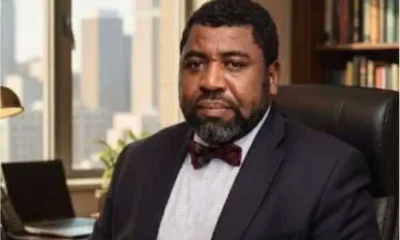
Major (rtd.) Yinka Ogunsanya is a defence and counterinsurgency expert and
US army veteran who has served in Iraq, Afghanistan, Korea, and Southeast Asia
US army veteran who has served in Iraq, Afghanistan, Korea, and Southeast Asia
-

 News22 hours ago
INVESTIGATION: How Anthony Kila falsified all his academic qualifications – from Bachelor’s to Doctorate
-
News7 hours ago
UK universities withdraw admission offers to Nigerians over visa crackdown
-
News7 hours ago
Benue: Suspected herdsmen kill nine in fresh Ukum attacks
-
News7 hours ago
Why kidnappers target NYSC members — Security experts
-
Politics6 hours ago
2027: Protest, relief as INEC releases final candidates’ list
-
Politics6 hours ago
2027: Opposition, APC clash over campaign funding
-
World News7 hours ago
US gunman shoots dead 7 relatives, family friend
-
Metro22 hours ago
Adamawa LG Chair Passes Away 18 Months After Predecessor’s Death