World News
US Doesn’t Have Enough Missiles To Return To All-out War With Iran – Experts

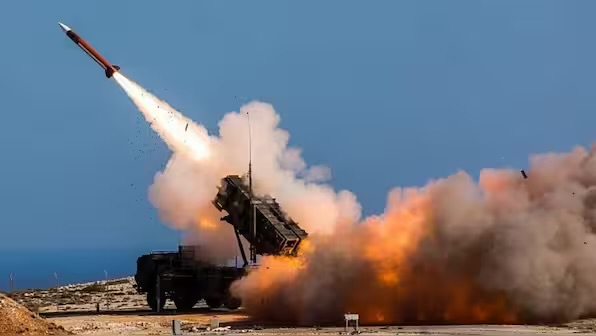
Pentagon official warns dwindling missile stockpiles could limit operations against Tehran
The US does not have enough missiles to return to an all-out war with Iran, an American official has warned.
Donald Trump is considering his options to launch a “wider war” against Tehran as more American warplanes are deployed to the Middle East.
However, a US official familiar with administration discussions said the operation would be limited by dwindling stockpiles of air defence and long-range munitions.

We do not have enough to safely sustain operations, and I don’t think the White House is aware of that,” the official told The Washington Post.
The US expanded its strikes in a ninth consecutive night of attacks on the country, edging closer to all-out conflict in the region.
Iran kept up its barrages across the region in response, with its Revolutionary Guards announcing they had hit targets in Bahrain, Jordan and Syria. Bahrain said Tehran had targeted its air navigation systems.
Masoud Pezeshkian, the Iranian president, said Tehran was once again engaged in a “full-scale war” with the US and Washington should accept the repercussions of the conflict.
And yet, both sides have signalled that diplomacy is continuing behind the scenes.
On Monday, Esmail Baghaei, Iran’s foreign ministry spokesman, said that Tehran had received proposals from mediators, and that despite more than a week of attacks, “diplomacy also knows its duties well and spares no efforts”.
Earlier on Sunday night, Marco Rubio said that the US was willing to negotiate.
The US secretary of state said: “We’ve tried multiple times with Iran, and we’ll continue to try. If that door opens, we’ll be happy to see it open.”
The latest barrage of US strikes over the weekend was meant to “punish” Tehran for the deaths of three American soldiers and a suspected fourth in Iranian attacks last week.
On Monday, two of the soldiers were identified as 1st Lt Tyler James Feehan, 25, and Pte Isabella Gonzales, 19.
Mr Trump said the US had “hit them [Iran] very hard again” on Sunday night in “honour of” the “three great patriots” who died.
“Iran has been very, very badly damaged. They’ve lost everything almost militarily. They’ve got very little left,” the US president told reporters on his return from the World Cup.
US Central Command (Centcom) announced on Sunday night that human remains had been located at the air base. Officials were yet to verify whether the remains belonged to the third soldier, however Mr Trump later said the death toll in Jordan was “probably” up to three.
Another American soldier died on Saturday during what was described by Centcom as “a controlled detonation of unexploded ordnance from a downed Iranian one-way attack drone” in northern Iraq.
Mr Trump called the American deaths “a shame” but argued that the soldiers had been there “because they don’t want to see Iran have a nuclear weapon”.
Dozens more soldiers are believed to have been injured in other Iranian strikes last week on US bases in Jordan.
The New York Times, citing US officials, said that the Pentagon had not disclosed the injuries or the scale of the damage inflicted, despite the government’s obligation to inform the public about the war
On the home front, Americans are growing increasingly frustrated with Mr Trump over his handling of the war.
The latest public polling says his approval ratings remain stuck at 37 per cent and that most Americans do not believe fuel prices will return to normal.
Early on Monday, explosions were reported in several Iranian cities – Bandar Mahshahr and Bandar Imam Khomeini on the Persian Gulf, Tabriz, in the north-west, and in Chabahar and Konarak on the Gulf of Oman – state news reported on Monday morning.
The mission, according to Centcom, was intended to “diminish Iran’s ability to attack commercial vessels and civilian mariners transiting the Strait of Hormuz”.
During the late-night bombardment, which lasted more than three hours, officials at the Pentagon were reportedly discussing how to prepare for the conflict to escalate.
American F-16 fighter jets from Germany and F-35 jets from Britain were being deployed to the Middle East, the New York Times reported, citing officials. Aerial refuelling aircraft were also on the way, the report said.
The additional equipment had reportedly already been ordered before the Iranian attack on the air base in Jordan, with Mr Trump previously signalling plans to intensify military action including the targeting of key infrastructure including bridges and power plants.
However, experts have also warned that, besides a lack of missiles, the US is unprepared for ground operations inside Iran, which Mr Trump refused to rule out last week.
Iran responded to the weekend’s attacks by continuing its strikes on American allies across the Gulf.
Kuwait said it had come under missile and drone attack. It said a power station and water desalination facility had been hit, which it described as a direct strike on vital civilian infrastructure.
Air sirens continued in Kuwait on Monday morning, and in Bahrain, where the US embassy warned Americans to “remain vigilant” as it had “information to suggest that Iran may seek to target unspecified locations” in Manama, the capital.
A vessel was also on fire off the coast of northern Oman, near the Strait of Hormuz, UK Maritime Trade Operations (HMTO) reported in a notice of “suspicious activity” on Monday morning. It said the cause was unknown.
Sailors safely abandoned the vessel, which was adrift eight nautical miles north-west of Kumzar, UK HMTO later said, adding that it had been hit by an “unknown projectile”.
Shortly after, Iran’s Islamic Revolutionary Guard Corps announced that two oil tankers had “exploded and were forced to cease movement” after trying to traverse the strait.
The guards did not directly claim responsibility for the “explosions” but used the statement to warn the US to prepare for a “punitive operation”. Not a “single drop of oil and gas” would be able to pass safely through the waterway while American “aggression”
The IRGC also claimed to have launched a “surprise attack” on an enemy command centre in the Al-Tanf region of Syria.
Earlier on Sunday, Iranian authorities said the US had attacked an under-construction nuclear power plant in the country’s south-west, in Darkhovin.
The United Nations’ International Atomic Energy Agency said it was looking into the reports.
The incident was “not believed to pose any radiological risk”, said Rafael Grossi, its director, reiterating his “call for military restraint in the vicinity of all nuclear-related sites”. (The New York Post)
-

 News10 hours ago
PFIPC: CBN opens govt accounts only on OAGF authorisation – Director tells Reps probe panel
-
 News10 hours ago
How PFIPC got into 2026 Budget — Adeyemi
-
Metro10 hours ago
Pastor to die by hanging for killing 16-yr-old daughter in Calabar
-
Politics10 hours ago
2027: Kwankwaso confirms written one-term agreement with Obi
-
Sports22 hours ago
Ex-England captain, manager Kevin Keegan dies following battle with cancer
-
Sports20 hours ago
“The pain is immense,” says Messi of World Cup defeat
-
News21 hours ago
Tinubu appoints Fayose Chairman Rural Electrification Agency, make 25 other appointments
-
Business7 hours ago
Consensus On CBN Holding Rates At 26.5% Ahead MPC Decision