Business
Nigerian tycoon Rasheed Sarumi’s Presco stake hits $1 billion after Belgian buyout

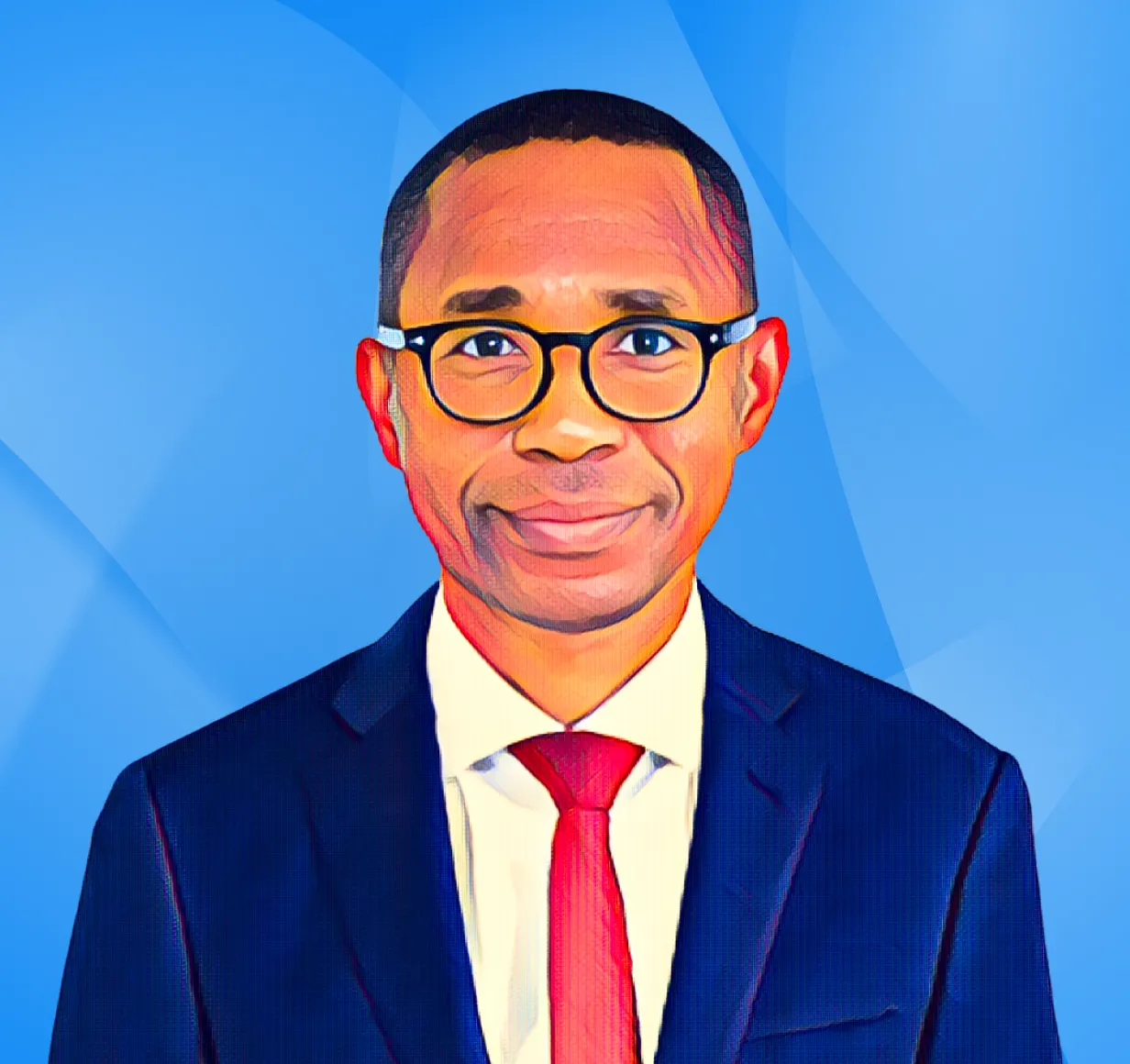
Pierre Vandebeeck spent the 1970s and 1980s drawing maps of Nigeria that other people paid for. Working for SOCFINCO, the consulting arm of the Belgian plantation house Socfin, he wrote the master plans for at least seven World Bank-backed oil palm projects across five Nigerian states, each designed to create a state-owned company that would absorb existing plantations and develop new ones.
By the early 1990s those parastatals were buried in debt and the World Bank was pressing for privatisation. Vandebeeck incorporated a company of his own under Belgian law in 1991, named it Société d’Investissement pour l’Agriculture Tropicale, and began buying the assets he had helped design. SIAT’s first corporate act was the acquisition of Presco, in Nigeria’s Edo State.
Thirty-three years later, on March 4, 2024, a Nigerian bought the whole thing out of a Belgian courtroom. At Presco’s current share price of ₦2,300, the Nigerian listing inside that purchase alone is worth about $1.03 billion to him.
What SIAT actually is

SIAT is not a plantation. It is a portfolio of them, assembled across three decades and five countries from a head office outside Brussels, employing roughly 15,000 people.
The group holds around 40,000 hectares of oil palm and 22,000 hectares of rubber, plus a cattle ranch running close to 6,000 head. It ranks among the five largest palm oil plantation operators on the continent. Its palm oil has gone to Nestlé and Unilever, its rubber to Goodyear and Michelin, according to research by the Belgian development network CIDSE.
Nigeria is the crown. SIAT holds 61.2 percent of Presco Plc and has separately owned Siat Nigeria Limited outright.
Ghana came next, through Ghana Oil Palm Development Company, which farms about 8,000 hectares of a 14,000-hectare concession at Kwae and Okumaning in the Eastern Region and supports some 7,000 outgrower farmers working a further 13,700 hectares. GOPDC was among the first African palm oil producers certified by the Roundtable on Sustainable Palm Oil.
Gabon arrived through privatisation. When the government sold down in 2003, SIAT took Agrogabon, Hévégab and the Nyanga ranch, signing the takeover convention the following year. The Gabonese rubber operation spans mature estates at Bitam, Mitzic and Kango feeding a crumb rubber factory rated at 80 tonnes a day, while the palm operation around Lambaréné and Makouké runs a mill, a soap factory producing 15,000 tonnes a year and a refinery handling 20,000 tonnes of oil.
In Ivory Coast the group holds Compagnie Hévéicole de Cavally, with 5,300 hectares planted of a 7,700-hectare concession near the Liberian border and about 1,200 registered outgrowers. A second Ivorian venture at Prikro closed in 2022, and SIAT settled debt owed to NSIA Bank in kind, transferring its long lease on 5,000 hectares. The bank now guards land it does not farm while it looks for a buyer.
Cambodia adds about 2,700 hectares of rubber. Belgium adds something else entirely: Deroose Plants, a tissue-culture business propagating young plants, which SIAT built from a minority position into an 81 percent holding by 2013, with operations reaching the United States and China.
The expansion has drawn sustained opposition. Activists from Ivory Coast, Ghana and Nigeria travelled to SIAT’s Belgian headquarters to protest over land, chanting for its return, and the land-rights organisation GRAIN has documented community resistance across the group’s operations.
A price set in a Belgian courtroom
The seller was not negotiating from strength. Fimave NV, the Vandebeeck family holding company that owned 86.7 percent of SIAT, had refinanced roughly €213 million of debt with its creditor banks in 2019 and then put SIAT on the market. By the summer of 2023 it could not meet its obligations and applied to a Belgian commercial court for judicial reorganisation, the country’s mechanism for restructuring under supervision.
A month after the court approved the process, Fimave signed the sale to Oak and Saffron Limited and simultaneously agreed a debt reduction with its creditor consortium, which included KBC and Belfius.
The Belgian financial daily L’Echo put the price at more than €200 million, about $216 million at the time, with a commitment from the buyer to take out remaining minorities later. Afrinvest advised Oak and Saffron. Verdant IMAP acted as joint financial adviser to Fimave.
From Ilesa to a Belgian boardroom
Olakanmi Rasheed Sarumi was born in Ilesa, Osun State, on November 3, 1966, and grew up in a farming community. He has said the exposure shaped him early, watching agriculture function not merely as livelihood but as the organising fact of daily life.
He attended Government College Ibadan from 1978 to 1983, then read Agricultural Engineering at Obafemi Awolowo University in Ile-Ife. He completed the Advanced Management Programme at Lagos Business School in 1998 and later took executive courses at Harvard Business School.
The business began in 1991, when he was 24. Nigeria’s agricultural sector was in poor condition after years of underinvestment, and several multinational agrochemical companies were retreating from the market. Sarumi founded Saro Pharma and Chemicals Company Limited to fill the gap, selling crop protection products to farmers the multinationals had stopped serving. The company was later renamed Saro Agrosciences and became the flagship of what grew into Saroafrica International. He served as its pioneer managing director for nineteen years, until 2010.
The fortune was built by extension rather than by any single windfall. Saro Agrosciences moved from distributing agrochemicals into seeds and inputs, then into the crops themselves. Saro Agro-Allied took the group into commodity sourcing and export. Saro Lifecare pushed into consumer goods and personal care, and Gossy Warm Springs into bottled water drawn from a natural spring, giving the group branded products alongside its business-to-business trade. It is the classic Nigerian conglomerate arc: start where foreign firms leave, integrate backwards toward the raw material, then forwards toward the consumer.
The move into land came late and fast. Saroafrica began investing in large-scale plantations in 2017, taking on a 15,000-hectare sugar and ethanol project in Nasarawa State budgeted at $125 million and a 5,000-hectare cassava venture in Edo through a joint venture with the Mohinani Group. Saro Oil Palm was incorporated in 2019 and assembled 22,500 hectares in Edo, partly through the state’s oil palm programme and partly by absorbing Bansley International.
The SIAT purchase, five years after that first oil palm company was registered, made him the operator of more than 80,000 hectares across Nigeria and Ghana with over 20,000 employees. He now styles himself group chief executive of the Saroafrica-SIAT Group and chairs Presco.
The position has brought political proximity. He sits on Nigeria’s Presidential Economic Coordination Council and the Presidential Committee on Food Security Systems, chairs Alpha African Advisory and the Family Business Advisory Committee at Lagos Business School, and holds a seat on the board of Seed Co Nigeria. His son, also Rasheed Sarumi, works in the group after studying at Imperial College London.
Corporate Affairs Commission records show him holding 35 percent of Oak and Saffron directly, with Saroafrica International holding the other 65 percent. Since he controls Saroafrica, the beneficial interest is effectively the whole vehicle, giving him a look-through holding of about 53.1 percent of Presco, roughly 618 million shares. Companies House filings show the pattern repeated in Britain, where he is sole director and sole person with significant control of Saroafrica Limited, a company placed into solvent members’ voluntary liquidation in December 2024 after its principal asset was sold into Presco.
The listed company began buying from its owner
What followed the acquisition is where the structure becomes visible.
In December 2024, Presco announced a ₦100 billion Series 1 bond under a ₦150 billion programme, closing on January 10, 2025, with proceeds directed at acquiring Ghana Oil Palm Development Company. Existing debt stood at ₦58 billion. Agusto & Co rated the issue, citing estimated cumulative revenue of ₦3.5 trillion over seven years and EBITDA interest coverage of 11 times.
In August 2025 the company returned to shareholders, seeking approval to buy 100 percent of GOPDC for $124.93 million and 100 percent of Saro Oil Palm for $46.71 million, a combined $171.64 million. Saro Oil Palm was a wholly owned subsidiary of SIAT SA. Billionaires.Africa reported at the time that the transaction would deliver about $46 million to Presco’s own chairman.
To fund it, Presco launched a ₦250 billion rights issue, roughly $163 million, aimed at existing shareholders, with proceeds earmarked for refinancing debt, settling the outstanding GOPDC consideration, paying for Saro Oil Palm and building a buffer. The GOPDC purchase had been approved at the 2024 annual meeting, but litigation forced the board to resubmit every resolution passed there.
The sequence was disclosed and put to a shareholder vote. Presco’s board argues the acquisitions diversify currency exposure, deliver economies of scale and lift plantation area 37 percent, from 43,547 hectares to 59,760. All of that is true. It is also true that a listed company in which outside investors hold 38.8 percent raised debt and equity from the public market to buy assets from the man who chairs it.
Whether he is a billionaire depends on what he owes
Presco trades within reach of its 52-week high of ₦2,315.40, up from a low of ₦850.10, valuing the company at about $1.94 billion (₦2.68 trillion). Revenue for 2025 rose 59.6 percent to roughly $240 million (₦331.19 billion), with earnings up 81.6 percent to about $100 million (₦138.12 billion).
Nigeria has never produced a palm oil billionaire, largely because it never owned its palm oil companies. Presco was Belgian-controlled from 1991. Okomu Oil Palm, the other listed producer, remains 62.94 percent held by Socfinaf of Luxembourg. Sarumi is the first Nigerian to control a producer at this scale, and on the market value of his Presco holding alone he would clear the threshold comfortably.
The number that settles it has never been published. Wealth trackers including Forbes and Bloomberg net debt against assets when estimating fortunes, on the working assumption that acquisitions of this size are funded substantially with borrowed money. Oak and Saffron has never disclosed how it paid roughly $216 million for SIAT, and Saroafrica has never published consolidated accounts showing what the group owes. If leverage sits over the structure, it sits between the market value of the shares and the personal fortune of the man who controls them.
Saroafrica did not respond to a request for comment from Billionaires.Africa.
What is not in question is the direction of travel. Plantations that Nigeria’s government once owned, designed by a Belgian consultant who later bought them, sold out of a Belgian court to a farmer’s son from Ilesa who started with a crop chemicals business at 24 and has since folded them into a Lagos-listed company worth close to $2 billion. The last piece of that arithmetic is the only one still hidden.
(Billionaires Africa)
-

 Politics9 hours ago
2003 poll: Obasanjo faults Osoba, accuses Atiku of impeachment plot
-
Business9 hours ago
Oil block bidding: Inside Nigeria’s seven-hour transparency test
-
 News9 hours ago
Soldier Declared Wanted Over Alleged Sale Of Military Uniforms To Terrorists
-
News9 hours ago
From Cold Relations To Warm Ties: Inside Tinubu/Trump’s Relationship
-
 News8 hours ago
Opposition Lawmakers Protest As Reps Pass State Police Bill
-
Business9 hours ago
Lagos Assembly approves N200bn bond, FAAC financing scheme
-
Metro9 hours ago
Police confirm mysterious death of five Abia family members
-
Metro9 hours ago
Niger: NSCDC Operative Killed In Clash With Miners