Business
Tony Elumelu’s Heirs Energies and state giant NNPC lose oil block bids to little-known firms

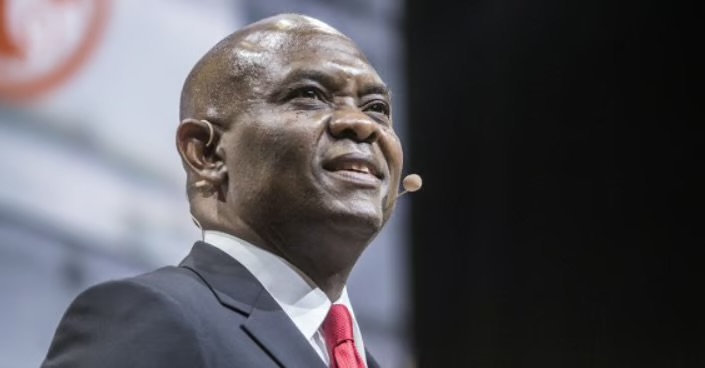
Several big-name operators, including a subsidiary of the state-owned Nigerian National Petroleum Company (NNPC) and billionaire Tony Elumelu’s Heirs Energies, were outbid by smaller firms in the country’s third oil block auction in four years.
The licensing round, launched in December, is Nigeria’s largest since the Petroleum Industry Act (PIA) took effect in August 2021, overhauling the legal and regulatory framework for Africa’s largest oil producer.
The Nigerian Upstream Petroleum Regulatory Commission (NUPRC) offered 50 blocks, of which 37 attracted bids, with the remaining 13 returning to the pool of available acreage.
Nearly 300 companies initially expressed interest in the auction, according to NUPRC chief executive Oritsemeyiwa Eyesan. That number fell to 196 after prequalification, and 143 companies ultimately submitted 200 bids.

“The round confirms that the PIA licensing framework is now functioning as designed: periodic, competitive and rules-based,” Ayodele Oni, an energy expert and partner at Lagos-based commercial law firm Bloomfield LP, told The Africa Report.
‘Mix of new entrants’
The blocks spanned several geological terrains, including the established Niger Delta as well as frontier areas such as the Benue Trough, Chad, Anambra and Benin basins.
“We saw a mix of new entrants, who believe they are ripe and able to take on the full responsibility of developing our upstream resources,” Eyesan said in Abuja ahead of the announcement of winners at the commercial bid conference in Abuja on 21 July 2026. “We also saw international companies and indigenous players already in the industry participate.”
She said the evaluation considered bidders’ experience, operational capacity, proposed work programmes, resource commitments and ability to deliver projects on time.
“It isn’t going to be just about your ability to be the highest bidder,” she said. “We want to ensure you have the right capabilities to deliver the asset, in addition to having the financial resources.”
Eyesan said the assets could add around 500 million barrels to the country’s crude oil reserves and unlock 300,000 barrels a day of production.
“That projection is only credible if the drill-or-drop policy below is enforced without sentiment,” Oni said.
NNPC beaten on perfect score
NNPC E&P Limited and 10 others vied for the onshore asset Petroleum Prospecting Licence (PPL) 2A32. Dutchford Exploration and Production Company emerged as the winner, with an aggregate score of 100%, comprising the maximum weighted technical score of 60 points and a commercial score of 40.
The NNPC subsidiary ranked fourth overall and was the third reserve bidder, scoring 73% – 33 for its technical submission and 40 for its commercial offer, trailing Saratoga Energy Resources and Fairmont Petroleum.
In the 2022/2023 mini-bid round, the national oil company lost its bids for three deep offshore oil blocks to smaller operators, namely Biswal Oil and Gas, Hakilat Oil and Gas Consortium, and MRS Oil and Gas Company.
The latest round has prompted questions from some industry insiders. One executive, who requested anonymity due to the sensitivity of the process, questioned how a bidder could achieve full marks in a complex technical and commercial assessment.
“There is no technical evaluation that will score anybody 100%,” the executive said, arguing that even a field-development plan prepared by leading specialists would involve uncertainties around reservoir forecasts and engineering design.
NUPRC has strongly defended the integrity of the auction. Eyesan said the evaluation was “rigorous” and “objective”, designed to place assets with companies capable of delivering long-term value rather than merely selecting the highest financial offer.
“Forget whatever you’ve been told; forget whatever you’ve heard. Nobody has seen anybody’s commercial bids,” she said before the bids were opened that day – that assurance was echoed by oil minister Heineken Lokpobiri, who told bidders, “It’s also important for us to say that nobody knows the content of your commercial bids”.
“To enhance the integrity of the process, NEITI was present to observe the relevant bid-opening process and the entire technical process,” Eyesan said, referring to the Nigeria Extractive Industries Transparency Initiative.
An industry insider alleged that the bidding portal was reopened after its initial closure in June to allow certain participants to amend their submissions, but NUPRC spokesperson Eniola Akinkuotu has refuted these claims, saying “the portal was never reopened”, by phone on 28 July 2026.
Heirs Energies, Midwestern shut out twice
Heirs Energies, the oil and gas company owned by Elumelu’s Heirs Holdings and chaired by the tycoon, missed out on two fiercely contested shallow-water blocks.
The firm competed for PPL 2A39 alongside 21 other bidders, including Waltersmith Petroman Oil, only to see Pivot GIS and BVOF Energy Company tie at 93% each. Pivot GIS secured the block through a tie-break based on its proposed signature bonus of $14.53m, compared with BVOF’s $8m.
Heirs Energies also contested PPL 2A43, another block that drew 24 bidders, including Midwestern Oil and Gas and Petralon. BVOF Energy Company again prevailed, scoring 87%, while Heirs Energies failed to be among the reserve bidders.
Elumelu has continued to pursue his ambition to expand Heirs Energies, which acquired OML 17 from Shell, TotalEnergies and Eni in a $1.1bn transaction in 2021. The company has positioned itself as an indigenous operator seeking a larger role as international majors reduce their exposure to Nigeria’s onshore fields.
The failed bids came nearly seven months after Heirs Energies snapped up a 20.07% stake in Seplat from French oil group Maurel & Prom for $496m, becoming the biggest shareholder in the Lagos- and London-listed Nigerian oil independent.
Midwestern, which began upstream activities more than 20 years ago, also lost its bid for shallow-water block PPL 2A40, which attracted 24 bidders. Network Exploration and Production Nigeria won with a score of 96%, while Midwestern finished as the first reserve bidder following a tie-break because it offered a signature bonus of $7.56m, against AOS Orwell’s $1.05m.
Energia Limited and 10 others were beaten by Ssonic Petroleum for onshore block PPL 2A29, with the winner scoring 87 points
‘Broadening the operator base – with execution risk’
Fiza Jan, senior analyst at Norway-based Rystad Energy, wrote in a note on 25 July 2026 that the licensing round “shows Nigeria is not simply transferring acreage to its existing independent producers”.
“It is attempting to broaden the domestic operator base, allowing locally owned businesses to move from contracting and services into resource ownership. That can create new centres of capital formation and technical capability, but it also introduces considerable execution risk,” she said.
She noted that signature bonuses were capped at $3m-$7m to attract new entrants.
“It worked to attract companies, but a licence is the cheapest part of the journey,” she added. “Seismic, appraisal wells, and field development will require far more capital, and NUPRC’s drill-or-drop provision means operators cannot sit indefinitely on acreage they cannot finance.
Oni echoed the point that the true test will come later, after the ceremonial award announcements have faded.
“Every awardee cleared the same technical and financial prequalification as the established names, so the awards are presumptively merit-based,” he said. “These are conditional awards, not grants: winners have 90 days to meet signature bonus, guarantee and documentation obligations, failing which reserve bidders step in.”
He said the auction’s success should be measured by investment and production rather than the identities of the winners.
Wumi Iledare, a professor emeritus of petroleum economics and former president of the Nigerian Association of Energy Economics, hailed the NUPRC’s handling of the auction, adding that the failure of frontier basin blocks to attract bids should not be interpreted as a lack of confidence in Nigeria’s frontier petroleum potential.
“Investors bid for commercial opportunities, not merely geological prospects. There is an important distinction between the chance of recoverability and the chance of commerciality,” he said. (The Africa Report)
-

 Business20 hours ago
67.4% of Nigerians Want Fuel Subsidy Restored — SBM Survey
-
Politics5 hours ago
‘She has nothing to offer’ — Wike says Ireti Kingibe won’t return to senate
-
News5 hours ago
Tinubu, Shettima’s Absence: I’m Not Acting President, Says Akpabio
-
Politics5 hours ago
It’s A National Disgrace For Tinubu To Be In France While Macron Is At UNGA – ADC
-
 Politics5 hours ago
2027 elections: APC leaders weigh options as Wike-govs rift deepens
-
Business24 hours ago
Nigerian billionaires Dangote and Rabiu face a Chinese-owned rival as cement prices double
-
Business21 hours ago
NMDPRA raises concern over fuel under-dispensing at stations, threatens licence revocation
-
Politics4 hours ago
I’ve never seen a president with better plans than Tinubu – Aminu Masari