Business
Petrol consumption drops by 52m litres amid higher prices

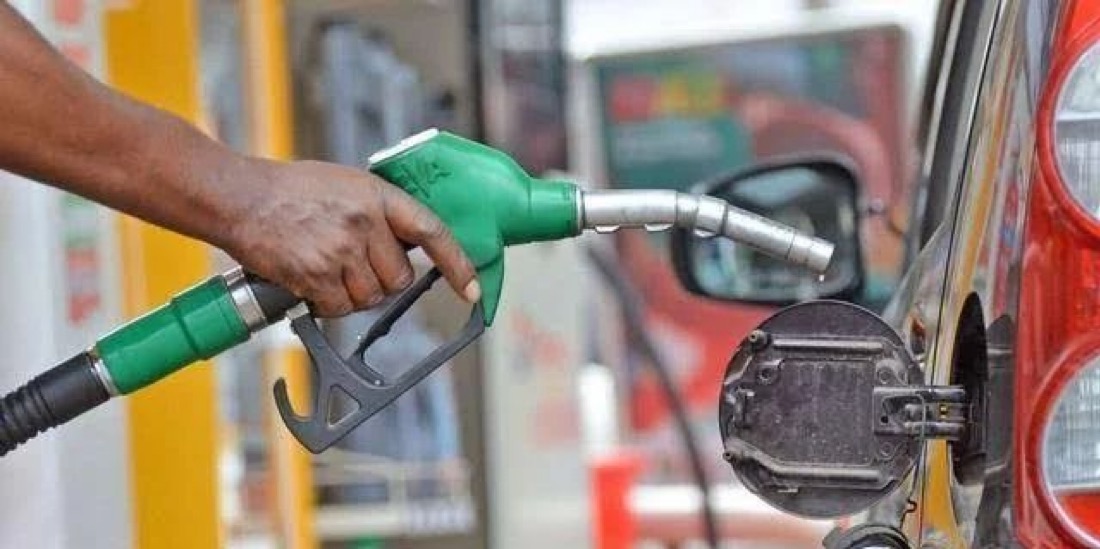
Nigeria’s petrol consumption declined by about 52 million litres in the first six months of 2026, suggesting that persistently higher pump prices may be moderating fuel demand despite increased domestic refining capacity.
An analysis by The PUNCH of data from the Nigerian Midstream and Downstream Petroleum Regulatory Authority showed that Nigerians consumed an estimated 9.316 billion litres of Premium Motor Spirit (petrol) between January and June 2026, compared with 9.368 billion litres in the corresponding period of 2025, representing a decline of 52 million litres, or 0.56 per cent. The regulator stated that the consumption figures were based on volumes trucked into the domestic market.
The moderation in petrol demand came during a period of elevated fuel prices following the removal of petrol subsidy and the full deregulation of the downstream petroleum sector.
Data from the NMDPRA showed that average retail petrol prices in June 2026 ranged from N1,284.50 per litre in Lagos to N1,393 per litre in Maiduguri, compared with average prices ranging from N910 per litre in Lagos to N982.50 per litre in Maiduguri in November 2025, illustrating the sharp increase in pump prices over the period.

The lower overall consumption occurred even as domestic refining expanded significantly, reducing Nigeria’s dependence on imported petrol.
A breakdown of the regulator’s monthly consumption figures showed that average daily PMS consumption stood at 60.2 million litres in January 2026 before dropping to 56.9 million litres in February. Demand declined further to 47.3 million litres in March, recovered to 51.1 million litres in April, fell to 46.3 million litres in May and rose marginally to 47.4 million litres in June.
For the corresponding period of 2025, average daily consumption was 51.5 million litres in January, 50.4 million litres in February, 50.9 million litres in March, 55.2 million litres in April, 54.4 million litres in May and 48 million litres in June.
Using the actual number of days in each month, The PUNCH calculated that Nigerians consumed 1.866 billion litres of petrol in January 2026, 1.593 billion litres in February, 1.466 billion litres in March, 1.533 billion litres in April, 1.435 billion litres in May and 1.422 billion litres in June, bringing total first-half consumption to 9.316 billion litres.
In comparison, total consumption stood at 1.597 billion litres in January 2025, 1.411 billion litres in February, 1.578 billion litres in March, 1.656 billion litres in April, 1.686 billion litres in May and 1.440 billion litres in June, giving a cumulative 9.368 billion litres during the first half of last year.
While demand softened marginally, domestic refining became the dominant source of petrol supplied to the Nigerian market.
An analysis of NMDPRA supply data showed that local refineries supplied an estimated 6.609 billion litres of PMS during the first six months of 2026, representing 77.9 per cent of the 8.482 billion litres supplied to the domestic market during the period. Imported petrol accounted for the remaining 1.873 billion litres, or 22.1 per cent of total supply.
Domestic refinery receipts averaged 40.1 million litres per day in January, 29.4 million litres in February, 34.2 million litres in March, 40.7 million litres in April, 41.5 million litres in May and 32.5 million litres in June. Imports, on the other hand, contributed 24.8 million litres per day in January, 3.0 million litres in February, 5.9 million litres in March, 3.7 million litres in April, 5.9 million litres in May and 18.1 million litres in June.
Overall PMS supply averaged 64.9 million litres per day in January before falling sharply to 32.4 million litres in February. It subsequently recovered to 40.1 million litres in March, 44.4 million litres in April, 47.4 million litres in May and 50.6 million litres in June.
The June 2026 report showed that total daily PMS receipts increased by seven per cent from 47.4 million litres in May to 50.6 million litres in June. The increase was driven entirely by imports, which jumped by 207 per cent from 5.9 million litres per day to 18.1 million litres per day, offsetting a 22 per cent decline in domestic receipts from 41.5 million litres to 32.5 million litres per day.
According to the regulator, domestic daily receipts comprise volumes received through the Dangote Petroleum Refinery gantry and all coastal evacuation receipts, while consumption reflects products trucked into the domestic market.
The data also showed the growing role of the Dangote Petroleum Refinery in Nigeria’s fuel supply. The NMDPRA reported that the refinery operated at an average capacity utilisation of 101.36 per cent in June 2026. During the month, it produced 39.1 million litres of PMS per day, supplied 32.5 million litres daily to the domestic market, exported 3.4 million litres per day and closed the month with PMS stocks of 410.7 million litres.
Despite the increased domestic production, the country’s petrol reserve remained below the regulator’s benchmark. The NMDPRA said Nigeria had 20 days of PMS stock sufficiency in June, below its required threshold of 30 days. Diesel stock sufficiency stood at 37 days, aviation fuel at 73 days and LPG at 16 days.
Although the decline in petrol consumption was relatively modest, it points to changing consumption patterns in an increasingly deregulated downstream market, where consumers are adjusting to higher fuel costs while domestic refining continues to reshape the country’s fuel supply mix.
The PUNCH earlier reported that the price of Premium Motor Spirit (petrol) jumped from N175 to N1,300 per litre between May 2023 and May 2026, representing an increase of approximately 643 per cent over the three-year period.
Findings showed that the surge in petrol prices was triggered by the removal of the petrol subsidy by President Bola Tinubu immediately after he was sworn in on May 29, 2023. Also, the devaluation of the naira compounded the situation, causing the then-imported product to rise beyond the reach of many Nigerians.
Three years later, the price of a litre of petrol at filling stations ranged between N1,300 and N1,400, depending on the location. The latest price surge from about N800 some months earlier to N1,300 was occasioned by tensions in the Middle East, which disrupted global oil supplies following the closure of the Strait of Hormuz.
The PUNCH also reported that Nigeria recorded the sharpest increase in petrol prices across Africa during the first half of 2026, with pump prices surging by 39.5 per cent as the Middle East conflict disrupted global crude oil supplies and exposed the country’s vulnerability to external market shocks despite growing domestic refining capacity.
The disclosure was contained in the Nigeria Half-Year Downstream Industry Report (January–June 2026) released by the Major Energies Marketers Association of Nigeria.
According to the report, the conflict involving Israel, Iran and the United States, which began on February 28, 2026, triggered widespread uncertainty in global oil markets, sending crude oil prices above $100 per barrel and sharply increasing the cost of transporting petroleum products worldwide.
The report explained that the temporary disruption of shipping through the Strait of Hormuz forced oil tankers to abandon the traditional route and sail around the Cape of Good Hope, more than doubling voyage time from about 18 days to nearly 40 days.
MEMAN stated, “During the first half of 2026, severe geopolitical tensions in the Middle East sparked immediate supply anxieties, injecting a heavy risk premium that drove international crude benchmarks past $100/bbl.
“This price surge was quickly compounded as the conflict bottlenecked traffic through the Strait of Hormuz, forcing maritime oil tankers to reroute around the Cape of Good Hope and stretching what is typically an 18-day voyage into a nearly 40-day journey.”
The association said Nigeria’s deregulated petrol market transmitted the global price shock directly to consumers, making the country the hardest hit in Africa.
It said, “Operating under a newly deregulated system, Nigeria experienced immediate price transmission at the pumps. Data from the height of the crisis revealed that Nigeria recorded a 39.5 per cent gasoline price surge, the sharpest increase across Africa, more than doubling the price increases recorded in regional peers such as Egypt (14.3 per cent).”
Despite the sharp rise in prices, the report said the period also marked a significant turning point in Nigeria’s downstream petroleum industry as local refining displaced imported fuel at an unprecedented pace.(Punch)
-

 News8 hours ago
Tinubu extends 3-week vacation
-
Metro8 hours ago
Protest as hoodlums break into female hostel, rape student
-
Politics8 hours ago
I’ll never support Uzodimma to be senate president, says Wike
-
World News8 hours ago
US TV networks suspend Trump coverage after White House’s ban on three media outlets
-
Metro8 hours ago
Darkness hits Lagos-Ibadan Longbridge as more streetlights disappear
-
News7 hours ago
FG Threatens To Shut Lagos-Calabar Coastal Road In Two Weeks
-
News8 hours ago
‘They’ve tasted its money’ — Umar Bago says boys are abandoning schools for mining in Niger state
-
Business8 hours ago
Nigerian stock market valuation hits all-time high of N162.39trn