News
Real reasons Tinubu expanded Army divisions – Report

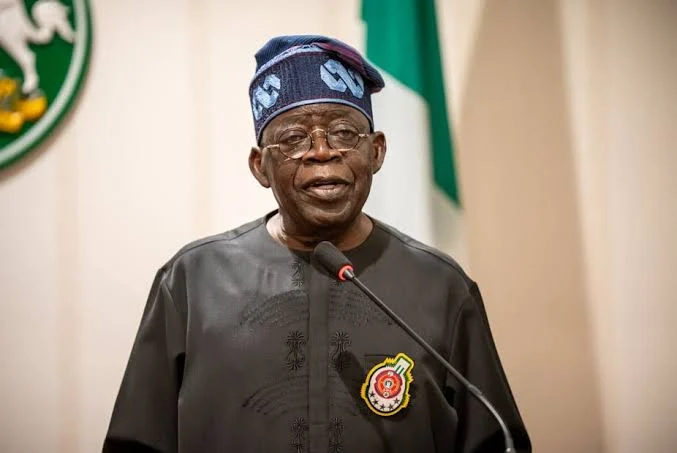
An extensive security review ordered after the failed September 2025 coup plot may have influenced President Bola Tinubu’s decision to expand the Nigerian Army with four additional divisions, Saturday PUNCHhas learnt.
Some senior military officers, who spoke to our correspondents, said the reforms were designed to strengthen constitutional order and make any future unconstitutional takeover far more difficult.
The proposed expansion will increase the Army’s field divisions from eight to 12 and provide for the recruitment of an additional 28,000 personnel.
A senior military intelligence operative, who spoke to Saturday PUNCH on condition of anonymity because he was not authorised to speak on the matter, disclosed that intelligence assessments conducted after the September 2025 failed coup plot significantly influenced the ongoing reforms within the security architecture.

According to him, security planners concluded that preventing future unconstitutional attempts to seize power required strengthening and improving the military’s operational capabilities.
“Given the scale of destruction security agencies believed the failed coup plot could have caused had it succeeded, it is understandable that the government would seek to eliminate every vulnerability capable of supporting another unconstitutional takeover,” the officer said.
Another military officer with the Nigerian Air Force, who also spoke on condition of anonymity, disclosed that many military leaders were disturbed by the failed coup plot and had since devised measures to eliminate any possibility of attempts to topple a democratically elected government.
He said part of the strategy could be the expansion of the military divisions.
The Air Force officer added that internal assessments of public reactions following reports of the failed coup plot also influenced the government’s security calculations.
According to him, authorities believed public reactions did not demonstrate a widespread willingness among citizens to openly resist any unconstitutional change of government, reinforcing the need to strengthen preventive measures.
The source argued that recent changes across the country’s security institutions, including the planned expansion of Army formations, should be viewed within that broader strategic framework.
“From the government’s perspective, the safest option is to ensure that any future attempt becomes practically impossible to organise.
“The reforms may improve internal security operations, but they also increase the resilience of the constitutional order by making the security architecture stronger and more difficult to compromise,” the Air Force officer said.
However, he noted that executing a successful military coup had become considerably more difficult because of advances in surveillance technology, intelligence gathering, and command-and-control systems.
“Any modern coup would require sophisticated weapons, secure communications, extensive logistics, movement of military hardware, and a network of trusted collaborators operating without detection.
“When those requirements are combined with Nigeria’s political, ethnic and institutional realities, the chances of successfully executing such an operation become extremely slim,” the source said.
However, a retired Major General in the Nigerian Army, Abidogun Lasisi, said the creation of additional divisions should be evaluated primarily from the standpoint of operational necessity and available resources.
According to him, the Army already has several brigades approved under its 2016 Order of Battle that are yet to become fully operational.
“If the objective is to improve national security, the government should first determine where the real capability gaps exist. We should begin with a proper threat assessment. Is the biggest challenge manpower, equipment, intelligence, logistics or serviceability? Only after identifying those deficiencies should we determine whether entirely new divisions are necessary or whether strengthening existing formations would produce better results,” he said.
Lasisi also expressed concern over the financial implications of the proposal.
He noted that recent discussions at the National Assembly suggested that only a relatively small proportion of the Army’s allocation was dedicated to capital equipment procurement.
“A military division is far more than a headquarters and a General Officer Commanding. It requires thousands of trained personnel, armoured platforms, artillery, engineers, signals units, medical support, logistics, accommodation and continuous operational funding.
“You cannot simply erect buildings and declare a combat-ready division. It does not work that way,” he said.
Also commenting, Brig. Gen. John Sura (retd.) said the planned creation of additional Army divisions would make it more difficult for any group to successfully stage a military coup in the country.
According to him, expanding the number of divisions and increasing troop strength would further decentralise the Army’s command structure, making it harder for coup plotters to gain control of key military formations.
“With the creation of additional divisions, executing a coup will become more difficult. Looking at the expansion of troops, it will be much more difficult for anyone to think about it,” he said.
Sura also said the expansion could strengthen security during elections by enabling the military to better secure the outskirts of polling areas and major entry and exit points in states, while leaving election activities within polling units to other security agencies, as required by law.
He added that the additional divisions would enhance the military’s presence across the country and improve its capacity to respond to security threats in different parts of the country.
Presidency dismisses coup theory
However, the Presidency dismissed suggestions that the Army expansion was motivated by fears of another military coup or political considerations ahead of the 2027 general elections.
Instead, it said the expansion was informed by the changing nature of the country’s security threats and the need to modernise military structures that have remained largely unchanged for decades.
Speaking with Saturday PUNCH, the Senior Special Assistant to the President on Media and Publicity, Temitope Ajayi, said the decision was consistent with Tinubu’s campaign promise to strengthen the country’s security architecture by increasing troop strength, expanding military formations and investing in modern equipment.
According to him, the current administration inherited a security infrastructure designed several decades ago, which has become inadequate in the face of emerging security challenges.
“It cannot be the result of any coup attempt. Those making such claims are Nigerians who also desire improved security. The country’s security challenges have continued to evolve, and the President has consistently maintained that our security architecture must evolve to respond accordingly,” Ajayi said.
He noted that since assuming office in 2023, the Tinubu administration had embarked on one of the largest military recruitment drives in recent years.
“Over the past three years, the Armed Forces have recruited about 50,000 personnel across the three services, and another 28,000 personnel are set to be recruited.
“In his campaign manifesto, President Tinubu promised to increase boots on the ground while simultaneously investing in military hardware and technology. That is exactly what his administration is implementing,” he stated.
Ajayi explained that the creation of additional divisions was intended to improve operational response times by bringing military formations closer to areas facing security threats.
“The restructuring is designed to improve operational efficiency. Instead of relying on a division located several states away to respond to an emergency, new formations will place commanders and troops much closer to flashpoints.
“For instance, rather than waiting for a division headquartered in Jos to coordinate responses to incidents in Sokoto, Zamfara or Yobe, there will now be formations strategically positioned to react much faster,” he said.
The presidential aide also disclosed that the Federal Government had established three additional military training depots in Kogi, Ebonyi and Osogbo to complement the existing Nigerian Army Depot in Zaria.
According to him, each of the new facilities has the capacity to train between 5,000 and 6,000 recruits simultaneously, significantly increasing the military’s training capacity.
“Our population has grown substantially, but much of the military infrastructure we are relying on today dates back to the 1970s, 1980s and 1990s. Those facilities are no longer sufficient for the country’s current security realities.
“The existing infrastructure has become overstretched. That is why the government is increasing troop strength while also investing heavily in modern equipment and technology. These are commitments President Tinubu made to Nigerians, and he is implementing them,” Ajayi said.
Similarly, a member of the 41 Regular Course Alumni of the Nigerian Army, Nurudeen Adeyemi, dismissed suggestions that the planned creation of the four new divisions was politically motivated, describing the initiative as part of a long-term effort to strengthen the Army’s operational capacity.
He noted that with almost every geopolitical zone now having two divisions, troops would be deployed closer to flashpoints, enabling faster responses to insurgency, banditry and other security threats.
“The Nigerian military has become too large and too professional for the creation of new divisions to be linked to coup prevention. Countries such as the United States regularly establish new military formations without anyone suggesting they are preparing for coups.
“This is not a political gimmick. It is systemic capacity building. As the population grows and security challenges become more complex, the military must also expand its manpower and operational capability,” Adeyemi added.
He further stated that the expansion would improve career progression within the Army by creating additional brigades, battalions and command appointments.
“More divisions mean more formations, more command positions and greater opportunities for deserving officers to advance their careers. That will boost morale and ultimately strengthen the institution,” Adeyemi said.
A security expert, Musa Aliyu, told Saturday PUNCH that funding would be critical to the success of the expansion.
“Beyond personnel recruitment, establishing new divisions would require extensive investment in barracks, training institutions, weapons systems, communications equipment, transport assets, armoured vehicles, engineering support, intelligence infrastructure and recurring operational logistics,” he said. (Punch)
-

 Politics24 hours ago
Atiku raises alarm over mysterious credit alert, suspected data breach
-
Politics24 hours ago
Davido trolls Edo gov with WAEC result after Adeleke jibe
-
Politics5 hours ago
EFCC boss in sack storm over Osun
-
Business23 hours ago
Air Canada begins regulatory processes to launch Lagos flights in 2027
-
 Politics23 hours ago
Coastal Highway: We have moved beyond Epe – Umahi replies Duke
-
Sports5 hours ago
FA issues new rules on pitchside walls after ex-Arsenal player’s death
-
News5 hours ago
Gunmen kidnap two farmers in Ondo, demand N100m ransom
-
Opinion23 hours ago
Obasanjo, Atiku and the burden of old political battles