Business
CBN reforms begin reaching consumers as banks expand dollar card spending limits

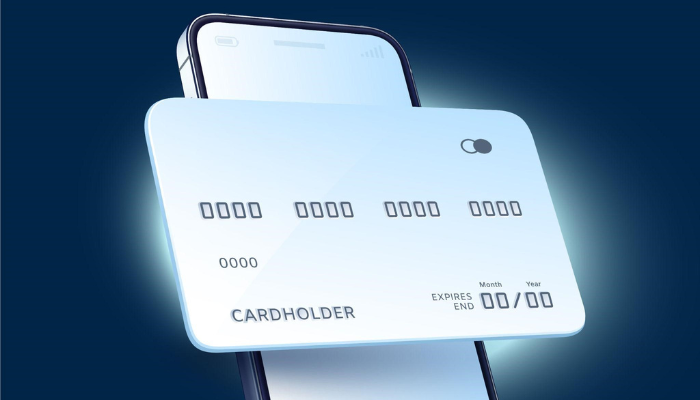
The Central Bank of Nigeria’s (CBN) foreign exchange reforms are beginning to deliver tangible benefits to consumers, as banks expand international spending limits on naira cards amid improved liquidity in the foreign exchange market.
Guaranty Trust Bank (GTBank) has become the first among Nigeria’s 33 recapitalised banks to raise the international spending limit on its naira card to $20,000 per quarter, allowing customers to pay for flights, hotel bookings, school fees, goods and other eligible international transactions.
The new limit represents a sharp increase from the $6,000 quarterly cap introduced in November 2025 and is 20-times higher than the $1,000 quarterly limit announced in July 2025.
The move comes as analysts point to a more liquid foreign exchange market following reforms introduced by the CBN over the past three years.

“This reflects the improved liquidity in the foreign exchange market. It also shows the focus of banks in maximising income from card payments,” said Ayokunle Olubunmi, head of Financial Institutions Ratings at Agusto & Co.
Muda Yusuf, chief executive officer of the Centre for the Promotion of Private Enterprise (CPPE), said the increase in card spending limits reflects the significant improvement in liquidity and confidence in Nigeria’s foreign exchange market.
“It’s an indication that the liquidity in the foreign exchange market has improved significantly and we can see that from the stability of the exchange rate. We can also see that reflected in our foreign reserves. All of these things reflect the level of confidence,” Yusuf said.
According to him, businesses and individuals are no longer under pressure to obtain foreign exchange for legitimate transactions, unlike in the past when access to dollars was constrained.
“It also means that citizens and those who use foreign exchange are no longer desperate about foreign exchange usage. Whether you want to use it through your card or access it for international trade, there is no anxiety, there is no pressure and there is no desperation. All of these things have arisen because the level of confidence in the foreign exchange market and the outlook for the market have been very reassuring,” he said.
Yusuf added that the adjustment of international spending limits by banks demonstrates growing confidence in the sustainability of the foreign exchange market reforms.
“That is why we are seeing all these positive developments around the use of the naira card abroad and the limits that are now being adjusted by banks. It is a very good development and I hope we can sustain it. I am confident we will.”
The increase follows a series of policy changes by the apex bank aimed at deepening the foreign exchange market and improving access to foreign currency for legitimate transactions.
Under the CBN’s Foreign Exchange Manual, Fourth Edition, the maximum tuition fee remittance for Nigerian students pursuing undergraduate and postgraduate studies abroad was raised to $25,000 per semester, from the previous $15,000.
“Payment of tuition fees for undergraduate/postgraduate studies shall be subject to a maximum limit of $25,000.00 per semester,” the Manual states.
The expansion of international card limits also reflects growing confidence among lenders that foreign exchange liquidity has improved enough to support retail dollar transactions.
Access Bank recently published a daily exchange rate of N1,378 per dollar for international payments made with its naira cards. The bank allows holders of Visa Signature and Visa Platinum cards to spend up to $3,000 per month, while Visa Classic and Mastercard holders have a monthly limit of $2,000.
United Bank for Africa (UBA) also quoted N1,378 per dollar for international transactions on naira cards as of August 3, 2026, advising customers to complete transactions early because rates are updated daily in line with market conditions.
Stanbic IBTC, however, maintains a significantly lower international spending limit of $100 per month on its naira debit card, applicable across point-of-sale terminals, web payments and ATMs.
The banks’ renewed appetite for international card transactions aligns with the CBN’s assessment that Nigeria’s foreign exchange market has become sufficiently liquid to function with minimal intervention from the Central Bank.
Speaking recently at the BusinessDay 14th Annual CEO Forum in Lagos, CBN Olayemi Cardoso, governor of the CBN said buying and selling activities now increasingly determine outcomes in the foreign exchange market, unlike in the past when market participants relied heavily on routine Central Bank interventions.
According to Cardoso, Nigeria’s net foreign exchange reserves have risen from just over $3 billion at the start of the reform programme to more than $40 billion, while gross reserves have climbed to about $52 billion, providing stronger confidence for investors and enabling the Central Bank to reserve interventions for periods of market stress rather than day-to-day liquidity management.
The restoration and expansion of international naira card spending limits are increasingly being seen as one of the clearest signs that the benefits of the CBN’s foreign exchange reforms are beginning to reach households, students and businesses making legitimate cross-border payments.(BusinessDay)
-

 Metro18 hours ago
Child trafficking suspect admits receiving ₦250,000 per child
-
News18 hours ago
Ebola: Uganda seeks Nigerian woman’s travel history from FG
-
Politics18 hours ago
2027: Tinubu campaign council creates new directorate, reshuffles teams
-
Business17 hours ago
Transport, petrol prices soar in S’East amid fuel discount
-
News18 hours ago
Abuja bizman arrested over alleged $120m fraud
-
Politics18 hours ago
Ebola case: Atiku urges calm, backs contact tracing
-
Metro16 hours ago
Otedola Bridge rapidly becoming Nigeria’s deadliest accident spot
-
Business17 hours ago
Senate Summons Olam Nigeria, MD, Eight Other Executives Over Alleged $15Billion Forex Transactions