News
Nigeria’s reform success hinges on living standard

Nigeria’s economic reforms are restoring macroeconomic stability, but experts say success depends on creating jobs, raising incomes and improving living standards. SAMI TUNJI examines why the next reform phase must deliver tangible benefits for ordinary Nigerians
Three years into one of Nigeria’s most ambitious economic reform programmes in decades, the debate among policymakers is changing. The initial focus was on correcting deep macroeconomic distortions. Today, attention has shifted to a more difficult challenge: how can those reforms translate into higher incomes, decent jobs and better living standards for millions of Nigerians?
That question dominated discussions at the 7th Africa Emerging Markets Forum in Abuja, where central bankers, finance ministers, economists and development experts examined how African economies can navigate geopolitical tensions, shifting trade patterns, artificial intelligence and tighter global financial conditions. Rather than debating whether reforms were necessary, speakers concentrated on how governments could ensure that difficult policy decisions ultimately improve citizens’ welfare.
For Nigeria, the timing is significant. Since 2023, the Federal Government and the Central Bank of Nigeria have implemented major fiscal and monetary reforms, including the removal of petrol subsidies, foreign exchange market reforms, tighter monetary policy, banking sector recapitalisation and tax reforms. Official data indicate that some macroeconomic indicators are improving. Nigeria’s economy grew 3.89 per cent in the first quarter of 2026, external reserves remained above $50bn and inflation eased marginally to 15.91 per cent in June after three consecutive monthly increases. Meanwhile, the Monetary Policy Committee has retained the benchmark interest rate at 26.5 per cent in its effort to preserve price stability.

Despite these gains, households and businesses continue to grapple with high food prices, elevated borrowing costs and weakened purchasing power. Participants at the forum therefore agreed that the next stage of Nigeria’s reforms must move beyond stabilisation to creating jobs, raising productivity and improving living standards.
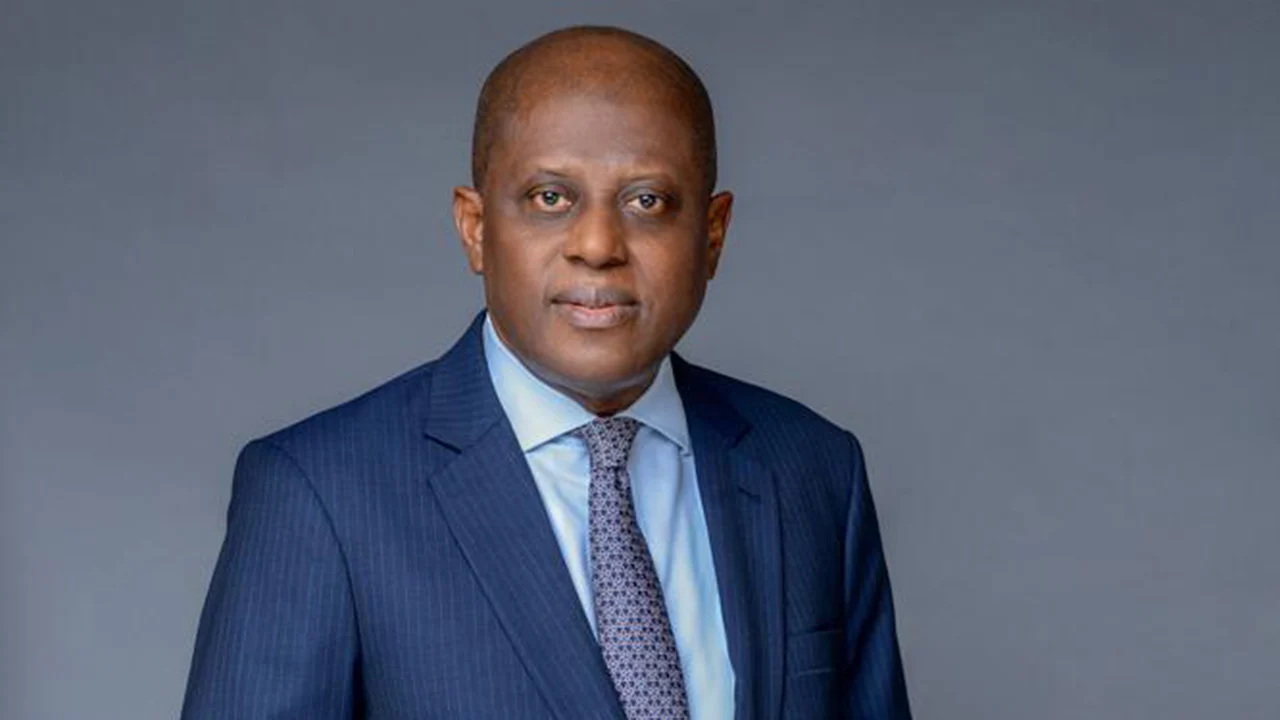
CBN Governor Olayemi Cardoso argued that this challenge extends beyond Nigeria as Africa confronts a rapidly changing global economy. He identified three forces reshaping the global economy. The first is the fragmentation of global trade, which he believes should encourage African countries to deepen regional integration.
“Intra-African trade still accounts for only about 16 per cent of our total trade. We must build stronger regional value chains, produce more of what we consume, and trade more with one another,” Cardoso said.
The second is the increasing selectivity of global capital. “The era of abundant liquidity chasing returns regardless of risk is over,” the CBN governor noted. According to Cardoso, investment now flows to countries with credible institutions, transparent policies and consistent governance. As a result, African economies must rely more on domestic savings, pension assets, insurance funds and diaspora capital.
“Credibility is not only a CBN concern; it is a national economic asset,” Cardoso added.
The third force is artificial intelligence. Rather than remaining consumers of imported technology, Cardoso urged African countries to invest in electricity, digital infrastructure and skills that would enable them to develop home-grown solutions.
“Africa must move beyond being consumers of technology. We must become creators, developing African solutions to African challenges,” the apex bank chief said.
He argued that Nigeria’s reforms were intended to prepare the economy for these structural shifts.
“We unified the exchange rate, restored price discovery, ended monetary financing of fiscal deficits, and rebuilt the foreign exchange market around transparency and settlement integrity,” Cardoso said.
While acknowledging the sacrifices involved, he said the reforms had begun strengthening macroeconomic fundamentals.
“Today, the results of those sacrifices are evident. Inflation has moderated from high levels despite the energy shock. External buffers have strengthened, and the financial system is safer and better capitalised,” he said.
Still, Cardoso stressed that stability alone was not the goal. Macroeconomic stability, he said, is only the foundation for investment, productivity and job creation rather than an end in itself.
Reality tests reforms
If Cardoso’s message was that stability creates the conditions for growth, the Director-General of the World Trade Organisation, Dr Ngozi Okonjo-Iweala, argued that reforms must ultimately improve people’s lives. Speaking against the backdrop of growing geopolitical tensions, she rejected suggestions that globalisation was collapsing.
“To call this an era of geo-economic uncertainty feels like a polite understatement,” Okonjo-Iweala said.
Instead, she described the current period as one of “competitive interdependence.”
“What we are seeing is not the end of globalisation, but its transformation from cooperative to competitive interdependence,” the WTO chief noted.
She noted that global goods and services trade reached a record $34.65tn in 2025, while most world trade still takes place under WTO rules or agreements built upon them.
For Africa, she said, the changing global economy presents an opportunity to build regional value chains instead of relying on raw commodity exports.
“Instead of the extract-and-export model… the goal should be higher value, higher productivity growth driven by the development of sub-regional value chains and integration into global supply networks,” she said.
With Africa holding roughly 30 per cent of the world’s known mineral reserves, she warned that the continent must seize emerging opportunities in critical minerals, green manufacturing and digital trade.
“Quite frankly, the time to seize this opportunity is now,” she affirmed.
Turning to Nigeria, Okonjo-Iweala praised recent monetary reforms. However, she cautioned that reforms must be accompanied by prudent fiscal management and responsible borrowing.
“Nigeria needs to continue the work on overall macroeconomic reforms with a careful approach to fiscal issues, contracting of debt, and debt management,” Okonjo-Iweala said.
Most importantly, she said, citizens must experience the benefits.
The WTO boss said, “Nigeria needs to focus on creating jobs and economic opportunities for a young and hungry population. Nigerians have to feel the dividends of reform in the real economy.”
That concern was echoed by World Bank Chief Economist and Senior Vice-President Indermit Gill. While acknowledging progress in inflation, revenue mobilisation and subsidy reforms, Gill questioned whether the benefits had yet reached ordinary Nigerians.
“The government actually has increased revenues, has reduced subsidies, and has controlled the deficit. But it’s not clear to people whether savings and the additional resources have been spent,” Gill said.
He also argued that monetary policy alone could not sustain the recovery.
“The Central Bank cannot bring the inflation rate down further without the help of the government,” the World Bank Chief Economist said.
According to Gill, fiscal policy must now complement monetary tightening by encouraging investment, boosting agriculture and creating jobs.
His remarks reflected the central challenge confronting Nigeria. While reforms have corrected major structural distortions, many businesses still face high financing costs and households continue to struggle with higher transport, food and energy prices. Participants therefore agreed that success should no longer be measured only by stronger reserves or exchange-rate stability, but by rising productivity, higher incomes and improved household welfare.
Reform dividends
For the Minister of Finance and Coordinating Minister of the Economy, Taiwo Oyedele, the next stage of Nigeria’s reform programme is not about introducing more corrective measures but ensuring that the benefits of existing reforms reach ordinary Nigerians.
Speaking during a conversation moderated by World Bank Chief Economist Indermit Gill, Taiwo Oyedele said President Bola Tinubu deliberately chose long-term economic stability over politically expedient decisions when he assumed office.
“When President Tinubu took office, he made a conscious choice. Long-term economic fundamentals over short-term political convenience. The administration inherited an economy weighed down by years of accumulated distortions. Postponing reform would have cost us more than confronting it,” Oyedele said.
He said the reforms, including exchange rate liberalisation, subsidy removal and tax restructuring, were designed to make Nigeria more competitive rather than simply increase government revenue. According to him, the tax reforms simplify the country’s tax system by reducing multiple taxes, expanding reliefs for small businesses, exempting low-income earners, removing VAT on selected essential goods and services, and establishing the Office of the Tax Ombud to strengthen taxpayer confidence.
The finance minister said, “These reforms are not simply about collecting more revenue. They’re about making Nigeria more competitive, because a competitive economy is what attracts capital and scale.”
Oyedele argued that early signs suggest the reforms are beginning to deliver results, citing stronger capital inflows, improved economic growth, healthier external reserves and the successful banking recapitalisation exercise. However, he stressed that stronger economic indicators alone would not define the success of the reforms.
“Stability is the foundation, not the destination. A reform that shows up on national statistics but not on the household dining table hasn’t finished its job,” Oyedele said.
Addressing public concerns over subsidy savings, Oyedele acknowledged that Nigerians deserved greater transparency. He said removing fuel subsidies and the “subsidy on foreign exchange” created fiscal savings equivalent to about five per cent of Gross Domestic Product, but emphasised that the primary objective was to eliminate distortions rather than simply reduce government spending.
He said, “So where has the money gone to? In a few days, you will see the detailed analysis, because we believe that we owe a duty to explain what we do to the Nigerian people. That’s what transparency looks like.”
According to the minister, much of the additional fiscal space has been absorbed by higher debt servicing costs following monetary tightening, implementation of the new N70,000 minimum wage and expanded social programmes such as the Nigerian Education Loan Fund.
He also defended continued government borrowing despite higher revenue generation.
The finance minister said, “If you have a budget to spend 10 and you have a target of revenue of six, you need to borrow four. If you collect revenue of seven, you have exceeded your revenue target… But it doesn’t change the fact that you still need to borrow three. There’s nothing wrong with borrowing, provided you’re applying productively every one naira and every one dollar that you borrow.”
Oyedele also addressed concerns over rising poverty, arguing that reforms had exposed long-hidden economic weaknesses rather than created them.
“The reform itself was a reset. We were living in fiscal illusions. So, we need to stop deceiving ourselves so the country can move forward,” the minister said.
He said the government would increasingly measure progress using multidimensional poverty, growth in real per capita income and inequality rather than relying solely on conventional economic indicators.
The finance minister affirmed, “Our intention is to make it prosperous for all Nigerians.”
On employment, Oyedele argued that Nigeria’s biggest challenge is not unemployment alone but widespread low-productivity work.
“If you have unemployment at five per cent and poverty at close to 70 per cent, then it doesn’t add up. It means you have a lot of working poor. So, you don’t just need to create jobs. You create decent jobs,” Oyedele said.
He said future reforms would prioritise agriculture, retail and other labour-intensive sectors while reducing the burden of excessive regulation on businesses.
The discussion also turned to artificial intelligence. Gill dismissed fears that AI would inevitably destroy jobs in developing economies, arguing instead that countries such as Nigeria risk being left behind if they fail to embrace the technology.
“There is a danger that countries like Nigeria… will miss this industrial revolution,” Gill said.
Rather than competing to develop frontier AI models, he said developing countries should focus on adapting existing technologies to improve agriculture, healthcare, education and judicial administration.
Another structural challenge was highlighted by the CBN’s Director of Statistics, Dr Okpanachi Moses. Presenting findings from research covering 36 Sub-Saharan African countries, Moses said food price volatility and inflation reinforce each other, limiting the effectiveness of monetary policy alone.
“What we found is… a mutually reinforcing relationship between food price volatility and inflation persistence,” Moses said.
Because households across much of the region spend between 40 and 60 per cent of their incomes on food, he argued that central banks cannot achieve lasting price stability through interest rate adjustments alone. Governments must also improve agricultural productivity, strengthen food systems and implement broader structural reforms.
As the forum drew to a close, discussions shifted from individual policy measures to Africa’s broader economic future. Executive Director of the Centre for the Study of the Economies of Africa, Dr Chukwuka Onyekwena, described the gathering as an opportunity to develop evidence-based responses to profound global changes. While geopolitical tensions, supply chain disruptions and rapid advances in artificial intelligence pose significant risks, he said Africa also has important advantages, including a youthful population, expanding digital economies, renewable energy resources and the African Continental Free Trade Area.
Emerging Markets Forum Founder and Chief Executive Harinder Kohli echoed that message, describing Africa as “the ultimate frontier for economic development” and urging policymakers to focus on practical solutions rather than theoretical debates. (Punch)
-

 Business24 hours ago
Nigerian tycoon Eruani Azibapu’s $1 billion Niger Delta refinery is nearing completion
-
Politics8 hours ago
BREAKING: Police summon APC senator over threat to ‘kill Accord members’
-
Politics22 hours ago
Osun guber: ‘I’m bulldozer, not afraid of FG, govs backing APC candidate – Adeleke
-
Politics8 hours ago
Osun election: 10 battleground LGs that may decide Adeleke, Oyebamiji race
-
News8 hours ago
‘It’s a crime’ — NCAA to investigate blockage of Lagos airport airside by bus
-
Business7 hours ago
Tinubu unveils framework to unlock $50bn offshore investment
-
Politics8 hours ago
‘Kill Accord’ Remark: Fadahunsi Backtracks, Says He Meant Votes
-
News8 hours ago
Fubara, lawmakers battle stalls Rivers N1.85tn budget