Business
Nigeria LNG bets on Train 7, new gas deals after revenue slips to $5.87bn

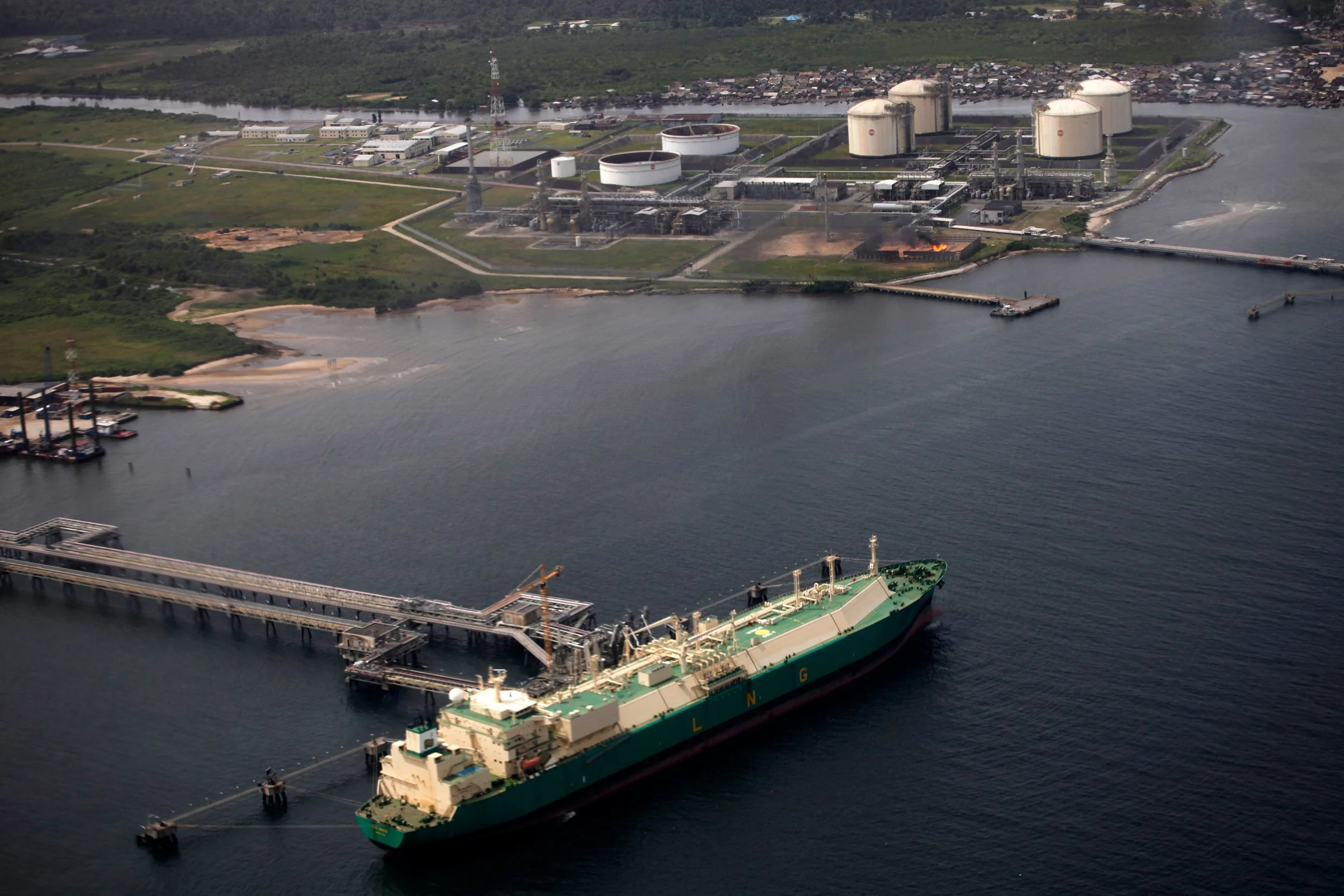
Nigeria LNG Limited (NLNG), the country’s largest gas exporter, is projecting a bullish outlook for the years ahead, even as its annual revenue slipped amid a force majeure declared nearly four years ago.
Its revenue fell to $5.87bn last year, down from $5.97bn in 2024, according to its latest Facts and Figures report. Capital investment, however, rose to $1.09bn from $1.06bn, underscoring the company’s push to expand production and strengthen its position in the global liquefied natural gas (LNG) market.
The company is banking on new long-term gas-supply agreements and its $4.3bn Train 7 project to revive growth. Train 7, currently under construction, is expected to increase production capacity from 22 million tonnes per annum (mtpa) to 30mtpa when it starts operations in 2027.
“With the construction of Train 7 well underway, the coming years will be exciting for NLNG,” the company said in the report. It added that it remained focused on safely delivering the project while responding to the global shift towards cleaner energy.

“At the same time, NLNG remains focused on maintaining its competitive position in the global LNG market,” it said.
NLNG’s revenue has fluctuated sharply over the past 15 years, reflecting shifts in global energy prices and domestic production challenges. Revenue rose from $22.8m when the company began operations in 1999 to a peak of $11.59bn in 2012.
It fell to $6.84bn in 2015, down from $10.79bn a year earlier, as global oil prices slumped.
Underinvestment in the industry
More recently, crude oil theft, pipeline vandalismand years of underinvestment in Nigeria’s oil and gas industry have disrupted feedgas deliveries to NLNG’s Bonny Island complex near Port Harcourt. These constraints have reduced plant utilisation and weakened the company’s standing in the international market.
NLNG declared force majeure in October 2022 after severe flooding disrupted gas production and reduced output at its liquefaction plant.
The company’s revenue plunged to $5.84bn the following year, down from $7.59bn in 2022.
Adeleke Falade, who took the helm as the company’s CEO in April, said at a Lagos briefing last month that the declaration remained in effect because gas supplies had not yet stabilised sufficiently.
“It’s still in place,” he said. “We are having conversations around what it will take for us to lift it.”
He said NLNG needed to demonstrate that any recovery in supply could be sustained before ending the declaration.
Strategy for shifting energy market
Beyond expanding capacity, NLNG said it was diversifying its portfolio, targeting niche markets, optimising delivery schedules, and reviewing sales and purchase agreements to maximise value.
It is also considering backhaul transactions and “LNG-as-a-service” solutions to enhance logistics and commercial flexibility.
The company said this strategy was necessary because Europe sought alternative supplies after the end of Russian gas transit through Ukraine, Asian demand continued to rise, and geopolitical tensions disrupted global energy flows.
NLNG sees natural gas retaining a significant role in the energy transition as countries move away from more carbon-intensive fuels, such as coal.
Falade said Nigeria was well placed to benefit from supply disruptions linked to Russia’s war in Ukraineand instability in the Middle East – but only if the country invested quickly enough to develop its resources.
“Nigeria is at a point where we can benefit a lot from the opportunities being created by what has happened in Russia or what is happening in the Middle East,” he said. “For us, it’s the time to invest.”
New suppliers ease feedgas squeeze
NLNG signed long-term agreements with six third-party suppliers last year, easing a feedgas shortage that had threatened the Train 7 expansion. The agreements form part of a broader effort to reduce the company’s historical dependence on gas supplied by affiliates of its shareholders.
Between 70 and 75% of NLNG’s feedgas now comes from companies outside the shareholder-affiliated suppliers, according to Falade. NLNG is jointly owned by the Nigerian government, Shell, TotalEnergies and Eni.
“We intend to get to the point where we have between 110 and 150% capacity of what the plant needs,” he said. “When there is an upset and one supplier has to go out, we know that we’re not stuck.”
NLNG is also in discussions with additional producers and is exploring ways to make its facilities a preferred destination for their gas, according to the CEO.
The company said that dedicated upstream gas projects had already been identified to supply Train 7. Securing credible feedgas sources would also be a condition of investment in any additional production trains.
“It became obvious to us that we needed to be more ambitious about our growth,” Falade said. “Today, we have started initial conversations and exploratory activities around what it will take to grow to Train 8, Train 9 and Train 10.” (The Africa Report)
-

 Metro19 hours ago
Child trafficking suspect admits receiving ₦250,000 per child
-
News19 hours ago
Ebola: Uganda seeks Nigerian woman’s travel history from FG
-
Politics19 hours ago
2027: Tinubu campaign council creates new directorate, reshuffles teams
-
Business19 hours ago
Transport, petrol prices soar in S’East amid fuel discount
-
News19 hours ago
Abuja bizman arrested over alleged $120m fraud
-
Politics19 hours ago
Ebola case: Atiku urges calm, backs contact tracing
-
Metro17 hours ago
Otedola Bridge rapidly becoming Nigeria’s deadliest accident spot
-
Business19 hours ago
Senate Summons Olam Nigeria, MD, Eight Other Executives Over Alleged $15Billion Forex Transactions