Politics
ANALYSIS: How Large Voter Turnout Diluted Vote Buying In Osun

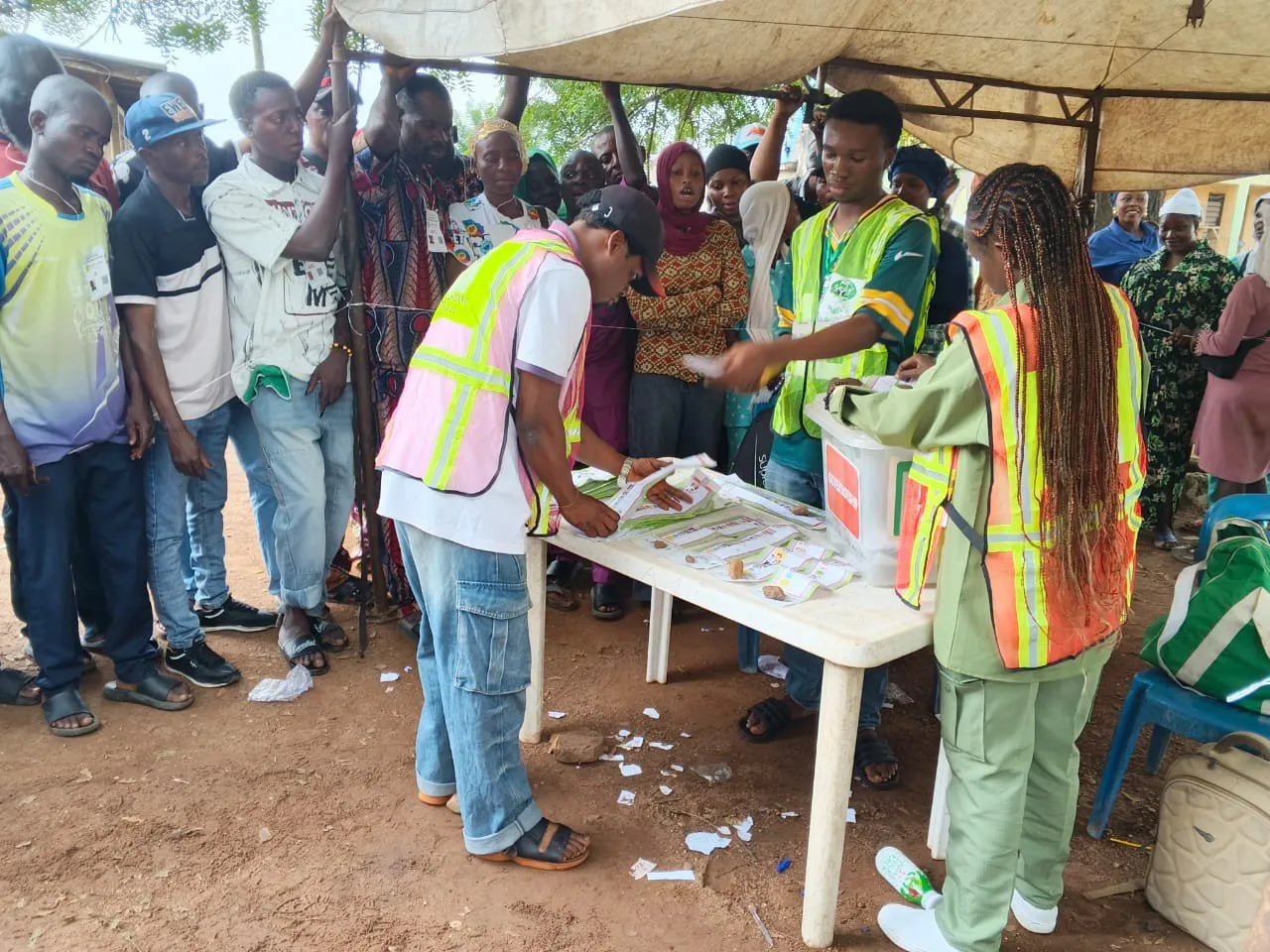
The expansion of Osun State’s electorate and the increase in the number of voters who participated in the 2026 governorship election may have made retail vote buying less effective, according to an analysis by the Athena Election Observatory (AEO).
The observatory’s preliminary assessment of the August 15 election shows that the number of registered voters rose from 1,952,387 in the 2022 governorship election to 2,339,544 in 2026, representing a 19.8 per cent increase.
At the same time, accredited voters rose from 827,218 to 1,010,684, while total votes cast increased from 823,124 to 1,005,800.
The figures indicate that the number of people who actually participated in the election expanded alongside the voter register, creating a larger and more difficult electorate for political actors attempting to influence individual voters through cash or other inducements.

The AEO said the growth in the active electorate introduced greater uncertainty and increased the cost of attempting to manipulate voters on a retail basis.
“Substantial electorate growth mitigates retail vote buying,” the observatory said in its preliminary assessment, explaining that the combination of a rapidly expanding voting population and a broadly stable accreditation rate could reduce the effectiveness of attempts to buy individual votes.”
The accreditation rate moved only marginally from 42.37 per cent in 2022 to 43.20 per cent in 2026.
This means that the increase in votes cast was not simply the result of a dramatic change in the proportion of registered voters who turned up. Rather, the size of the registered electorate itself expanded considerably, while participation also increased.
Register expands by nearly 400,000 voters
The most striking change in the AEO’s comparison is the expansion of the voter register. Osun had 1,952,387 registered voters in 2022. By 2026, the figure had risen to 2,339,544, adding 387,157 voters to the register over four years. That represents a 19.8 per cent increase.
The expansion matters because vote buying generally operates at the individual or household level. A political actor seeking to influence an election by purchasing votes must identify willing voters, mobilise them and ensure that the transaction translates into actual votes.
A larger electorate increases the number of voters that would have to be reached to produce a decisive effect across the state. The AEO therefore argued that the expanded electorate made retail manipulation more difficult and potentially more expensive.
“This combination of a rapidly expanding active voting population and stable accreditation rates suggests that a larger, competitively mobilised electorate dilutes the efficacy of retail voter manipulation on election day,” the observatory said.
The assessment does not mean vote buying disappeared from the election. Reports from the field showed that vote trading remained a concern in some locations. There were several reports of vote trading at polling units during the election.
The significance of the AEO analysis is therefore different: it suggests that even where individual voters were targeted, the sheer scale and competitiveness of participation could make retail inducement less capable of determining the overall outcome.
More voters actually cast ballots
The growth becomes more significant when measured against the number of accredited voters and total votes cast.
Accredited voters increased from 827,218 in 2022 to 1,010,684 in 2026. That represents an increase of 183,466 accredited voters, or about 22.2 per cent.
Total votes cast also increased from 823,124 to 1,005,800, an increase of 182,676 votes, or about 22.2 per cent.
In other words, more than one million voters participated in the 2026 election according to the AEO’s preliminary dataset.
That larger pool of voters potentially changed the economics of vote buying.
Where fewer voters participate, a relatively small number of purchased votes can have a greater influence on the final result, particularly in a closely contested election. But as participation expands, political actors face a larger and more dispersed voting population, making it harder to rely on small-scale inducement to secure an election-wide advantage.
The AEO described the phenomenon as a dilution effect rather than an elimination of vote buying.
Its assessment said the “rapidly expanding active voting population” combined with stable accreditation rates could reduce the effectiveness of retail voter manipulation.
Participation increased without a major turnout-rate jump
The data also provides an important qualification.
Although the number of voters increased substantially, the accreditation rate did not rise by a comparable margin. In 2022, accredited voters represented 42.37 per cent of registered voters. In 2026, the figure stood at 43.20 per cent.
That is an increase of only 0.83 percentage points.
The distinction is important for understanding the AEO’s argument.
The election did not experience a dramatic increase in the proportion of registered voters participating. Instead, the electorate became significantly larger, and the number of voters who participated increased broadly in line with that expansion.
For a data analysis, this suggests that the principal structural change was the enlargement of the voting population rather than an extraordinary surge in turnout as a percentage of registration.
The AEO nevertheless considered the larger pool of active voters significant because it increased the number of voters political parties had to mobilise and potentially influence.
Both major camps expanded their vote
The AEO’s data also shows that the increase in participation benefited both leading political camps.
Governor Ademola Adeleke’s vote count increased from 403,371 in 2022 to 511,067 in 2026, representing an increase of 107,696 votes.
The APC’s vote count also increased, rising from 375,027 in 2022 to 444,815.
That represents an increase of 69,788 votes.
The figures show that the two leading political forces did not simply compete over a shrinking pool of voters. Both expanded their vote totals substantially compared with the previous election.
Yet the additional mobilisation did not produce an extremely narrow result.
Instead, according to the AEO, the declared margin increased from 28,344 votes in 2022 to 66,252 votes in 2026.
The margin therefore widened by 37,908 votes and became more than twice the 2022 margin.
For the observatory, the data points to an election in which strong political mobilisation occurred on both sides, but where the larger electorate and intense competition made the outcome more difficult to manipulate through isolated interventions.
Competition added another layer of protection
The AEO did not attribute the observed resilience solely to voter numbers. It identified political competition as another important factor.
“Organised political competition is itself an important safeguard for electoral integrity,” the observatory said.
It explained that parties with agents deployed across polling units, knowledge of electoral procedures and the ability to independently monitor results create additional obstacles to large-scale manipulation.
“Where competing political parties possess capabilities at scale,including agents across polling units, working knowledge of the electoral process, and the capacity to track results independently, manipulating an election becomes much harder to execute without detection,” the AEO said.
The implication is that vote buying and other forms of electoral manipulation become more difficult when multiple political organisations possess the capacity to observe, document and challenge irregularities.
This creates a monitoring effect around the polling process.
In practical terms, an attempt to manipulate results or influence voting behaviour at one polling unit may face scrutiny from rival party agents, observers and voters.
Technology strengthened the audit trail
The AEO also linked the electoral environment to improvements in election technology.
The observatory credited the Independent National Electoral Commission’s deployment of the Bimodal Voter Accreditation System, immediate uploading of polling-unit results to the IReV portal and structured digital data entries with creating a more transparent and auditable trail.
The technology does not directly prevent vote buying. Rather, its value lies in strengthening the chain through which votes are accredited, recorded, uploaded and eventually collated.
INEC’s official results platform currently shows 3,611 of the 3,763 expected polling-unit results uploaded, representing a 96 per cent completion rate.
Yiaga Africa also separately reported that electoral technology and voter vigilance strengthened transparency during the election, although it identified implementation gaps.
The AEO, however, said technological progress still requires further improvement, particularly around upload delays, public transmission timelines, system resilience and reconciliation between different digital records.
Vote buying remains a concern
The AEO’s analysis should not be interpreted as evidence that vote buying was absent or insignificant in Osun.
Indeed, other election observers identified voter inducement as a continuing concern.
Yiaga Africa said widespread reports of vote buying and voter inducement raised concerns about the integrity of voter choice, even while its statistical verification found that the official results were consistent with the votes recorded at polling units.
That distinction is important.
An election can produce results that accurately reflect the ballots counted at polling units while questions remain about how some voters arrived at their choices.
Thus, the AEO’s argument about voter growth concerns the effectiveness and scale of retail manipulation, not the disappearance of inducement from the electoral process.
The data suggests that a larger participating electorate can make it harder for vote buying targeted at individual voters to determine the overall result.
What the numbers suggest
Taken together, the AEO figures present a clear pattern.
Registered voters increased by 387,157 between 2022 and 2026. Accredited voters increased by 183,466, while total votes cast increased by 182,676.
At the same time, the accreditation rate remained broadly stable, moving from 42.37 per cent to 43.20 per cent.
The two major candidates also increased their individual vote totals, while the final declared margin expanded from 28,344 to 66,252 votes.
The data therefore points to an election characterised by a larger electorate, higher absolute participation, intense competition and a wider declared margin.
For the AEO, those conditions collectively raised the structural barriers to electoral manipulation.
The observatory said the announcement of a winner should not end scrutiny of the election. Instead, it plans to conduct an independent post-election audit focused on the accuracy and resilience of the electoral collation system.
“We are not asking who should have won. Voters have voted, and INEC has exercised its statutory responsibility to declare the winner,” the AEO said.
“We are asking a different question: How resilient, transparent, and accurate is the structural chain of collation when subjected to total digital and declared results?”
The question is significant because the Osun data shows that electoral integrity cannot be measured solely by turnout, technology or the final margin.
A larger electorate may dilute the influence of retail vote buying, but the persistence of reported voter inducement means the quality of voter choice remains a separate issue from the accuracy of vote counting.
The 2026 Osun election therefore provides two different data stories: more voters participated than four years earlier, making retail manipulation more difficult to scale, while election observers continue to demand stronger safeguards against inducement and greater transparency across the digital and physical stages of the electoral process.
The AEO’s assessment ultimately suggests that the combination of more voters, stronger political competition and improved electoral technology created a more difficult environment for large-scale manipulation, but not one in which electoral risks have disappeared. (Daily trust)
-

 News23 hours ago
Ebola: NCDC to pay contacts N100,000 weekly
-
Politics22 hours ago
‘Weapon fashioned against APC’ — outrage as youth leader gifts 2026 Prados to party officials, then deletes post
-
Politics23 hours ago
We’ll Soon Expose Those Plotting To Scuttle My Guber Ambition – Pantami
-
Politics22 hours ago
We Won’t Allow Repeat Of 2023 Defeat – Lagos APC
-
News22 hours ago
Zamfara Steps Up Ebola Containment Measures After Passenger With 38°C Fever Arrives Airport
-
Metro22 hours ago
Okonjo-Iweala’s mother dies at 96
-
News22 hours ago
States’ six-month debt servicing bill hits N800bn
-
Politics22 hours ago
2027: NDC slams Tinubu, APC over ₦1bn worth of Prado SUVs for youth leaders