Business
Nigeria’s FTSE frontier return boosts prospects for Dangote refinery IPO

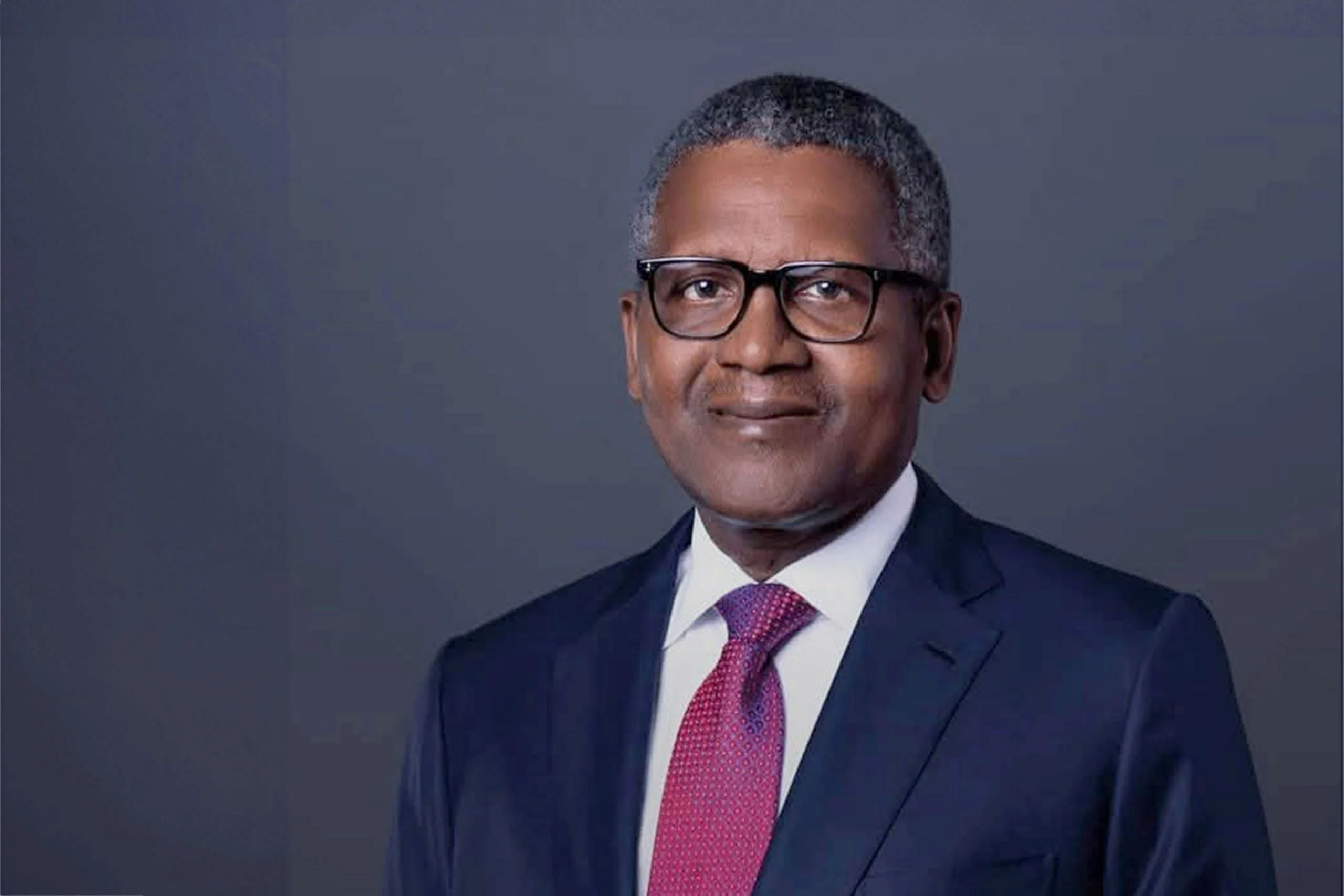
Nigeria’s return to a key global equity index is expected to boost the highly anticipated initial public offering of Africa’s largest refinery. FTSE Russell’s decision to readmit Nigeria to its Frontier Market Index after a three-year absence provides a tailwind for Africa’s richest man, Aliko Dangote, ahead of what is expected to be the continent’s largest IPO.
The London-based index provider confirmed that the reclassification would proceed as planned, ending nearly two months of uncertainty about whether Nigeria’s transition to a T+1 settlement cycle would derail the upgrade.
Following further assessment, FTSE Russell said “no material settlement, operational or funding issues have been observed since the implementation of the T+1 settlement cycle”.
The decision comes as Dangote Petroleum Refinery and Petrochemicals FZE prepares for a share sale that could raise about $5bn and value the 650,000-barrel-per-day facility at between $40bn and $50bn. The company has filed its IPO application with the Securities and Exchange Commission. Its prospectus is expected in September, with the public offer targeted for October.

“Both events are good for the market. That they’re happening sequentially is positive,” says Gloria Fadipe, head of research at CSL Stockbrokers. “That may mean we will see more foreign participation in the Dangote Refinery listing.”
In August, the company secured a $1bn underwriting programme comprising a fully funded $600m tranche covering its completed private placement and a further $400m commitment for the IPO, according to its co-financial advisers, Marob Strategies and Lilium Capital.
Catalyst for foreign capital
Bismarck Rewane, chief executive of Lagos-based Financial Derivatives Company, says the FTSE reclassification creates opportunities but also leaves Nigeria more vulnerable.
“It means many investors can include Nigeria in their portfolios,” he says. “It is an endorsement of the market, its transparency and its efficiency.” Rewane expects the refinery listing to attract a broader pool of subscribers. “It means that there will be many more potential investors.” However, he stresses that Nigeria’s underlying investment conditions matter more than the classification itself.
Foreign portfolio inflows can lift markets rapidly but can leave just as quickly if confidence weakens, he warns. Nigeria must therefore become “much more transparent, efficient and accountable to investors”.
NGX Group CEO Temi Popoola described the reclassification as “an important milestone”, adding: “The real opportunity is what comes next. We must turn greater international visibility into broader participation, deeper liquidity and more capital for Nigerian businesses.”
Following the FTSE announcement, the stock market ended an 11-day losing streak on 27 August and had extended its gain to 2.3% by 31 August.
Why Nigeria was removed from global indices
FTSE Russell downgraded Nigeria from Frontier to Unclassified status in September 2023 after foreign investors struggled to repatriate capital at exchange rates acceptable for index calculations. A month later, New York-based MSCI reclassified its Nigeria indices from Frontier to Standalone Markets, citing foreign-exchange liquidity problems that had persisted since March 2020. S&P Dow Jones Indices subsequently announced a similar downgrade, effective March 2024.
The decisions followed a severe forex shortage. On 14 June 2023, two weeks after President Bola Tinubutook office and began implementing economic reforms, the Central Bank of Nigeria allowed the naira to depreciate by as much as 40% against the dollar.
Fadipe says the conditions that led to Nigeria’s exclusion have since eased. “There is better forex liquidity. You can get forex now if you are investing in the market,” she says. “I don’t think you’re going to be waiting for two years to repatriate funds. Both liquidity and stability have improved. We’ve not seen another major devaluation.”
FTSE Russell announced in March that Nigeria would be upgraded from Unclassified to Frontier status, effective 21 September 2026. Its assessment gave the country passing grades in areas including regulation, capital repatriation, brokerage competition, taxation and settlement efficiency.
Managing the T+1 settlement risk
On 1 June, the Nigerian Exchange adopted T+1 settlement, six months after shifting from T+3 to T+2. The change placed Nigeria ahead of every other African bourse and aligned it with markets in the United States and Canada.
However, it initially threatened the FTSE upgrade. On 30 June, the index provider warned that the accelerated system could turn Nigeria into “a de facto prefunded market for international institutional investors”.
NGX Group led a delegation to London in July to meet FTSE Russell and global investors. On 12 August, the Securities and Exchange Commission set 5pm on the first business day after a transaction as the settlement deadline for equities and commodities cleared via the Central Securities Clearing System.
The regulator clarified that foreign portfolio investors would not be required to pre-fund their accounts. Capital-market operators must instead establish controls to ensure timely funding, it said.
“Under the new cycle, four separate processes have to be completed within one business day,” says Gbemi Adelokiki, an analyst at Coronation Asset Management. Investors must convert dollars into naira, move the funds through the banking system, instruct and match trades through the custody chain, and settle at the depository. “What is new is that they have to happen in half the time that was previously available,” she adds.
More work remains
Finance Minister Taiwo Oyedele described FTSE Russell’s decision as validation of the country’s reform trajectory and “a meaningful signal to global capital that our market is open, orderly and improving”.
Rewane warns against celebrating prematurely, saying Nigeria must maintain reform discipline to earn investor confidence.
Asked whether the country is ready to return to the MSCI Frontier Markets Index, which attracts much larger pools of passive capital, he says: “We should take one step at a time. If you are classified by FTSE Russell as a frontier market, it is something the Morgan Stanley Index will also consider. But you have to finish your O Levels before your A Levels. There is much more work to be done to attract and earn investor confidence.”
S&P Dow Jones Indices placed Nigeria on its watchlist on 7 July and said it would monitor developments through the rest of 2026, with a possible upgrade from Standalone to Frontier status next year.
Fadipe expects the FTSE decision to support Nigeria’s return to other major indices, particularly MSCI, which is tracked by many international fund managers.
Closing the foreign-investor gap
Before Nigeria’s exclusion from the global indices, foreign investors accounted for an average of about 42.7% of domestic equity trades over the preceding decade, according to CSL Stockbrokers. By July, their share had fallen to 5.6%, leaving domestic investors dominant.
CSL expects FTSE re-entry to provide incremental liquidity rather than immediately transform market activity. The effect will probably be strongest among large-cap, highly liquid stocks, where international investors can deploy capital efficiently, it said.
“We expect foreign participation in the domestic equities market to increase following the re-inclusion, as enhanced market visibility and access to a broader pool of offshore investors, particularly global funds benchmarked against the FTSE Frontier Market Index, could support stronger portfolio inflows,” according to CSL. (The Africa Report)
-

 News22 hours ago
Ebola: Don’t panic – FG tells Nigerians
-
News22 hours ago
Gas leak: Ogun schools shut, over 100 pupils hospitalised
-
News21 hours ago
Italy rejects 2,220 Nigerians seeking asylum
-
News21 hours ago
State Police: Ekiti, Kebbi endorse bill, tally hits 15
-
 Politics22 hours ago
Imam Removed After Campaigning For Tinubu At Bauchi Mosque
-
Sports22 hours ago
Como Humiliates Manchester United 4-1, Osimhen Scores In Galatasaray UCL Win
-
Business21 hours ago
Guinness Nigeria profit jumps 53% to N40.69bn
-
Business21 hours ago
Nigerian billionaire Aliko Dangote eyes Egypt oil refining in $15 billion plan