Opinion
Atiku, Tinubu, subsidy removal and Azu Ishiekwene’s devilnomics

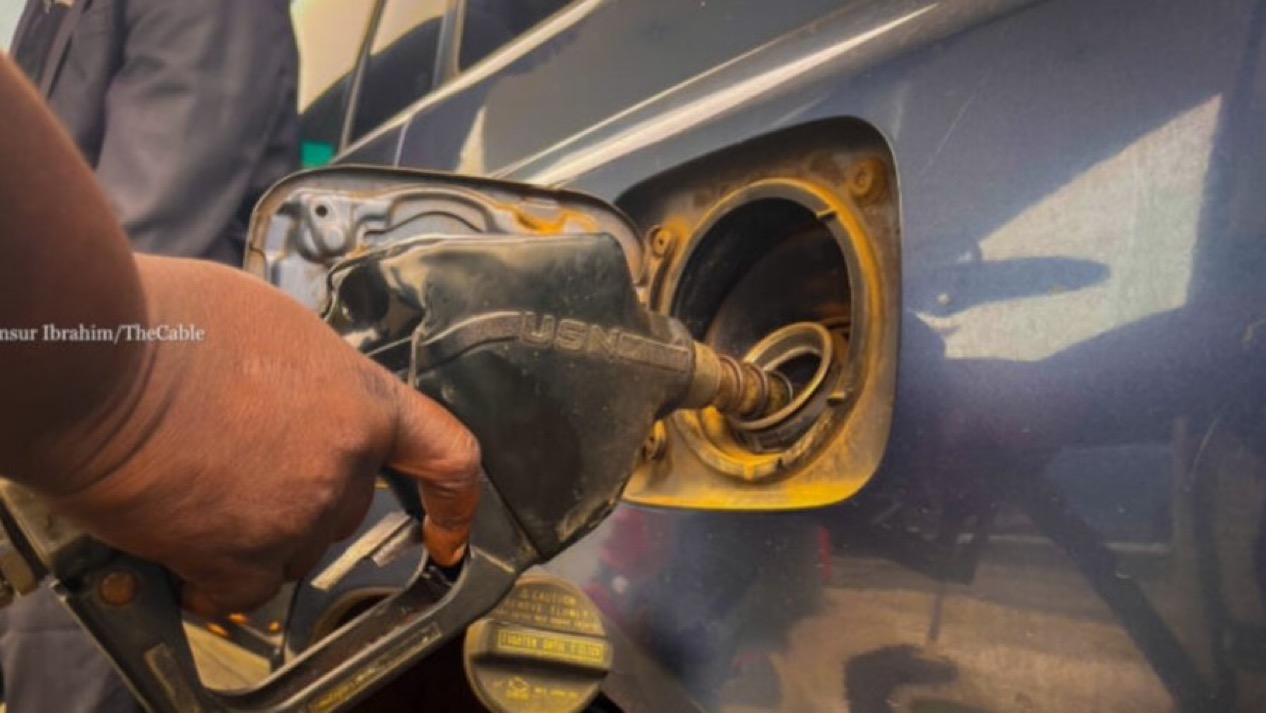
On September 3, 2026, Azu Ishiekwene served Nigeria his poisoned chalice; an opinion piece titled ‘Has Atiku Cornered Tinubu On Petrol Subsidy?’ Just as the title appears to be a harmless inquiry into the effects of African Democratic Congress (ADC) candidate Atiku Abubakar’s campaign promise to reintroduce petrol subsidy on President Bola Tinubu’s re-election chances, anyone could be misled into thinking Mr Ishiekwene was embarked on a middle of the road wholesome interrogation of the subjects. Instead, the body of the article was a devil’s brew of deceptive philosophy. He offered his readers a one-sided fusillade of thunderbolts against the former Vice President Atiku Abubakar’s ideas. Worse still, he gave reasons aplenty (six in all, yes, he actually numbered them) why it is impossible to effectively and effectually reintroduce petrol subsidy in Nigeria.
The most inexcusable failure in Ishiekwene’s treatise is the
wooden-headed insistence that refined petroleum products importation
bazar is the only option open to Atiku. Before we proceed to the other
issues, lets quickly throw off Ishiekwene’s unreasonable reasons
energetically out of the window.
Ishiekwene: “First, I’m not sure how many local refineries will be
left if subsidies return. The Waltersmith Refinery, the Edo Refinery,
the Aradel Refinery, and the Dangote Refinery (the most consequential
in terms of output) were all built with zero subsidies, a regime that
profited the state-owned NNPC by encouraging racketeering in import
licences. A return to petrol subsidy will damage investments in local
refineries and hand the future back to the racketeers.”
My reply: Which 11th Commandment of God decreed that any subsidy
regime must depend on import of refined petroleum products? And is
Ishiekwene the Black Moses to whom God Almighty in his infinite wisdom
handed the tablet on which that law was etched? On which Mount Sinai
did he receive it?
Why was he so confident that no new formula could be worked out with
the local refineries? What if they received crude petroleum on a
subsidized rate first of all?

Ishiekwene: “Second, there is no legal basis to return the subsidy. In
March 2022, Senate President Ahmad Lawan said that an amendment to the
Petroleum Industry Act (PIA) would be required to extend the subsidy
regime because the law contained no such provision.”
My reply: Please, dear Ishiekwene, who made that law? If the Petroleum
Industry Act (PIA) was passed in 2022, which law in heaven and earth
has banned it from being amended or repealed? Or is it not a man-made
law, enacted here by members of the National Assembly? Haba,
Ishiekwene, haba!
Ishiekwene: “Several sections of the PIA, specifically Section 205(1),
make this point clearly: “Subject to the provisions of this section,
wholesale and retail prices of petroleum products shall be based on
unrestricted free market pricing conditions.”’
My reply: Come on, man, come on! This is pure deceptive philosophy; it
is so deceptive that even the devil himself would love it. The NNPC
Plc will produce the refined products in detailed business
relationships with local refineries, including any of Nigeria’s
refineries that could still be repaired and put to work as part of the
“unrestricted free market pricing conditions.” Then, any Seyi or Azu
or Suleiman could import petrol all they like from Malta blending
facilities into Nigeria…and the open market would welcome them with
open arms to sell such imported petrol at any price. In fact, that
would give the buyers the real choice; to buy the imported blended one
or the truly locally refined one.
Where’s the crude?
Ishiekwene: “Third, even though Nigeria’s oil production has risen
from about 1.2 mpd to about 1.6 mpd, about 30 per cent of this stock
set aside and managed by the NNPC has been pledged in forward deals
for many years. There’s hardly any headroom left, which explains why
the NNPC cannot even meet its current obligation to the Dangote
Refinery.”
My reply: This is outrageous. I have to grope for a most civil way to
put this, because this insults our collective intelligence. We could
begin by reexamining such deals and check our jurisprudence books for
any infractions, and how to punish those responsible for such a
misfortune. Then the real answer is that nothing is written in stone.
Some past failed leaderships have forced Nigeria to mortgage her
future for her yesterday. Yet, what could be remedied must be
remedied. The loan incredible load sitting on Nigeria’s bare head, the
repayment of which we have been doing with crude oil, could be
lightened by using the cash we could save when any leader, not just
Atiku, could get the NNPC Plc to enter into crude oil for refined
petrol deals with the local refineries and by that time, we could even
begin to export refined petrol. God did not forbid Nigeria from
exporting petrol. In fact, the Dangote refinery is showing us that
way.
Ishiekwene: “Four, for nearly 10 straight years until 2023, there was
no new investment, onshore or offshore, largely due to the delay in
passing the PIA. Even with recent commitments, it would take some time
before significant onshore production could start, limiting supply and
hampering the redemption of any subsidy promissory notes.”
My reply: That was Ishiekwene’s deceptive philosophy at its most virulent, outrageous and diabolical level. This is enough to make anyone weep. This is devilish, and that is putting it mildly. The Punch Newspaper, which Ishiekwene edited and headed published on the 13th of August 2026 that Nigeria had met her OPEC quota for three straight months. I know that there are lies, damned lies and statistics but even those who have embraced devilnomics should at least pay due homage to bare facts.
I wrote the above paragraph based on the knowledge that even if Nigeria had the capacity and capability to produce 10 million barrels of crude oil daily, it must stay fidel to her OPEC quota. To do
otherwise is to bust OPEC’s quota regime, which would be sabotage of an organization to which we belong. So, if we master how to meet our production quota, all that remains is to manage the quantity we
produce and apply the returns from our quota to meet our needs.
As we are now meeting our OPEC quota, the issue of more or “new investment, onshore or offshore” is just for future guarantee that we would not miss our future quotas and that would also help us shore up
our strategic reserve – a reserve I guess we neither have nor have we
planned for.
Ishiekwene: “Five, the NNPC, the industry’s rotten core, is a dead horse. It was dead even before the Obasanjo government, of which Atiku was a part, sold it to Bluestar in 2007. Yet, the attempts to give
this carcass another life since the Umaru Musa Yar’Adua Government revoked the sale have cost billions of dollars, the most recent of which was $1.5 billion for the Port Harcourt Refinery”.
My reply: The administrations which awarded the contracts should be asked what came of the contracts they awarded. If government-owned refineries work elsewhere and are operated by say, Petrobrass of
Brazil or ARAMCO of Saudi Arabia, then only corruption or sheer ineptitude should have made ours not to work. This is not a lost
cause; even as late as last month, President Tinubu himself vowed to
get the refineries working and I wish him God’s speed ahead.
Ishiekwene wrote: “And six, while the NNPC has become a hotspot for
issuing petrol import licences mainly to benefit insiders, a major
regulator, on which Atiku may rely for information about exactly how
much petrol the country’s consumers consume daily, relies on dubious
estimates. It only gets worse when Atiku added that he would “open the
borders!”
My reply: I don’t speak for Atiku. Yet, I say boldly that the way I
read Atiku, he was talking about local refining of petrol as opposed
to the importation of blended petrol products at outrageous prices.
And here is my real grouse with Ishiekwene’s Devilnomics: He has
applauded the Structural Adjustment Programme (SAP), which President
Tinubu reintroduced at his inauguration. Does Mr. Azu Ishiekwene not remember how Military President Ibrahim Babangida’s SAP, especially his removing the petrol subsidy made Nigerians to go into mourning as
the quality of lives plummeted and songs of sorrow, the type the dearly departed Jamaican reggae super star, Mr. Jimmy Cliff sang Suffering In The Land, examplies?
That song of sorrow ricocheted
around the world but its real meaning dawned on Nigerians when SAP came: “It is plain to see that we are in a terrible situation, Suffering In the Land, Nearly half of the (country) on the verge of starvation, Suffering in the land, And the children are crying for more education, Suffering in the land, The rich getting richer and the poor getting poorer, Suffering in the land, Everything getting higher and time getting tougher, Suffering in the land”.
IBB introduced SAP in 1986; 40 years ago, as vended by World Bank and IMF in the 1980s. And Ishiekwene wants it to continue on that accused track. Look it up on the internet and you will see that it is
generally agreed that it caused severe social hardships across Africa. It was supposed to shift state-controlled economies toward free-market capitalism and local currencies were devalued to boost exports. Austerity resulted when governments cut spending on public goods and removed subsidies.
SAP gave Nigeria Negative Rising poverty, sparked hyper-inflation, loss of jobs, and higher food prices even as healthcare, water, and education provision declined. Local manufacturing industries that could not compete with cheap imports died.
Ishiekwene gloried in the short-term illusory growth because it enhanced GDP growth temporarily in countries like Ghana and Nigeria during early implementation. He mentioned how the President asked the
state Governors to eschew constructing Flyover bridges and face projects. Interrogating the increased quantity of money accruing to the states as well as the value of the Naira today as against what it
could buy prior to the Tinubu inauguration actually deserves an article on its own. All I quip here is that if the monthly Federal Allocation has placed more money in the state Governor’s hands as Ishiekwewne implied, it has also placed more money in the Federal Government’s hands. If so, why is Nigeria ever the vagrant vagabond knocking on every foreign door for loan?
They say that the road to hell is paved with good intentions. So, President Tinubu should be helped to lead Nigeria in the right direction by warning him when his policies are backfiring for nobody is mistake-proof. If he had the “courage”, as he termed it, to remove petrol subsidy, he could also summon the “courage” to reintroduce it.
And a policy that has not only failed but caused hardship should be changed. You may not like Atiku Abubakar’s candidature but to argue that it is not possible to effect a new petrol subsidy is to spit on
the human spirit and the ingenuity that has made man who he is.
Tony Eluemunor, a veteran journalist, is an authority on the presidency.
-

 News13 hours ago
Ebola: Don’t panic – FG tells Nigerians
-
News13 hours ago
Gas leak: Ogun schools shut, over 100 pupils hospitalised
-
News13 hours ago
Italy rejects 2,220 Nigerians seeking asylum
-
News13 hours ago
State Police: Ekiti, Kebbi endorse bill, tally hits 15
-
 Politics13 hours ago
Imam Removed After Campaigning For Tinubu At Bauchi Mosque
-
Sports13 hours ago
Como Humiliates Manchester United 4-1, Osimhen Scores In Galatasaray UCL Win
-
Business13 hours ago
Guinness Nigeria profit jumps 53% to N40.69bn
-
Business13 hours ago
Nigerian billionaire Aliko Dangote eyes Egypt oil refining in $15 billion plan