News
Inside Sunrise’s Mambilla money trail: $1.74m to Dasuki’s son, Agunloye’s ‘medical expenses’ — and a promised cut for Malami


Leno Adesanya, founder of Sunrise Power and Transmission Company Limited, moved millions of dollars and naira through companies, intermediaries and relatives of influential Nigerian officials as he pursued control of the Mambilla hydropower project, according to a final arbitral award that sharply criticised his conduct.
The International Chamber of Commerce (ICC) tribunal, in its final award dated September 16, 2026, examined payments linked to Atiku Abubakar, a former vice-president; Olu Agunloye, a former minister of power and steel; Abdullahi Yola, a former solicitor-general of the federation; Dere Awosika, a former permanent secretary in the ministry of power; and Sambo Dasuki, a former national security adviser.
The money did not always pass directly to the officials. In several instances, it went to their wives, children, assistants or associated companies. Adesanya used entities including China Castle Investments Limited, Lutin Investments Limited and Sunrise itself. Other payments were routed through his personal assistant.
Adesanya described the transactions variously as a foreign-exchange deal, medical assistance, a friendly loan, support for house renovations and an investment in a restaurant. He said another multimillion-dollar transfer was meant to finance a quarry business connected to the Mambilla project.

The tribunal rejected some of those explanations outright and found material inconsistencies in others.
It was nevertheless careful in its conclusions. For some transactions, the arbitrators found “significant” or “serious red flags” but said the evidence did not prove that the public official performed a particular act in exchange for the money.
The clearest finding of corruption concerned a different transaction: an alleged promise by Adesanya to pay then attorney-general Abubakar Malami a portion of a proposed $200 million settlement. The tribunal found that Adesanya and Malami reached a corrupt deal, although no settlement money was eventually paid.
Taken together, the transactions revealed what the tribunal described as Adesanya’s practice of engaging influential officials “including through financial incentives”.
In its decision on costs, the tribunal went further, describing Adesanya as personally responsible for a “decades-long campaign of bribery and corruption” involving payments — some of them very large — to officials connected to Mambilla or thought capable of influencing decisions on the project.
$500,000 TRANSFERRED TO ATIKU’S WIFE
One of the earliest payments identified by the tribunal was a $500,000 transfer to Jennifer Douglas Abubakar, who was then married to Vice-President Atiku Abubakar.
On January 30, 2003, China Castle Investments Limited, an offshore company controlled by Adesanya, transferred the money from its Swiss bank account to Douglas’s Citibank account in the United States.
The timing attracted the tribunal’s attention.

By then, Adesanya had been lobbying the Nigerian government over Mambilla and dealing extensively with Atiku. In July 2002, Atiku had led a Nigerian delegation to China on a visit that resulted in a memorandum of understanding covering the proposed hydropower project.
Less than four months after the $500,000 transfer, Agunloye issued the May 22, 2003 letter on which Sunrise subsequently based its claim that it had been awarded the Mambilla build-operate-transfer contract.
Adesanya admitted making the payment but said it was an ordinary foreign-exchange transaction conducted for Atiku. He claimed that a company called Moneyline Ventures Limited held a bureau-de-change licence through which he conducted such transactions.
The tribunal found multiple problems with that explanation.
No contemporaneous document was produced to show that the transaction was a currency exchange. Neither Atiku nor Douglas provided a witness statement. Adesanya produced no communication with Atiku, Douglas or their representatives confirming the purported naira-for-dollar arrangement.
Adesanya also failed to produce the bureau-de-change licence he said Moneyline held, despite undertaking during the hearing to look for it.
More damagingly, Moneyline was not the company that sent the money. China Castle was the transferor, and Adesanya admitted that China Castle neither held a foreign-exchange licence nor had currency trading among its corporate purposes.
His explanations for the absence of testimony from Douglas also shifted. In a witness statement, Adesanya said he remained her friend. Under cross-examination, he said she would not take his calls because he had sided against her during her divorce from Atiku.
The tribunal said it was unable to accept the foreign-exchange explanation.
It found that the payment, its timing and Atiku’s role in the Mambilla process created significant red flags. However, it said there was no evidence that Atiku actually exercised his governmental powers to secure the contract for Sunrise.
Consequently, the tribunal did not make a definitive finding that the $500,000 was a bribe. It said, however, that it could not exclude the possibility that the payment was connected to Atiku’s leading governmental role in relation to Mambilla.
N5.2 MILLION TO AGUNLOYE WHILE SUNRISE NEEDED HIS EVIDENCE
Sixteen years after Agunloye issued the controversial May 2003 award letter, Adesanya arranged three payments to the former minister.
The payments were made through Jide Sotinrin, Adesanya’s assistant:
- N3.6 million on August 10, 2019;
- N500,000 on October 22, 2019; and
- N1.121 million on November 13, 2019.
They totalled approximately N5.2 million, then worth about $15,000.
The timing was again crucial. Nigeria had, in July 2019, formally challenged the validity of the supposed 2003 award during an earlier arbitration. Agunloye was potentially Sunrise’s most important witness because he was the official who signed the letter on which its claim depended.
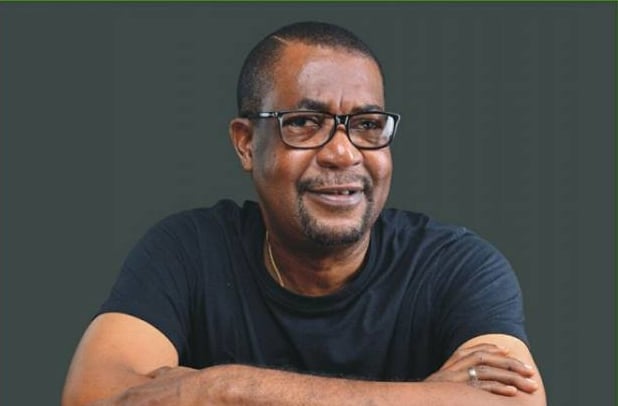
Adesanya said the money was humanitarian assistance for Agunloye’s medical treatment. He said members of his community contributed the funds and that Sotinrin handled the transfers because his Nigerian bank accounts had been frozen.
The tribunal found substantial doubt surrounding that account.
It said Adesanya gave inconsistent evidence about the medical documents he had received, who gave them to him and why the records were not produced to substantiate his explanation. No sufficient evidence was presented to establish that the three payments actually covered Agunloye’s treatment.
There was also no contemporaneous evidence that members of Adesanya’s community contributed the money. Nor did Adesanya substantiate his claim that his Nigerian accounts were frozen.
The tribunal questioned why Sotinrin had to serve as an intermediary when Adesanya acknowledged that he could make transfers from bank accounts in Senegal to Nigerian accounts.
It added that even if Agunloye genuinely needed medical treatment, that would not automatically remove the possibility of bribery. The character of a payment, it said, depends on the circumstances in which it is given, not simply on how the recipient eventually spends it.
Nevertheless, the tribunal stopped short of connecting the 2019 payments conclusively to Agunloye’s 2003 letter. It noted the 16-year interval, the absence of evidence of other payments during the intervening period and the fact that the earlier arbitration was settled before witness testimony was taken.
It therefore found significant red flags, including the possibility that the payments were connected to Agunloye’s potential evidence in the arbitration, but did not make a definitive finding that they were payment for the 2003 award.
N10 MILLION TO YOLA THROUGH A MINISTRY CLERK
The tribunal was particularly critical of Adesanya’s explanations for a N10 million payment to Abdullahi Yola, who had served as solicitor-general of the federation.
Yola represented the ministry of justice during the process that produced the 2012 general project execution agreement (GPEA) and the related terms of settlement. He signed both documents on behalf of the attorney-general.
On November 23, 2015 — only 13 days after Yola retired — Lutin Investments Limited, one of Adesanya’s companies, transferred N10 million to Vincent Awaji.
Awaji had been a clerk in the ministry of justice and Yola’s assistant. The money was intended for Yola’s benefit.
The award said Yola subsequently instructed Awaji to transfer the funds to several recipients, including Seabright Capital Limited, a company Nigeria said was controlled by Yola’s son, Buhari Abdullahi Yola; Binta Magaji Karaye; and Buhari Yola himself.
Adesanya initially described the payment as a loan to help Yola complete renovations to his house and establish a law practice. He said Yola could repay him through legal services and initially claimed those services had eventually been provided.
Yola contradicted that account. He told the Economic and Financial Crimes Commission (EFCC) that he neither requested nor received a loan and had never provided legal services to Adesanya.
Adesanya subsequently called his earlier account an error. During cross-examination, however, he again suggested that Yola had started providing services, only to reverse himself after being confronted with his corrected witness statement.
The explanations concerning the house also conflicted. Adesanya said Yola’s home was under renovation and that the money was intended to complete the work. Yola said he used it for general upkeep and pressing personal needs and had never intended to operate his law practice from his home.
Their accounts also differed on why the money was routed through Awaji. Adesanya said he wanted to pay a contractor directly and Yola supplied Awaji’s details. Yola said using a third-party account was Adesanya’s suggestion.
The tribunal said it was not persuaded that Adesanya’s justification was truthful. It found his repeated changes of position “troubling”.
It also noted that the N10 million exceeded Yola’s annual salary before retirement, was routed through an intermediary and followed his participation in an agreement that conferred a major benefit on Sunrise.
The tribunal found clear indications of the official act potentially connected to the payment: Yola’s legal advice in favour of settlement and his direct role in executing the GPEA and accompanying terms.
It described the transaction as raising red flags over the payment, the connection to Yola’s conduct and the official actions that benefited Sunrise — red flags that were not neutralised by any other evidence.
N25 MILLION ‘RESTAURANT INVESTMENT’ IN PERMANENT SECRETARY’S SON
Between May 2015 and January 2016, Lutin Investments transferred N25.01 million, approximately $135,000 at the time, to Tola Awosika and his company, 355 Integrated Services Limited.
Tola is the son of Dere Awosika, who was permanent secretary in the ministry of power during the negotiation and execution of the 2012 GPEA.
The transfers were:
- N13 million to 355 Integrated Services on May 20, 2015;
- N12 million to the company on June 19, 2015; and
- N10,000 to Tola Awosika on January 22, 2016.
Adesanya said the money was an investment in Tola’s restaurant business, made for the benefit of his daughters. He said his daughters were friends with Tola and that he wanted them to learn how to conduct business.
There was some documentary support for an investment. Adesanya’s daughters were allotted shares in a related hospitality company in 2016 and received dividends between 2016 and 2023.
But Adesanya’s account of how he met Tola repeatedly changed. He initially said he met him through two of his daughters, who attended the same school as Tola. He later said he met Tola in his mother’s office. He also admitted that Tola and his daughters had not attended the same school but were merely in the same social circle in England.
The tribunal also questioned why the investment was placed in his daughters’ names when Adesanya supplied the money, responded to later cash calls and received at least some dividend payments himself.
It found that Awosika was involved in the GPEA process and had substantive contacts with Adesanya, contrary to the argument that their interactions were purely social.
The tribunal concluded that the absence of a credible explanation for the investment, the amount involved and the official position of Tola’s mother raised serious red flags.
But it did not find sufficient evidence that Awosika took a specific action in exchange for the investment. The shareholding and dividend records also provided some evidence that an actual business investment existed.
The tribunal therefore treated the transaction as suspicious without conclusively declaring it a bribe.
$1.74 MILLION TO DASUKI’S SON — SPENT ON FEES, AIRCRAFT AND AN UNEXPLAINED TRANSFER
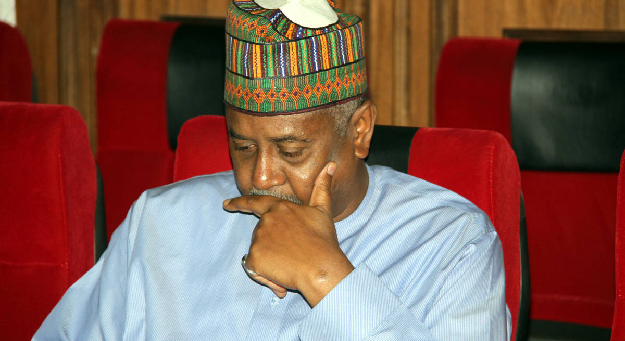
On December 16, 2014, Sunrise transferred approximately $1.74 million to Abubakar Dasuki, a son of then national security adviser Sambo Dasuki.
Adesanya described the money as a loan intended to allow Abubakar Dasuki to participate in a quarry operation that would service the Mambilla project.
The tribunal found no “credible and uniform explanation” for the transfer.
Adesanya initially said a written loan agreement existed and suggested that the EFCC might have taken it during a search. When ordered to produce the document, he could not do so. Under cross-examination, he eventually conceded that an agreement was probably never signed.
The purported loan was also absent from Sunrise’s statements of affairs for 2014 and 2015.
Abubakar Dasuki gave a different account of its purpose. He said he needed money for personal matters as well as for a proposed quarry. Bank records showed expenditure on school fees and aircraft charters, while $850,000 was transferred to the Bob Oshodin Organisation. No evidence established that any substantial portion was used to acquire equipment or resources for the proposed quarry business.
The transaction formed part of a wider arrangement.
In October 2013, Adesanya incorporated Hydropower Investments Limited in the British Virgin Islands. Its shareholders were three of Sambo Dasuki’s children: Abubakar, Hassan and Asma Dasuki. Adesanya and Abubakar were its directors.
The company’s incorporation documents stated that it would own 10 million shares in Sunrise. Adesanya said the proposed transfer was conditional on Abubakar becoming involved in Mambilla and never took effect.
The tribunal could not determine whether the shares were ever transferred. It nevertheless described Adesanya’s creation of an offshore company for the national security adviser’s children, with a contemplated holding of 10 million Sunrise shares, as a “serious red flag”.
It found no concrete evidence that Sambo Dasuki intervened in the 2012 GPEA process or used his office to assist Sunrise. But because the loan explanation was unconvincing, the tribunal said it could not exclude the possibility that the $1.74 million was paid in exchange for the exercise of the national security adviser’s influence.
THE MALAMI DEAL: A PROMISED SHARE OF THE SETTLEMENT
The tribunal’s most direct corruption finding concerned former attorney-general Abubakar Malami.
In January 2020, Malami and then power minister Saleh Mamman signed a settlement under which Nigeria would pay Sunrise $200 million. An addendum signed in March 2020 divided the sum into two $100 million instalments and exposed Nigeria to an additional $200 million default payment, apart from interest.
Adesanya testified that Malami and Mamman demanded that he pay 50 percent of the settlement as bribes. He said they told him Nigeria would pay the first half and release the second after he had done “what is needed”.
Adesanya insisted that he rejected the demand. He also claimed to possess audio and video recordings of the conversations.
But despite an order from the tribunal, he refused to produce the recordings, citing concerns for his safety and that of his family. He stated that he would not disclose them even if they were later found.

The tribunal drew the opposite inference from the one Adesanya wanted.
It found it implausible that he would withhold recordings that cleared him of wrongdoing. It also observed that the payment structure subsequently inserted into the addendum mirrored Adesanya’s own description of the alleged bribe demand: Nigeria would first pay $100 million, after which the remaining $100 million would be released.
The tribunal concluded that a corrupt deal was reached between Adesanya and Malami.
It identified the promised benefit as a share of the settlement money payable to Sunrise. Although the precise agreed amount could not be confirmed, Adesanya’s own evidence suggested a demand of as much as $100 million — half of the original settlement.
In return, the tribunal found, Malami cooperated in committing Nigeria to the addendum, signed terms that could expose the country to a $400 million liability and coordinated procedural steps with Adesanya.
The tribunal found that the settlement agreement and addendum were products of corruption and therefore unenforceable. It did not make a corresponding finding against Mamman because the withheld recordings were the only potential direct evidence of his role.
No settlement money was ultimately paid because then President Muhammadu Buhari refused to approve the arrangement. The tribunal said that did not remove the corrupt character of the promise: an offered or promised benefit can constitute the relevant improper advantage even if payment is never completed.
ALLEGATIONS INVOLVING ADEYANJU, OGAR AND YUSUF NOT PROVED
The tribunal rejected corruption allegations involving three other officials, underscoring the distinction between suspicious circumstances and proved bribery.
Zacchaeus Adeyanju, a justice ministry official who helped prepare the 2020 settlement, received about $107,113 through 67 deposits and foreign-exchange transactions between June 2019 and June 2020. But the tribunal found no evidence that any of that money came from Adesanya or Sunrise.
It also found no evidence connecting Adesanya to approximately $3,700 that Adeyanju transferred to another ministry lawyer, Oben Ogar. The corruption allegation relating to Ogar was dismissed for lack of evidence.
Tanko Yusuf, an aide to power minister Mamman, had his flights and Dubai accommodation paid by Adesanya while carrying the signed settlement to him. Adesanya also gave Yusuf a sum in pounds sterling in London, estimated by Nigeria at £5,000.
Adesanya said the cash was a currency exchange: Yusuf was to give the naira equivalent to Sotinrin. A transfer of N3.325 million was eventually made to Sotinrin, although it occurred about 20 months later.
The tribunal found the travel arrangement curious but held that the flights and accommodation were professional expenses, not a personal benefit. It also found insufficient evidence of the amount of cash Yusuf received or of any substantive influence he exercised over the settlement.
It therefore found no basis for Nigeria’s allegation that Yusuf had been compensated for influencing the agreement in Sunrise’s favour.
A PATTERN THE TRIBUNAL SAID COULD NO LONGER BE IGNORED
The award did not reduce every questioned payment to a proven quid pro quo. For Atiku, Agunloye, Awosika and Sambo Dasuki, the tribunal expressly identified evidential gaps concerning the official action supposedly purchased.
What it found unmistakable was the pattern.
Adesanya paid or extended benefits to five senior officials or their family members at critical stages of the Mambilla dispute. The explanations repeatedly involved undocumented loans, indirect transfers, offshore companies, friendly assistance or investments with people connected to the decision-making process.
That history, the tribunal said, made it more likely that Adesanya also offered Malami an improper benefit in connection with the 2020 settlement.
The arbitrators rejected Sunrise’s $400 million claim against Nigeria and ordered Sunrise and Adesanya to reimburse the government $11.82 million in legal expenses and $414,125 in arbitration costs.
Nigeria’s separate damages counterclaim was dismissed because it failed to establish the required causal connection between the corruption and the losses it claimed.
But on Adesanya’s conduct, the tribunal’s final assessment was unrestrained: the Sunrise founder had repeatedly used payments and financial incentives while pursuing a project that never produced electricity for Nigeria, but generated more than two decades of disputes, settlements and arbitration. (TheCable)