Politics
Atiku’s final shot: Can El-Rufai alliance, wage promises sway voters?


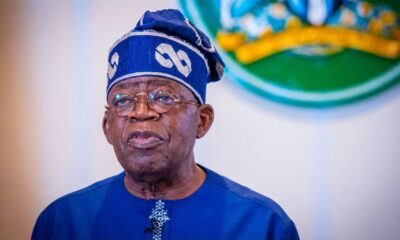
As Atiku Abubakar, presidential candidate of the African Democratic Congress (ADC), has declared that the 2027 presidential election will be his last, he has initiated a series of political and economic strategies aimed at making this attempt different from his previous bids for Nigeria’s highest office.
Atiku is not entering the race with a single campaign message. He is building an electoral proposition around economic hardship, opposition consolidation, northern mobilisation and an aggressive promise to reverse some of the most consequential economic policies of the Bola Tinubu administration.
At the centre of that strategy is a calculated attempt to turn Nigerians’ cost-of-living crisis into a political argument for change. Atiku has promised to raise the minimum wage and pursue measures aimed at reducing the cost of living, while simultaneously assembling a broad opposition coalition designed to take his campaign beyond the traditional ADC political structure.
But Atiku’s calculation goes beyond personalities and economic promises. He is seeking the presidency from the North, at a time when the informal political understanding over rotation of power between the two regions is again becoming a major issue in the 2027 contest.

That puts Atiku’s final bid at the intersection of three powerful political forces; Nigerians’ demand for economic relief, the opposition’s attempt to build a viable national coalition, and the continuing debate over whether presidential power should remain in the South until 2031 or return to the North in 2027.
For Atiku, therefore, the challenge is no longer simply securing the ADC ticket or assembling prominent political figures around his campaign. It is converting his final presidential bid into a national political movement capable of persuading voters that his economic prescription, northern strategy and opposition coalition offer a credible alternative to Tinubu’s direction.
Atiku has deliberately reopened one of the most consequential economic debates of the Tinubu presidency, petrol subsidy. After initially differing publicly with Paul Ibe, his media aide, over the duration of any restored subsidy, Atiku clarified that his position was unequivocal. “On the question of subsidy, my position has not changed and will not change: I will restore it!” he said in August.
Atiku argued that restoring a targeted subsidy would provide immediate relief by reducing fuel and transportation costs and, ultimately, easing pressure on food and household expenses. However, the argument to restore subsidy is a flawed ideology which would be costly to implement three years after.
Tinubu made petrol subsidy removal a defining element of his economic reform programme, but Atiku is now offering voters a fundamentally different proposition. However, the presidency and the ruling All Progressives Congress (APC) have opposed his promise, citing its economic consequences on Nigeria.
The wage factor
Atiku has also waded aggressively into the wage debate. The national minimum wage rose from N30,000 to N70,000 in 2024, but Atiku has argued that rising fuel, food, transport and housing costs have eroded the value of the increase. On September 27, he called for an immediate review of the wage and promised to begin raising the wage floor from his first day in office if elected.
Atiku’s argument is built around purchasing power rather than the nominal size of workers’ salaries.
“At N1,400 a litre, the entire N70,000 monthly minimum wage buys just 50 litres of petrol. What does the worker take home to feed the children? What pays the rent? What gets that worker back to work on Monday?” he queried.
BusinessDay reports that the strategy has already moved beyond the presidential campaign. The seven ADC governorship candidates in the North-West — Sabo Mohammed Nakudu of Jigawa, Isa Mohammed Ashiru (Kaduna), Ibrahim Ali Amin (Kano), Ahmad Babba Kaita (Katsina), Abubakar Malami (Kebbi), Manir Muhammad Dan’iya (Sokoto) and Bilyaminu Shinkafi (Zamfara)— have pledged to implement a N110,000 minimum wage if elected. Observers say this gives Atiku’s economic message a regional structure.
The Atiku -El-Rufai alliance
Nasir El-Rufai’s appointment as deputy chairman of Atiku’s campaign council adds another dimension to the strategy.
Atiku has placed the former Kaduna governor and former FCT minister in a senior position beneath Kashim Ibrahim-Imam, who chairs the National Campaign Council. Austin Akobundu is director-general and campaign manager, while Dele Momodu is deputy director-general of media and communications. John Oyegun, former APC national chairman, chairs the campaign advisory council.
Analysts say El-Rufai’s importance is partly geographical and partly political. He is a former APC governor and former federal minister with extensive experience in northern politics and the federal establishment. His presence reinforces Atiku’s northern political credentials.
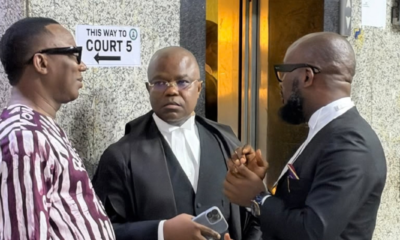
However, there are arguments that the alliance carries complications. El-Rufai is facing legal proceedings over allegations concerning the interception of communications involving Nuhu Ribadu, the National Security Adviser. He has pleaded not guilty, and the proceedings remain unresolved.
Dele Momodu, who now serves in Atiku’s campaign council, has defended El-Rufai’s inclusion, saying it was “a way of honouring his sacrifice” and describing his travails as “quite political in nature.”
The legal proceedings therefore remain a separate issue from El-Rufai’s political role, but analysts say his presence in the campaign guarantees continued scrutiny as he may not be of significant value following his travails.
Also, Kingsley Moghalu’s rejection of his inclusion in the policy team on the grounds of lack of prior consultation was an early indication of the organisational difficulties involved in assembling a broad coalition. The campaign subsequently said consultations were continuing and that its structure remained subject to further expansion.
‘Atiku’s victory will end rotational presidency’
Meanwhile, Shehu Sani, former lawmaker representing Kaduna Central, has said Atiku’s victory in 2027 could effectively end Nigeria’s informal power-rotation arrangement between the North and the South.
“If Atiku wins, it means that is the end of rotational presidency in Nigeria,” Sani said on Channels Television’s Politics Today. Sani, however, acknowledged Atiku’s constitutional right to contest, arguing that the South should complete its eight-year tenure before power returns to the North in 2031.
“I never said Atiku should not run. Constitutionally, he has a right to run for any election,” he said.
Sani said the South should be allowed to complete its tenure just like the North did from 2015 to 2023. “By 2031, when a northerner takes over, there will be no challenge from southern Nigeria,” he said.
While rotational presidency is not a constitutional requirement, Sani’s argument highlights a major political issue confronting Atiku’s 2027 bid: whether voters will give greater weight to the informal North-South power-sharing convention or to candidates, parties and policy proposals.
Analysts weigh in
Peter Awah, an economist, told BusinessDay that Atiku’s economic promises could appeal to Nigerians facing rising living costs, but their sustainability would depend largely on how they are financed and implemented.
“Subsidy can lower immediate costs, but it requires funding. Higher wages can improve nominal incomes, but they can equally increase government expenditure,” Awah said. He added that Atiku’s broader political strategy also carried both opportunities and challenges.
“A broad coalition can expand political reach, but it can equally produce competing interests. A northern presidential bid can consolidate support in one region, while forcing the campaign to persuade voters elsewhere that regional rotation should not determine their choice.
“That is where Atiku’s final bid becomes more than another presidential contest. He is combining economic promises with a political coalition and a regional strategy, and each of those elements will have to work together,” Awah said.
Jackson Lekan Ojo, a political analyst, told BusinessDay that Atiku’s ultimate fate would be determined by voters at the January 16, 2027 presidential election. He, however, argued that the economic environment could give Atiku’s campaign considerable traction.
“Remember, Atiku’s promises are swaying voters because the hardship in the land is too much. People are suffering. There are no jobs, the cost of living is high, hunger is widespread and insecurity is rising. Nigerians are genuinely angry. So, anything can happen,” he said.
However, Bernard Mikko, a political scientist, offered a different assessment, arguing that Atiku could face difficulties overcoming the political implications of seeking to return power to the North in 2027.
Mikko said Atiku’s economic promises and campaign strategy would not, on their own, resolve the broader question of regional power rotation. “He is contesting at the wrong time, and voters are aware of that. There is a need to keep Nigeria united,” he said.
“The northern votes alone cannot make Atiku president. He needs a broad national coalition that cuts across the country,” Mikko added.
Atiku’s seventh and final bid
Atiku has framed 2027 as the end of his presidential journey. “Whether I win or lose, 2027 will be my last time contesting for the presidency,” he said during a Facebook Live session on August 19.
His political pursuit of the presidency dates back to the 1993 Social Democratic Party (SDP) primary, followed by the 2007 general election on the Action Congress (AC) platform, the 2011 PDP primary, the 2015 APC primary, and the 2019 and 2023 presidential elections on the PDP platform.
With the ADC ticket in 2027, this is Atiku’s seventh major presidential attempt across primaries and general elections. However, strictly speaking, he was on the presidential ballot in only the 2007, 2019 and 2023 general elections; the 1993, 2011 and 2015 contests were party primaries.
Analysts say the distinction matters because Atiku’s seventh bid is politically powerful as a narrative, but the underlying electoral record is more nuanced. It nevertheless gives the 2027 campaign a final-chance character. (BusinessDay)
-

 News19 hours ago
DSS Reverses Position On Sowore Trial, Moves To Resume Prosecution Over His Continued ‘Insulting’ Of Tinubu
-
Business21 hours ago
BREAKING: Court orders NMDPRA to continually grant fuel import licences to Matrix, AA Rano, AYM
-
News2 hours ago
Delta dep director’s killing: Police arrest commissioner, 3 others
-
Opinion21 hours ago
APC governors vs Wike: What will Tinubu do?
-
Business3 hours ago
GTCO Plc Releases 2026 Half Year Audited Results
-
Business21 hours ago
NCGC Guarantees Unlock ₦46.95bn in Loans for Nigerians – Tinubu
-
Business19 hours ago
How Mafab, IHS Deals Could Make Tinubu A Major MTN Shareholder – Report
-
Business2 hours ago
Job losses loom as N3.9trn debt may cripple 22 firms