News
Food, drugs: The fakes among us

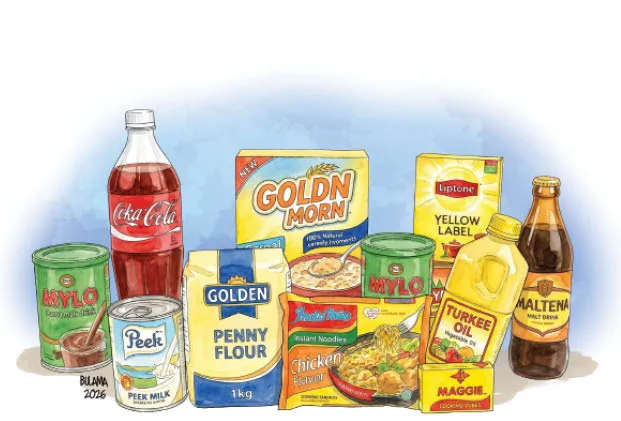
The increasing prevalence of food adulteration has raised public health concerns, amid calls for a comprehensive reassessment of food safety protocols and regulatory frameworks across the country.
Experts say food adulteration is driven by economic incentives, with individuals deliberately incorporating substances into food products to enhance their perceived commercial worth.
Adulterants are often employed to artificially increase the weight or volume of food products, thereby enabling the perpetrators to make more profits.
At the Lagos State Food Safety Conference and Exhibition held recently, Dr. Nurah Oseni, a senior lecturer at the Department of Food Technology, Auchi Polytechnic in Edo State, identified potentially toxic Sudan and Azo dyes, recycled or spent cooking oil, and multi-adulterant mixes as new means of adulterating palm oil.

Oseni stated that the practice is driven by high demand, consumer preferences for deep-red oil, pricing discrepancies, and the difficulty of detecting current adulterants.
Uzoamaka Nwajagu, a food scientist, expressed grave concern over the alarming increase in a certain practice.
“I am glad we are now calling out non-compliant companies. I am glad we are exposing products that are not safe for us. For six years, my work has revolved around one thing: ensuring that what we eat is safe. So it baffles me that adulteration continues at this scale,” she wrote in a LinkedIn post, adding that the regulators have a major role to play.
“We have adulterated packaged foods everywhere. What is NAFDAC doing about it? NICFOST (The Nigerian Council of Food Science and Technology) is the regulator mandated to handle unpackaged foods. We have adulterated fufu, adulterated palm oil, and countless other unpackaged foods on our streets that are unsafe for consumption and causing real harm. What is NICFOST doing? She asked.

‘Many people dying from food consumption’
Stakeholders emphasised that the inability of consumers to reliably distinguish genuine products from counterfeits necessitates a comprehensive approach to regulatory oversight, anti-counterfeiting measures, and consumer protection, involving all relevant agencies.
They urged regulatory bodies, manufacturers and law enforcement agencies to implement measures to prevent the distribution of unsafe products to consumers.
A food expert, Rita Bako, stated that it is quite depressing to witness how many people die these days as a result of the “unintentional foods we eat.”
She expressed concern that “at this rate,” it’s alarming that “practically every product in Nigeria is fake.”
Narrating her experience at a market recently, a food vendor, Blessing Morris Abari said: “At the fish market, I saw an old woman coming out with her hand stained in deep red colouration. Immediately, I knew what it was. That same colour is what many people now use to dye shrimps and prawns and make them appear fresh and reddish.
“I recognised the woman; she sells crayfish, prawns and shrimps. I could tell she was probably colouring or mixing something at the back of the stall. That’s how a lot of seafood gets adulterated before it reaches the buyer.”
An expert, Dr. Ezekiel Ode, warned that consumption of adulterated food could expose Nigerians to serious health conditions, including cancer, kidney damage, organ failure and developmental problems in children,
Ode, a food scientist and research and training officer at the Centre of Excellence in Food Technology and Research (CEFTER), Father Moses Orshio Adasu University (MOUA) in Makurdi, Benue State, said stronger market surveillance, improved laboratory capacity and stricter enforcement of food safety regulations were urgently needed to protect consumers.
He said the practice was largely driven by economic motives, with unscrupulous producers and traders introducing inferior or harmful substances, substituting ingredients or altering food products to increase their weight, volume, appearance or perceived value.
He identified excessive dilution of drinks and fruit juices, use of industrial dyes, substitution of ingredients, unauthorised colourants and the addition of cheaper substances to food products as common forms of adulteration.
Ode said some industrial dyes, including Sudan dyes, could pose serious health risks because of their potential carcinogenic effects, while the use of formaldehyde to preserve fish could expose consumers to harmful chemicals.
He raised the alarm over the addition of flour or starch to spices, lead-based pigments to improve colour, and the mixing of palm oil with cheaper or spoiled oils.
He said that adulteration also occurred in dairy products through water dilution of milk, addition of starch to yoghurt and substitution of milk fat with cheaper substances, while melamine could be added to milk products to falsely increase their apparent protein content, with potential consequences for kidneys.
According to him, the severity of health effects depended on the substance involved, its concentration and duration of exposure, with children and pregnant women among those who could be particularly vulnerable.
He added that prolonged exposure to lead could damage the brain, kidneys and cardiovascular system and contribute to reproductive problems, hypertension and developmental and learning difficulties in children.
Ode also identified aflatoxin contamination in maize and groundnuts as a major food-
safety concern, noting that although it was not necessarily deliberate adulteration, prolonged exposure could damage the liver and increase the risk of liver cancer.
He said poor drying and storage of groundnuts under moist conditions could encourage mould growth and aflatoxin production, which ordinary cooking methods might not adequately eliminate.
He urged consumers to check expiry dates, packaging integrity, labels, ingredients, appearance, smell and texture before purchasing food products, warning against damaged packaging and bulging cans that could indicate contamination or microbial activity.
The scientist, who has worked for more than a decade in food processing, food safety and food quality, cautioned consumers against relying on unverified food-testing methods circulated on social media, such as using candles or water to determine whether food was adulterated.
He said sensory checks could help consumers identify suspicious changes, but some dangerous contaminants could not be detected through sight, smell or taste, making laboratory analysis necessary for reliable confirmation.
Ode called for a coordinated, risk-based food-safety system involving scientists, research institutions, manufacturers, regulatory agencies, law enforcement bodies and market associations.
He recommended regular market surveillance, random sampling and laboratory testing of food products, as well as continuous research into affordable methods of detecting emerging forms of adulteration even as he urged manufacturers and food processors to strengthen quality-control systems, comply with good manufacturing practices, properly store raw materials and maintain product identification and traceability to facilitate investigations whenever contamination occurs.
The scientist called for more risk-based inspections, additional surveillance personnel and adequately equipped food-testing laboratories across the states, arguing that limited laboratory capacity could delay investigations and weaken regulatory response.
He further urged regulatory authorities to enforce product-registration requirements, promptly recall unsafe products and issue timely public alerts through traditional and social media, stressing the need for closer monitoring of bakeries and sachet-water factories, investigation of confirmed violations and appropriate sanctions based on laboratory evidence and due legal process.
Ode also called on market associations to report suspicious products and support food-safety education among traders, food handlers, manufacturers and consumers, stressing that sustained public awareness was essential to reducing exposure to unsafe food.
Rising alarm over fake, expired drugs
Patients living with chronic illnesses have raised concerns over the circulation of suspected counterfeit, substandard and expired medicines, saying the use of ineffective drugs could worsen their conditions and put their lives at risk.
Some of the patients, who spoke on their experiences, called for stronger monitoring of pharmacies and medicine outlets to ensure that drugs sold to members of the public are safe and effective.
Jerry David, a diabetes patient, said he was once given insulin which he used for days without seeing the expected improvement in his blood sugar level.
He said, “Sometime last year, I bought insulin from a pharmacy and used it for a long time. It was prescribed for me because I have Type 1 diabetes. However, my blood sugar remained high for days despite using the insulin.”
David explained that he later visited another hospital for further examination and was informed that the insulin had expired.
“I had not bought it long before then, and I got it from a pharmacy. We all know how deadly diabetes can be,” he said.
David urged the government to strengthen the system for examining and monitoring medicines before they reach consumers.
“I think the government should find a way to ensure that medicines are properly examined before they are sold to people to avoid loss of lives,” he added.
Similarly, Muhammad Kabiru, who is hypertensive, said people suffering from chronic conditions could face serious consequences if they unknowingly take ineffective medicines.
He said although he had not personally taken counterfeit medicine, he had heard accounts of people whose conditions worsened after using medicines they later suspected were ineffective.
“I have been dealing with hypertension for a very long time, and I know the danger. I have not taken any counterfeit drugs before, but I have heard people talk about the implications, which have even cost some people their lives,” he said.
He recalled the experience of a friend who, according to him, suffered persistent headaches after taking a medication that did not appear to control his blood pressure.
“He eventually visited the hospital after the constant headache and that was when he realised that the drugs were no longer working effectively. By then, his condition had reportedly worsened,” Kabiru said.
Aladi Enemona said on her way home from work earlier this year, he stopped by at a makeshift drug outlet to buy medicines. Shortly after taking the drugs, however, she developed severe complications that eventually kept her in a private hospital for almost a month earlier this year.
“They gave me some medicines to treat fever. I couldn’t sleep throughout the night after taking the drugs. By morning, it appeared as if life was going out of me, and I was rushed to a private hospital, where it was discovered that the drugs given to me were not good,” she said.
Enemona said her family spent a lot of money on her treatment. For Rejoice Jeremiah, it was difficult to establish whether the malaria medicine she took was counterfeit or substandard. She said all she knew was that her condition worsened after taking the drugs.
“I had to see a doctor and got another prescription before I got well. I believe some of these places where we buy drugs should be checked. In several slums, the medicine shops are not befitting for proper storage, and maybe that is why the drugs are not good,” she said.
James Patrick also said he experienced complications after taking a drug he bought over the counter, which he believed was counterfeit.
“I was stooling and decided to buy a drug, not knowing that it was a counterfeit drug. After taking it, the stooling became worse, and I was rushed to the hospital, where it was discovered that the drug was counterfeit,” he told Weekend Trust.
For Kingston Ebiwari, his experience has changed the way he views medicines purchased from informal outlets.
Common illnesses and their drugs:

‘Poor storage compromises medicines’
In a chat with Weekend Trust, a retired Director of Enforcement at the Pharmacists Council of Nigeria (PCN), Stephen Esumobi, said poor storage could compromise the quality of otherwise genuine medicines.
According to him, counterfeit medicines may contain ingredients different from those stated on their labels, while genuine medicines can also deteriorate when handled or stored under inappropriate conditions.
He said poor storage could cause medicines to degrade and potentially result in serious health complications when consumed.
“There are two types of counterfeit medicines – one in which the active ingredients claimed to be contained in it are not true and the second is actually genuine but, because of poor handling, deteriorates. This handling involves storage in unapproved places and that’s why the PCN would inspect before giving approval to operate where these drugs are kept.
“So if these medicines are poorly handled, they deteriorate with time and become harmful when they are exposed; they undergo biotransformation and become degraded. When the drugs are taken, it leads to kidney disease or other complications,” he said.
Pharmacist Damat Gwaison linked the situation partly to low purchasing power and intense competition among medicine vendors.
He said rising medicine prices and supply challenges could make it difficult for pharmacists to maintain consistent access to products from established sources.
Gwaison said some consumers deliberately sought cheaper medicines, creating a market where different versions of the same product could be found.
“You find that customers know that whatever is stocked in the pharmacy has gone through certain checks. We have customers who specifically come to us because they trust the quality of the medicines.
“In summary, the situation is very alarming. In some areas, there are several versions of the same medicine. You have one version, another version and even products that are difficult to authenticate.
“If you want to investigate this, you can randomly go into different premises and ask for a particular medicine. Most times, when people come, they ask for a product. For example, an antidiabetic medicine, you may find that only one or two outlets have the original product, while most of the others are selling parallel versions,” he explained.
Gwaison cited the price difference for a medicine sold at about N19,000 at his outlet, saying customers claimed they could obtain it elsewhere for between N10,000 and N12,000.
He also warned that checking NAFDAC registration numbers alone might not always be sufficient, saying counterfeiters could reproduce legitimate registration numbers.
He urged consumers to pay attention to packaging, product information and other identifying features. He added that some genuine medicines carry authentication codes that can help consumers distinguish them from imitations.
Scale of substandard medicines
Despite years of regulatory interventions, concerns over substandard and falsified medicines persist in Nigeria.
Official estimates frequently cited by NAFDAC have put the prevalence of substandard and falsified medicines in circulation at between 13 and 15 per cent.
However, claims about a much higher prevalence have also emerged from industry stakeholders, although such figures vary and are subject to debate.
The World Health Organisation (WHO) has warned that substandard and falsified medical products pose a significant public health risk, particularly in low- and middle-income countries.
Experts who spoke on the issue identified several factors that could contribute to the circulation of such medicines, including informal drug markets, weak points in the supply chain, inadequate storage conditions, economic hardship and gaps in enforcement.
A pharmacologist, Dr Chinedu Ifeanyi, told Weekend Trust that counterfeit medicines could be difficult to identify from their appearance alone.
“The numbers tell only part of the story. What we see today are drugs that look genuine—even trained professionals sometimes struggle to detect them,” he said.
Ifeanyi said poorly regulated open drug markets could serve as distribution points for medicines whose authenticity and quality may be difficult to establish.
“These markets are deeply embedded in the system. Even legitimate pharmacies sometimes source from them, which makes the problem harder to contain,” he said.
Nigeria’s dependence on imported medicines has also been identified as a factor that could increase vulnerabilities in the pharmaceutical supply chain.
Dr Zainab Zakari, a public health expert, said stronger border controls and product testing were important in reducing the risk of falsified medicines entering the country.
“When you depend heavily on imports, you increase your exposure to risks. Without strong border controls and rigorous testing, fake drugs can easily find their way into the country,” she said.
Economic hardship, experts said, could further influence consumers’ purchasing decisions, particularly when patients have to choose between medicines with significant price differences.
Pharmacist Nwosu Chisom said patients could face additional health and financial consequences when medicines failed to produce the expected results.
“People are trying to save money. But in many cases, the cheaper drug is ineffective or dangerous. When drugs fail, doctors may assume resistance or complications. They increase doses or change medications, not realising the issue is a counterfeit product,” Chisom said.
N1.5tn fake products destroyed in 3 years – NAFDAC
Director-General of the National Agency for Food and Drug Administration and Control (NAFDAC), Prof. Mojisola Adeyeye, said the agency destroyed regulated products worth over N1.5tn in a single coordinated operation across Lagos and the South-East between February and March 2025.
Speaking in Lagos, Adeyeye said simultaneous raids at Idumota, Lagos; Onitsha markets in Anambra and the Ariaria International Market in Aba, Abia State, led to the seizure and destruction of counterfeit and substandard products loaded in over 137 40-foot trucks.
“Between February and March 2025, across Idumota, Onitsha and Ariaria Market, Aba, NAFDAC coordinated and simultaneously executed major raids which led to the seizure and destruction of over 137 40-foot truckloads of counterfeit and substandard products valued at more than N1.5tn were evacuated and destroyed,” she said.
The agency also listed a series of destruction exercises targeting fake and expired medicines. In February 2026, NAFDAC said it destroyed over N15bn worth of fake, expired, counterfeit and banned medicines in Ibadan, Oyo State, including Analgin, Co-codamol, codeine syrups, Tramadol, Oxytocin and expired vaccines, and arrested a suspect linked to a smuggled container.
In December 2024, the agency noted that it destroyed expired and unregistered drugs worth N11bn, also in Ibadan. In March 2026, it destroyed N1.8bn worth of counterfeit medicines, banned sachet alcohol below 200ml, narcotics, antibiotics, antimalarials, counterfeit milk, skin-lightening creams, fake insecticides and medical devices in Kuje, Abuja.
Combined, the drug and pharmaceutical-related destruction alone amounted to N27.8bn.
NAFDAC further said it separately destroyed counterfeit beverages, spirits and revalidated foods worth N5bn in Aba in December 2023 after shutting down 150 shops. A repeat raid in the same location in December 2024 shut down 250 shops and uncovered N7bn worth of similar products, bringing the combined value of the Aba beverage and food destructions to N12bn.
Adeyeye noted that, in 2024 alone, the street market value of products destroyed nationwide was over N120bn.
Meanwhile, the NAFDAC boss, alongside the Director of Investigation and Enforcement, Iluyomade Martins, said the agency secured 64 convictions for counterfeiting across the country, with sentences ranging from one to seven years’ imprisonment without the option of a fine.
Adeyeye listed specific terms secured between June 2025 and June 2026, including five years for faking Global Fund Artemether, five years for a cough and cold syrup containing codeine, 12 months for fake ointments and condoms, and seven years for fake antibiotics.
NAFDAC said it is intensifying surveillance, inspections, raids, arrests, prosecutions and destruction of seized products as part of efforts to check the circulation of counterfeit and substandard drugs.
“Post-Market Surveillance is a critical component of NAFDAC’s regulatory mandate. It’s activities involve identifying products of regulatory concern, conducting inspections and surveillance visits, sampling products for appropriate assessment, investigating complaints and intelligence, removing non-compliant products from circulation and initiating appropriate regulatory action,” NAFDAC’s Director-General, Prof Mojisola Adeyeye, said at a press briefing.
NAFDAC added that; “Approximately 80% of post-market surveillance (PMS) activities are directed towards surveillance and related interventions aimed at detecting and curbing the circulation of fake, falsified, substandard and otherwise non-compliant products.”
The agency said its proactive surveillance covered the country, adding that “From May to July 2026, the PMS Directorate undertook routine/proactive surveillance nationwide across the 36 States and the FCT.”
It also said it had established channels through which members of the public could report suspected counterfeit and non-compliant products.
“The agency has invested significantly in efficient and reliable complaint channels, including a 24-hour Call Centre, for the reporting of genuine complaints concerning regulated products,” NAFDAC said. (Daily trust)
-

 News22 hours ago
Loyola College Alumni Launch ₦750m Endowment Fund to Secure School’s Future
-
 News6 hours ago
Cocaine: Bizman KC Luxury’s Cybertruck, hotel, millions frozen
-
News6 hours ago
Issues Tinubu Left Out In 66th Independence Day Speech
-
Politics5 hours ago
I’ll withdraw as Atiku’s running mate if fuel hits ₦600 tomorrow – Amaechi
-
News6 hours ago
NYSC kidnap: N950m ransom throws families into panic
-
Business18 hours ago
NNPC offers N66 fuel discount nationwide
-
Politics18 hours ago
2027: Why I withdrew indigeneship suit against Yayi — Ogun NNPP candidate
-
News6 hours ago
Senator Ojudu Writes Open Letter To President Tinubu Says Nigerians Are Hungry