African News
Xenophobia: More Nigerians depart S’Africa


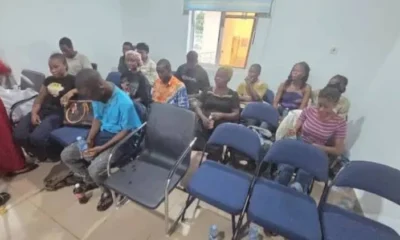
Nigerians are still in panic and anxiety following the repatriation of the second batch of Nigerians who left South Africa, courtesy of a humanitarian service sponsored by the Redeemed Christian Church of God.
Diaspora Tales gathered that many Nigerians in South Africa have not resumed their daily businesses following the anti-migrant campaigns held on September 30.
A Nigerian lawyer and activist, Austin Okeke, said the members of the Nigerian community were living in despair as their compatriots relocated to their home country.
Last Saturday, 105 Nigerians returned from South Africa bringing the total to 205 after the first batch of 100 returnees under the intervention scheme by RCCG.

Speaking about the repatriation as a co-facilitator, Okeke said, “Nigerians are terrified, traumatised and terrorised in South Africa since the incidents.”
The lawyer alleged that the South African Government was not sincere in protecting the interests of the Nigerians in the country.
“Nigerian victims of xenophobia are not safe in South Africa because the government of South Africa has lost control of the country as mobs now run the affairs of the country,” he said.
“The South African government must amplify the positive contributions of Nigerian professionals living in South Africa and stop being pretty.”
Another anti-migrant protest was staged across South African major cities including Johannesburg, Durban, and Pretoria last Wednesday.
The protesters, bearing placards trooped out to the streets, asking undocumented Nigerians and other African foreigners to leave South Africa.
While the demonstrations were not violent, they still formed the basis of the safety concerns for Nigerians in South Africa as they were indoors and couldn’t go about their legitimate businesses.
The National Publicity Secretary of the Nigerian Union South Africa, Akindele Olunloyo, said the protests were carried out by the March and March group.
“The protests were conducted nationwide across South Africa, marking their second unofficial deadline for undocumented migrants to leave the country,” Olunloyo said.
He stated that the protests significantly impacted the Nigerian community and heightened safety concerns for our nationals in South Africa.
Olunloyo further revealed that there were hundreds of protesters on the streets “carrying traditional weapons including sticks and spears.”
The National President of the Nigerians Citizens Association South Africa, Frank Onyekwelu, told Diaspora Tales that policemen were deployed to the streets to monitor protesters.
“The South Africa Police Service had their men on the streets that day as the protesters marched. This served as a caution to whatever violence some of them might have in mind,” Onyekwelu said.
Speaking on the security response, NUSA spokesperson said, “the South African security forces formed barricades and maintained presence at protest sites but the September 30 deadline has created significant anxiety and disruption within the
Nigerian community.”
The NICASA president said there were no records of loss of lives and looting during the protests as a result of the presence of security forces safeguarding the Nigerian community.
“We didn’t have any record of deaths or looting from anyone during and after the protests,” he said.
“All our members in all the regions were giving us situational reports, so the protests did not lead to loss of lives.
He stated that the South Africans have the constitutional right to a peaceful protest in their country which they demonstrated, but the protests were “scanty.”
“The protests were met with resistance from foreigners that have not given in to violence and the presence of the security operatives,” he added.
Both Onyekwelu and Olunloyo said the protests combined the anti-migrant message with the calls to address the recent rise in femicide cases in South Africa.
Concerns have grown in the country in the past few weeks as the police have discovered 12 bodies of women around Ekurhuleni municipality near Johannesburg.(Punch)
-

 Business13 hours ago
Petrol Hits ₦1,900/Litre as Depot Prices Surge Despite NNPC Cut
-
Metro13 hours ago
NYSC kidnap: Freed graduates get S’West posting offer
-
News13 hours ago
NAF crash: Wedding plans turn funeral tears as families await remains
-
Politics13 hours ago
2027: Senate rules out fresh review of Electoral Act
-
Metro13 hours ago
Nigerian man’s nudity arrest sparks US political row
-
Metro13 hours ago
Three Nigerian sisters committed suicide – UK coroner
-
Politics13 hours ago
ADC Unveils 38-Member Presidential Campaign Council Ahead of 2027 Elections
-
News4 hours ago
INVESTIGATION: How Anthony Kila falsified all his academic qualifications – from Bachelor’s to Doctorate