
Politics
2027: Agbakoba backs citizens’ right to publish election results

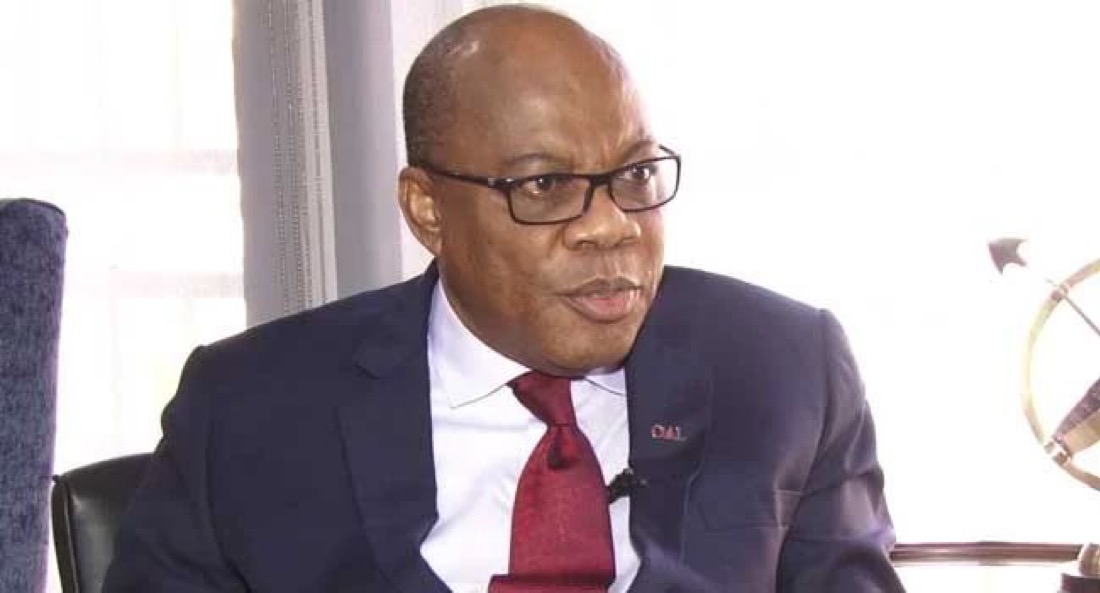
A Senior Advocate of Nigeria, Dr Olisa Agbakoba, has urged the Independent National Electoral Commission to guarantee citizens and the media the right to publish and analyse election results from authentic polling-unit records ahead of the 2027 general elections.
Agbakoba, in a letter dated October 12, 2026, addressed to the INEC Chairman, said the commission’s exclusive authority to formally declare election results should not be interpreted as a restriction on the public’s right to report results already announced at polling units or contained in authentic electoral records.
He argued that public access to election results was essential to strengthening transparency, building confidence in the electoral process and preventing disputes over declared outcomes.
The letter, titled “Ensuring the Right to Publish INEC’s Electoral Records in Respect of the General Elections of 2027, Pursuant to Section 39 of the Constitution of Nigeria,” urged the commission to clarify the distinction between formally declaring election results and reporting information already in the public domain.

Agbakoba said, “While INEC retains its exclusive statutory responsibility for the formal declaration of results, nothing in that responsibility should be understood as prohibiting citizens or the media from reporting results that have been publicly announced at polling units or from publishing information contained in authentic INEC electoral records (Forms EC8A-EC8E), provided that such reporting is accurate and does not misrepresent the official records.”
He maintained that citizens who accurately report results from authentic polling-unit result sheets do not usurp the commission’s statutory powers.
“A citizen who reports a result accurately from an authentic polling-unit result sheet does not, merely by doing so, assume the statutory role of INEC or usurp its authority to declare the final result. Rather, such a citizen participates in the legitimate public scrutiny of the electoral process,” he stated.
The former Nigerian Bar Association president said the constitutional right to freedom of expression supported the publication of electoral information lawfully obtained by citizens and journalists.
Citing Section 39(1) of the 1999 Constitution, as amended, Agbakoba said the provision guaranteed freedom of expression, including the freedom to receive and impart ideas and information without interference.
He also drew attention to the INEC Result Viewing Portal, which allows members of the public to view polling-unit result sheets uploaded by the commission.
According to him, access to the portal would have limited value if citizens could view the records but were discouraged or prohibited from discussing, analysing or reporting what they showed.
“In my view, the public availability of polling-unit result sheets through IReV would be of limited value if citizens could view the records but were discouraged or prohibited from discussing, analysing or reporting or projecting what those records show,” he said.
He added, “Access should be meaningful, not merely nominal.”
Agbakoba said citizens should be able to report figures displayed on uploaded result sheets, compare them with other publicly available records and identify discrepancies without being regarded as having formally declared election results.
The SAN also cited a 1984 judgment of the Lagos State High Court in Suit No. M/191/83, Nigeria Union of Journalists & 2 Ors. v. Inspector-General of Police & 3 Ors., involving a challenge to a directive restricting the media from publishing election results that had not been officially released by the then Federal Electoral Commission.
According to Agbakoba, the court ruled in favour of the Nigerian Union of Journalists, holding that the statutory authority to declare final election results did not prevent the media from publishing accurate results already announced at polling centres.
He quoted the court as saying, “Where therefore a journalist is present and around and receives such information, could anyone dispute that it is his duty to impart such information? Such liberty avails not only journalists but also every person who is privileged to receive such information.”
The judgment also stated that the law did not prohibit the announcement of preliminary results at counting stations by returning officers, according to the letter.
Agbakoba argued that the decision supported the distinction between the formal declaration of final results and the publication of electoral information lawfully obtained.
He further urged INEC to improve the timely publication of verified polling-unit results on IReV and establish clear procedures for addressing discrepancies between polling-unit records, uploaded documents and collated results.
The lawyer said political parties and other stakeholders increasingly used technological tools, including artificial intelligence-assisted systems, to collect, analyse and collate election information.
He urged INEC to strengthen its technological and administrative capacity to publish verified records promptly, proposing that the commission set clear targets for making information available within two hours of the close of polls or completion of counting at the relevant stage, where feasible.
“An electoral commission whose records are open to independent assessment is better positioned to demonstrate that its decisions are supported by verifiable evidence,” Agbakoba said.
He added that allowing citizens to compare polling-unit records and follow the collation process would make the eventual results more acceptable and reduce suspicions that declared outcomes differed from the figures recorded at polling units.
Agbakoba also referred to the June 12, 1993 presidential election, which he described as one of Nigeria’s most credible elections, arguing that transparency and public visibility of results were important to electoral legitimacy.
He said INEC should provide clear guidance to citizens, political parties, journalists and election observers on responsible electoral reporting while ensuring meaningful access to polling-unit result sheets and other electoral records.
According to him, the measures would help prevent avoidable electoral disputes and reduce the likelihood of the judiciary being drawn into controversies that could have been resolved through transparency and effective public scrutiny.
Agbakoba said the recommendations were intended to strengthen, rather than undermine, the commission’s authority as Nigeria prepares for the 2027 general elections. (Punch)
-

 Business24 hours ago
Deloitte helped in falsifying documents to evade tax on Abramovich’s wealth, BBC finds
-
 Politics16 hours ago
Coastal highway: Atiku challenges Tinubu over alleged $20bn loan plan
-
News16 hours ago
Alleged fake agency: FG files fresh charges against Adeyemi
-
News24 hours ago
BREAKING: Makinde’s chief of staff resigns
-
News7 hours ago
N267bn in education funds lie idle as 70% of Nigerian children can’t read
-
News23 hours ago
Wale Fapohunda, 67 Others Elevated to Senior Advocate of Nigeria
-
Politics7 hours ago
Pantami Gives INEC 72 Hours To Publish Name On guber List
-
Politics16 hours ago
Tinubu asked me to claim Adelabu as my ministerial choice, I refused — Makinde