
News
Nigeria’s correctional crisis: Inmate population hits 80,812

•51,955 await trial in overcrowded cells •Prisons battle ageing facilities, inadequate funding, security breaches •Corruption, delayed justice, welfare challenges threaten reforms
Nigeria’s correctional system is facing a serious crisis. The infrastructure is grossly inadequate. The facility is overcrowded. The pre-trial detention is prolonged. There are security breaches, feeding challenges as well as poor access to healthcare while corruption is killing the system. This has therefore raised questions about the country’s capacity to reform offenders while protecting the rights and dignity of persons in custody.
The scale of the crisis is reflected in the recent figures from the Nigeria Correctional Service, NCoS, which put the inmate population at 80,812. Of that figure, 51,955, representing 64 per cent, were awaiting trial, while 24,913 were convicted and another 3,850 fell under other detention categories. The figures underscore a fundamental contradiction in Nigeria’s correctional system: a facility designed to reform convicted offenders is increasingly occupied by people who have not been found guilty of any offence.

Data from the National Bureau of Statistics, NBS, had earlier shown that the number of unsentenced inmates increased from 47,610 in 2017 to 53,790 in the second quarter of 2025, while the total inmate population rose from 69,946 to 81,710 during the same period.
The problem is not new, but its persistence has become more troubling as the population grows faster than infrastructure, personnel and other resources required to manage it.
Pre-trial detention
At the heart of the crisis is the criminal justice system’s inability to dispose of cases quickly. The high number of awaiting-trial inmates has been attributed by justice-sector stakeholders to delays in investigation, late issuance of legal advice, inadequate legal representation for indigent defendants, repeated adjournments and other bottlenecks in the administration of criminal justice.
The ECOWAS Court of Justice, in a judgment delivered on May 15, 2026, found that prolonged detention of awaiting-trial inmates and resulting overcrowding in Nigerian correctional facilities violated rights including liberty, dignity, fair hearing, presumption of innocence and trial within a reasonable time.
The National Human Rights Commission, NHRC, has similarly continued to identify prolonged pre-trial detention, arbitrary arrest, torture, denial of access to lawyers and poor detention conditions as persistent human rights concerns.
In its 2026 statement on torture prevention, the commission said reports of excessive use of force, arbitrary arrest and detention, prolonged pre-trial detention, poor detention conditions, denial of legal representation and allegations of torture and ill-treatment remained concerns.
The consequences are enormous. Apart from overcrowding, prolonged detention means that people who may eventually be discharged or acquitted can spend months or years behind bars before their cases are determined.
Ageing infrastructure
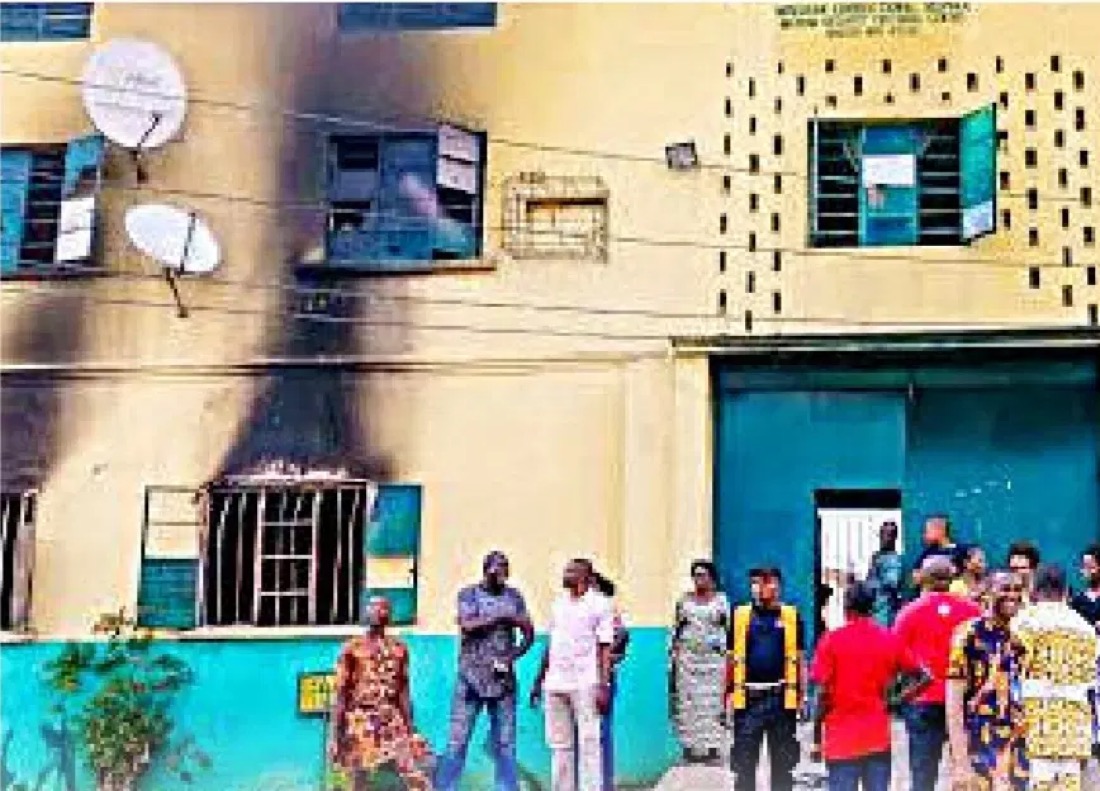
The physical condition of many correctional centres compounds the problem. Many facilities were constructed decades ago and are now operating beyond their original capacities. The House Committee on Reformatory Institutions recently warned that some facilities were built more than a century ago and have deteriorated significantly.
An independent investigative panel established by the Federal Government to examine allegations of corruption, abuse of power and human rights violations within the correctional system also identified severe infrastructure deficits.
The panel assessed 86 custodial facilities across 23 states and the Federal Capital Territory and raised concerns over security risks and infrastructural decay in several centres, including facilities in Delta, Edo, Sokoto and Kaduna states. The problem goes beyond uncomfortable accommodation. Dilapidated walls, inadequate ventilation, obsolete security systems, insufficient vehicles and weak perimeter protection create security vulnerabilities and make effective rehabilitation more difficult.
The NCoS itself has identified construction and rehabilitation of custodial facilities, vehicles, security equipment, information technology systems, inmate biometrics and prison farms as areas requiring substantial capital investment.
Feeding crisis
Feeding has also emerged as another major pressure point. A Federal Government investigative panel recently found evidence of inmate malnutrition and alleged abuses in the administration of feeding contracts. The panel subsequently recommended that the daily feeding allowance be increased from N750 to N3,000.
Vanguard’s investigation into feeding conditions in August also found complaints from inmates and former inmates over the quantity and quality of food available in some correctional centres, although correctional authorities denied allegations of systemic starvation and defended the official feeding arrangements.
The financial pressure is evident in the NCoS budget figures. In its 2025 budget performance, the Service said ₦27.28 billion, representing 71.7 percent of its overhead releases, was spent on inmate feeding, while outstanding food-ration obligations stood at ₦10.75 billion. For 2026, the Service proposed ₦14.83 billion to feed an estimated 91,100 inmates at ₦1,125 per inmate per day.
Corruption, illicit activities at custodial centres
Another major challenge is the scope of illicit activities going on at the custodial centres. The Independent Investigative Panel examined allegations ranging from corruption and abuse of power to torture, illegal movement of inmates, drug trafficking, unauthorised visits and the smuggling of prohibited items.
In April, a report based on proceedings before the panel detailed allegations of inmates operating businesses from correctional centres, including Point-of-Sale, POS, operations, and alleged involvement of officials in facilitating prohibited activities.
The NCoS, however, has also intensified its crackdown on contraband. In May, the Service publicly destroyed 1,167 confiscated mobile phones and other prohibited items recovered during nationwide searches. It also announced the recovery of ₦2.569 million in smuggled cash and said 147 officers had been sanctioned in connection with contraband-related infractions.
The seriousness of the problem was further illustrated in August when an inmate at the Ibara Medium Custodial Centre in Abeokuta, Ogun State, went live on TikTok using a prohibited mobile phone. The NCoS removed the officer in charge and two other principal officers pending investigation, while the inmate was transferred to another facility under enhanced security.
Escapes and security
Security breaches remain a recurring concern. The NCoS has continued to list escapees from facilities across the country, including the August 2025 escape of 16 inmates from the Medium Security Custodial Centre, Keffi, in Nasarawa State. The problem is aggravated by old infrastructure, inadequate security technology, insufficient operational vehicles and personnel pressure.
For 2025, only ₦3.22 billion, representing 22.2 per cent of the ₦14.50 billion appropriated capital allocation to the NCoS, was released, leaving ₦11.27 billion unreleased. The Service is seeking substantially higher capital funding in 2026 to address these gaps.
Healthcare and deaths
Healthcare remains another major concern.The NCoS recently commenced efforts to improve medical services, including nationwide distribution of essential medicines, greater attention to mental healthcare and plans to secure broader health-insurance coverage for inmates.
But human rights organisations continue to raise concerns about medical access, conditions of detention and treatment of detainees.
The broader detention environment was brought into sharp focus in September when 37 suspected illegal miners died in the custody of the Nigeria Security and Civil Defence Corps, NSCDC, in Niger State. The deaths did not occur in an NCoS facility, but the incident has renewed national scrutiny of detention standards. The government suspended 20 NSCDC personnel and constituted a 10-member committee to investigate the deaths after 67 detainees were reportedly held in one cell. The Nigerian Bar Association called for a transparent and independent investigation.
The incident highlights the wider challenge of ensuring that all persons deprived of liberty, whether in police, military, NSCDC or correctional custody, are treated humanely and receive adequate medical attention.
Rehabilitation versus punishment
The 2019 legislation that transformed the Nigerian Prisons Service into the Nigerian Correctional Service established a broader mandate centred on reformation, rehabilitation and reintegration.
The law requires the Service to provide educational and vocational programmes, psychological and counselling services and opportunities for inmates to develop skills and generate income. It also gives the NCoS responsibility for non-custodial measures, including community service, probation, parole and restorative justice.
But implementation remains uneven. A 2026 study of medium-security correctional facilities in Kwara State found that vocational training existed in the centres studied but was fully functional in only one. It also found that digital learning infrastructure was absent or non-functional across all three facilities examined, while overcrowding constrained rehabilitation programmes in two of them. This raises a central question: how can rehabilitation succeed where inmates lack adequate space, education, healthcare, skills training and basic welfare?
Non-custodial alternatives
There are efforts to reduce reliance on imprisonment. The NCoS has expanded parole, probation and community service, while parole boards have been reconstituted to strengthen prisoner reintegration. Yet the scale remains small compared with the prison population. NCoS figures reported in July showed that only 1,271 Nigerians were serving non-custodial sentences nationwide.
The Service proposed ₦37.99 billion in 2026 to expand non-custodial measures across the 774 local government areas. The expansion of such measures could reduce pressure on custodial centres, particularly for offenders whose detention is not necessary for public safety and for cases where community-based sanctions are legally appropriate.
Funding dilemma
The government’s response has increasingly centred on funding.
The NCoS proposed a total budget of ₦198.85 billion for 2026, including ₦138.30 billion for personnel, ₦50.40 billion for recurrent overhead and an additional ₦90.38 billion requested to strengthen capital expenditure.
The Service also identified ₦30.38 billion in promotion arrears and ₦25.16 billion owed to contractors as outstanding liabilities.
But funding alone may not solve the crisis. The investigative panel’s findings have placed accountability, procurement, contract administration, oversight and disciplinary mechanisms alongside infrastructure and welfare as central elements of reform.
The road ahead
Nigeria’s correctional crisis cannot be reduced to the number of inmates behind prison walls. It is a criminal justice problem, a funding problem, a human rights problem, a security problem and, increasingly, a governance and accountability problem.
The figures tell part of the story: more than 80,000 people in custody, 64 per cent awaiting trial, facilities operating far above capacity, billions of naira required for rehabilitation and infrastructure, and continuing allegations of corruption and abuse.
The reforms also provide another part of the picture: increased attention to non-custodial sentencing, rehabilitation, healthcare, parole, vocational training, digitisation, biometric registration and tighter control of contraband. But unless the inflow into custodial centres is reduced, particularly through faster investigation and prosecution, improved access to legal representation, greater use of non-custodial sanctions and more efficient court processes, new buildings alone may simply become overcrowded facilities in another generation.
For Nigeria, the challenge is no longer merely how to keep people behind bars. It is how to ensure that those lawfully deprived of liberty are kept securely and humanely, that those awaiting trial do not spend years in detention without their cases being determined, and that convicted offenders leave correctional centres better equipped to return to society rather than more deeply entrenched in criminality.
That remains the real test of the country’s transition from a prison system to a correctional system.(Vanguard)
-

 Politics11 hours ago
2027: ADC campaign accuses Kwankwaso of working for Tinubu
-
News23 hours ago
Tragedy Averted As Private Jet Loses Door Mid-Air
-
Metro22 hours ago
Anglican Church suspends Archbishop ‘with immediate effect’ over alleged misappropriation of N2 billion
-
News11 hours ago
DSS arrests fleeing Maina’s son in Abuja
-
Business23 hours ago
Importation, Insecurity Threaten Nigeria’s Food Sufficiency
-
Politics11 hours ago
2027: Tinubu afraid to face Nigerians – ADC
-
Politics10 hours ago
Buhari considered it distasteful for Osinbajo to contest against Tinubu – Babachir Lawal
-
Metro23 hours ago
Two DPOs suspended in Rivers over renovation of police outpost by suspected cultists