
Metro
First Niger Bridge: Gridlock Returns Days After Umahi’s Emergency Repairs

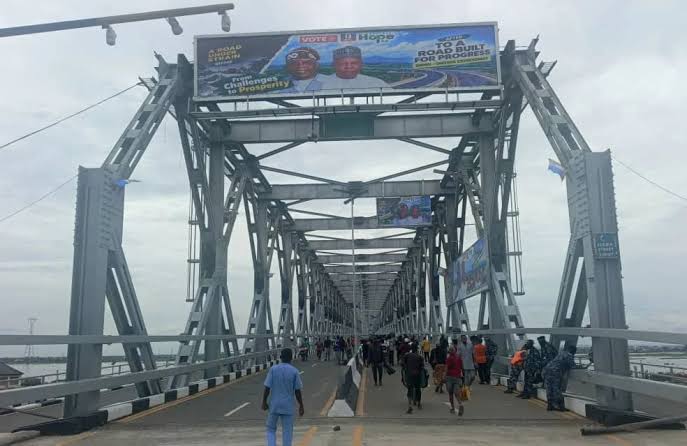
The return of traffic gridlock on the First Niger Bridge, linking Onitsha in Anambra State to Asaba in Delta State, has raised fresh concerns about traffic management and the effectiveness of the Federal Government’s emergency rehabilitation works.
The development comes just days after Minister of Works David Umahi reopened the bridge on October 15, 2026, following 38 days of closure for repairs. The bridge was shut on September 7 after officials identified damaged and vandalised structural components, including bolts and parts of the expansion-joint steelwork.
The rehabilitation was intended to improve the bridge’s condition, strengthen safety measures and restore smoother movement for motorists travelling between the South-East and South-South regions.
However, the reported return of gridlock has renewed questions about whether the reopening has delivered the expected relief for commuters and businesses that depend on the busy transport corridor.

Emergency repairs yet to eliminate congestion
During the closure, motorists were redirected to the Second Niger Bridge and alternative routes, increasing journey times and transport costs. The reopening was therefore expected to ease pressure on commuters, traders and businesses operating between the two states.
The Federal Government said the rehabilitation included resurfacing, repairs to damaged structural components, solar-powered streetlights, CCTV cameras, median barriers and designated turnaround points for emergencies.
However, the minister acknowledged at the reopening ceremony that the rehabilitation was not entirely complete, indicating that further work remained outstanding.
Questions over traffic management and maintenance
The reported return of gridlock highlights a distinction between repairing a bridge and ensuring that traffic moves efficiently across it.
Even when structural repairs are completed, congestion can persist because of heavy traffic volumes, bottlenecks at either end of the bridge, vehicle breakdowns, poor traffic discipline or problems on connecting roads. These are possible contributing factors, not confirmed explanations for the latest gridlock.
The development also raises questions about how effectively the newly installed barriers and turnaround points are being managed, and whether the relevant agencies have sufficient personnel to control traffic during peak periods.
Economic implications for the South-East and South-South
The First Niger Bridge is a major transport link connecting Onitsha, one of Nigeria’s important commercial centres, with Asaba and other destinations in the South-South.
Persistent congestion can delay the delivery of goods, increase fuel consumption and transport costs, disrupt commuters’ daily activities and affect businesses that depend on timely movement across the corridor.
The bridge’s age also makes continued inspection and preventive maintenance important. The Federal Government has separately raised concerns about vandalism, missing structural bolts and activities such as sand dredging around the bridge.
-

 Politics16 hours ago
Presidency denies withholding ₦250bn NLNG dividends from states
-
Politics15 hours ago
2027: APC unveils online portal for support groups
-
News15 hours ago
5 Security Operatives Killed As B/Haram Attacks Adamawa Communities
-
News16 hours ago
FG disagrees with World Bank over H1 124% debt servicing/revenue ratio
-
Metro16 hours ago
Kidnapped Catholic Priest, three others rescued in Benue
-
Politics15 hours ago
Buhari Saw Tinubu As ‘Bad News’, Resisted His Presidency – Baba-Ahmed
-
News15 hours ago
Nnamdi Kanu’s Family Accuses UK Of Failing To Protect Its Citizen, Demands Action To Secure His Freedom
-
News15 hours ago
How Scavengers Stole N3bn Power Line Cables – Zulum