
Politics
Results With Discrepancies Won’t Be Uploaded On IREV – INEC

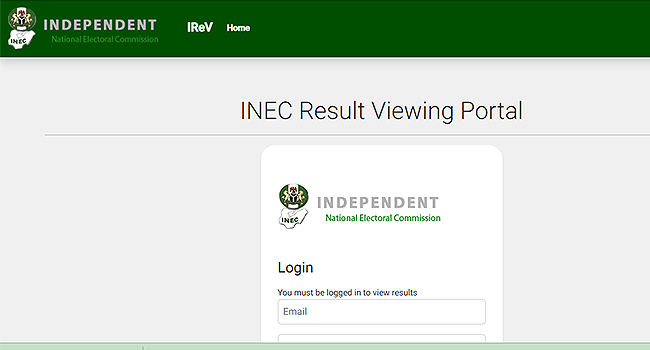
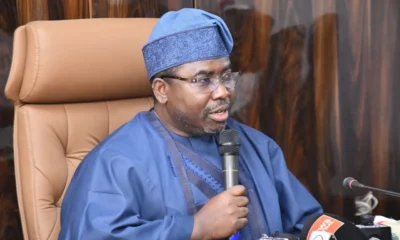
Dr. Lawrence Bayode, Director, ICT at the Independent National Electoral Commission (INEC), has promised Nigerians that results with discrepancies will not be uploaded to the INEC Result Viewing Portal.
Speaking in Abuja when an organisation, RiseNetworks, launched the AI4Election Hackathon initiative, Bayode said any result that does not tally with results on the BVAS would not be uploaded on IREV.
He said the commission would deploy AI technology that uses intelligence documents processing to digitise polling unit results sheet as well as perform consistency check.
He said the commission was exploring practical application of AI in areas such as voters information services, electoral data management operational efficiency and detection of misinformation.

The electoral official said what the system does is to perform a consistency check between the entered figure on the BVAS and the scanned results (EC8) before transmission is allowed.
Bayode said it was important to ensure that the results on the IREV were the ones that emanated from the polling units.
“It will help to improve accuracy, reduce human error and strengthen transparency. This initiative demonstrates that for INEC, AI is not merely a subject for discussion. We are moving from conversation to practical application while maintaining human oversight, accountability, appropriate safeguards,” he said.
Bayode noted that AI has a major role to play in the election, arguing that what needs to be done is to look at how it would be used without compromising the integrity, transparency and credibility.
He said the commission recognizes that Artificial Intelligence represents significant opportunities to improve electoral administration.
He revealed that the commission had taken deliberate steps towards responsible AI adoption, including the establishment of an Artificial Intelligence division within the ICT department.
“AI elections hackathon presents an opportunity to let the creativity of young Nigerians in addressing real electoral challenges, welcome innovations that can improve voters innovation, expand accessibility for persons with disability, bridge language barriers, strengthen information integrity and make electoral information more accessible to citizens.”
“On September 25, 2025, the commission adopted the policy on election technology appreciation and deployment. This policy provide a framework to streamline the development, appreciation and deployment of election technology by the commission. In this policy, the commission captured the use of AI in elections.
“Recently, when the commission decided to employ the use of AI, it went further to go beyond this policy that was put in place in 2025 to develop a framework that will guide the responsible deployment of AI that is still work in progress,” he said.
On her part, Chief Executive of Rise Networks, Dr. Toyosi Akerele-Ogunisi, said major stakeholders such as the INEC, META, Google, Microsoft, amongst others joined forces to launch the #AI4Elections Hackathon ahead of Nigeria’s 2027 Elections.
She said the initiative was designed to invite eligible Nigerians to apply for the #AI4Elections Hackathon, a national, multidisciplinary and nonpartisan programme designed to bring together Nigeria’s technology ecosystem, electoral experts, researchers, universities, developers, innovators and civil society to develop and reward responsible AI projects that can support electoral processes in 2027 and beyond.
“The programme which will connect innovators, researchers, civil society and electoral stakeholders is structured around three interconnected pillars: the #AI4Elections Hackathon, where participants design, develop and demonstrate solutions to electoral challenges; #AI4Elections Development Hub, which will support the further testing, refinement and development of promising solutions; and the #AI4Elections Community of Practice, which will connect participants, researchers, mentors, institutions and other stakeholders for continued learning, collaboration and knowledge-sharing beyond the Hackathon,” she said.
She said the programme was a response to the growing influence of artificial intelligence on information production, digital communications and civic participation, as well as emerging challenges including synthetic media, misinformation, privacy risks, cybersecurity threats and the manipulation of information environments.(Daily trust)
-

 News22 hours ago
FACT CHECK: Is Uganda Govt Right About Nationality Of Nigeria’s First Ebola Patient?
-
 News20 hours ago
Hardship: Nationwide labour action looms as talks deadlock
-
 News51 minutes ago
Abuja Workers Turn To Pick-Up Trucks Amid Rising Transport Costs
-
Sports20 hours ago
Carrick stays but senior Man Utd figures concerned by performances — Report
-
News22 hours ago
Bandits kill teacher, two others in Sokoto ambush
-
 Politics6 hours ago
Security Operatives Guard Tinubu’s Billboards Ahead Campaign Launch
-
News40 minutes ago
Ebola patient in Nigeria is Swiss, had not visited DR Congo – Foreign Ministry
-
Politics22 hours ago
INEC Under Pressure as Missing Voters’ Register Fuels Transparency Fears