
Opinion
Lagos built a night economy before it built a nighttime city

A little before six on a Friday evening, my phone lights up. “My guy, where are we chillin’ tonight?”
The official close of business is still about an hour away in Lagos, Nigeria. A few minutes later, my phone buzzes again. “Hey gee, where are we locking in?”
Across Victoria Island and Marina, two of Lagos’ financial districts, people are shutting down laptops. In Ikeja, the state capital, the last meetings drag toward their polite ends. Somewhere in Apapa, the port district, a dispatcher is checking traffic before sending another vehicle onto the road. Lagos is already changing shifts.
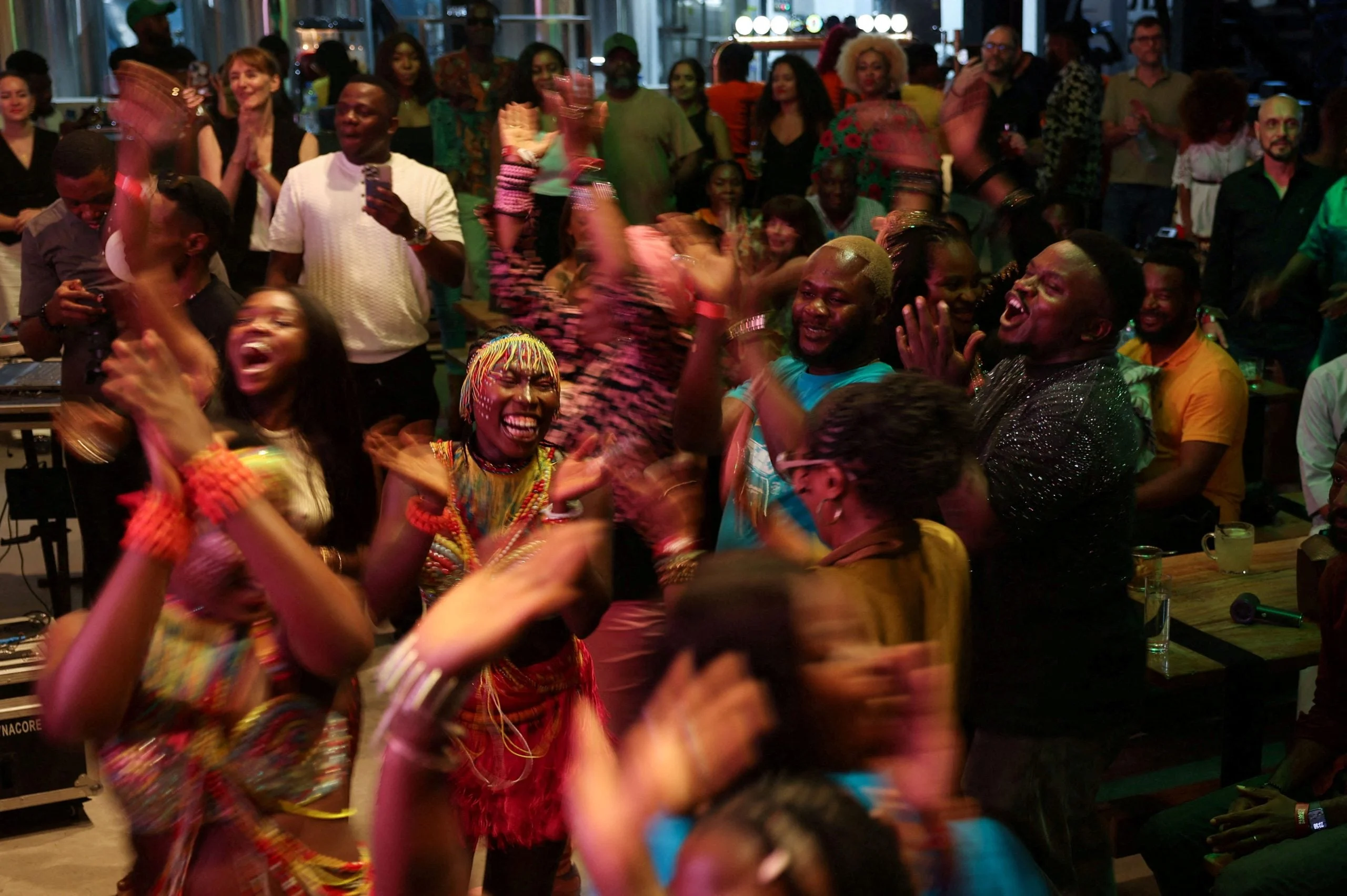
By 7pm, work bags, high heels and corporate jackets have given way to fresh trims, perfume and the careful calculation of a night out: where to go, what it will cost and how everyone will get home.

The message is ordinary. Economically, it is a starting gun. One reply can put a driver in motion, reserve a table, sell a ticket, initiate a bank transfer and keep a security guard on shift until dawn. Scale that across the city, and the Friday ritual begins to look like a supply chain wearing weekend clothes.
Lagos, in two shifts
Lagos has two shifts. The first runs on high-rise offices, regional headquarters, schools and bank branches. The second begins before the first has ended. Nightclubs are the most visible expression of Lagos nightlife, but the wider system includes food vendors, hotels, payment companies and ride-hailing platforms, alongside pharmacists, bakers, logistics workers and informal traders.
The city discovered the night before Afrobeats. Fela Kuti’s Shrine made late-night music a cultural and political institution decades ago. Today, Afrobeats carries Lagos abroad, and the diaspora carries its spending home each December. Culture built the invitation. Commerce followed it.
Yet it’s hard to put an official figure on this night economy’s worth. One proprietary estimate, produced by TAG by Oui Capital, an independent advisory, valued Lagos’ nightlife and entertainment economy at ₦2.9trn ($2.2bn) in 2025. The figure is eye-catching, but its public breakdown is not detailed enough to reproduce independently. At best, it’s an estimate, not an official valuation.
Stronger evidence comes from tracking payment activities. Moniepoint, a Nigerian fintech, processed more than ₦900bn for over 27,000 bars, clubs and lounges across Nigeria in 2025. Lagos accounted for 4,856 venues on its network, the largest concentration. Payments rose sharply around 8pm and peaked before midnight. Local bars expanded their staffing by 30%-50% on busy nights.
‘Detty’ December reveals another layer. Research firm MO Africa estimates that consumers spent ₦396.5bn in Lagos during the 55-day festive season ending in January 2026. Accommodation and hospitality accounted for 44%, followed by entertainment and nightlife at 33%. Visitors from abroad represented 11% of participants but generated 55% of spending.
Supply-side weakness
This shows demand, but also vulnerability. A year-round urban economy cannot depend on a six-week influx of visitors spending stronger currencies. Its foundations are local customers and community venues that keep trading after airport arrivals thin out.
The larger weakness sits on the supply side. Operators generate their own power, hire private security and often arrange transport for staff. Drivers wait through unpredictable traffic. Cleaners remain after the last customer leaves. Street vendors carry stock and cash into hours when public transport becomes scarce. We know the sector creates work; we know much less about wages, injuries, harassment or the cost of getting home.
The next valuable businesses may be the least glamorous: worker shuttles, mobile sanitation, soundproofing, waste collection and reliable power services for small venues. Each opportunity begins with a friction the city has normalised.
Lagos regulates noise and requires entertainment venues to meet environmental compliance rules. These measures are good but fall short of a night-economy strategy. Licensing, transport, policing, tourism and environmental regulation still operate as separate encounters with the state.
London’s independent Nightlife Taskforce proposed a permanent commission alongside reforms covering licensing, transport, sound and harm reduction. Lagos does not need to paste a foreign model onto its streets but can borrow the strategy and administrative seriousness.
Lagos, an investment opportunity
For Lagos, the investment opportunity in its nightlife is immense, but it must build a strong infrastructure base to harness the dividends.
The first step is a public census of economic activity between 6pm and 6am. That evidence should guide late transport in major corridors, simpler compliance for small operators, worker-protection standards and a platform where venues, residents, police and transport providers can resolve problems.
The lesson extends beyond Lagos. In fast-growing cities, cultural success can produce an economy long before government develops the language or machinery to govern it.
By 4.30am, the WhatsApp group chat is quiet. A driver is heading home. A cleaner is beginning the final sweep. Settlement alerts remain on phones after the music stops. At sunrise, Lagos changes clothes again. Until the city counts and plans for its second shift, it will keep celebrating an economy it has left to fend for itself.
•Written By Vincent Anani
-

 News7 hours ago
Awujale succession: DSS invites Fusengbuwa ruling house leaders
-
News7 hours ago
It’s not how much we borrow, but what we build — Tinubu
-
Entertainment7 hours ago
‘Star Trek’, ‘X-Men’ star Patrick Stewart dies at 86
-
Politics6 hours ago
2027: INEC clears Pantami, Gwarzo, rejects Adebutu
-
Business7 hours ago
Falana seeks recovery of $123bn in oil funds
-
News7 hours ago
FG pumps N5tn into military operations
-
Politics7 hours ago
I’ll work closely with Kwankwaso if elected – Obi reassures
-
Sports7 hours ago
Germany’s Zverev becomes tennis world No. 1