Business
Nigerian billionaire Abdul Samad Rabiu no longer needs central bank for dollars

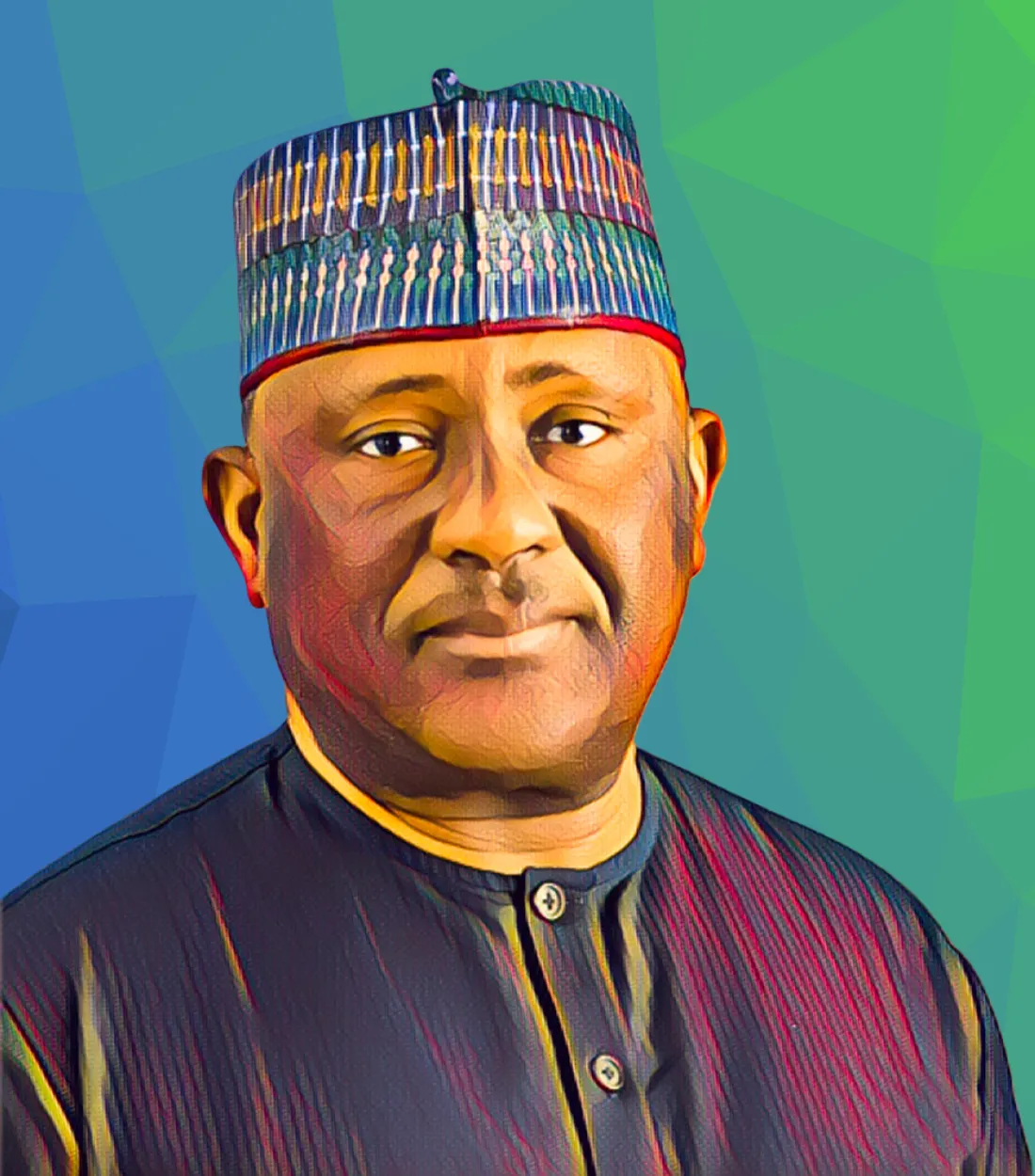
Nigerian billionaire Abdul Samad Rabiu, the founder and chairman of cement and food conglomerate BUA Group, said changes to the country’s currency rules mean he no longer has to lobby the central bank for dollars, though expensive loans and poor infrastructure still hold back industry.
“In the past we had to make a pilgrimage every two weeks to the CBN. Today I hardly need to go,” Rabiu said on Monday at the 32nd Nigerian Economic Summit in Abuja, referring to the Central Bank of Nigeria.
“Since Yemi Cardoso assumed office as CBN governor, I think I’ve seen him three or four times because I don’t need him for FX allocation. That is the truth,” he said.
Before the reforms, manufacturers had to apply to the central bank for allocations of foreign currency to pay for machinery and raw materials, and supply often ran short. “You could have all the naira required and still be unable to get FX for machinery,” Rabiu said. Companies can now buy dollars from banks at the market rate.

“As an industrialist, I’d rather operate in a transparent market where I can plan than in a system where the official rate appears attractive but foreign exchange is unavailable, because certainty gives businesses the confidence to invest,” he said.
Costs still high
Rabiu said the reforms of the past three years, including the removal of the petrol subsidy and changes to tax and fiscal policy, had been costly for households and companies.
“Of course, high financing costs, infrastructure gaps, and pressures on household incomes remain serious challenges,” he said.
He said factories need long-term funding because projects often take 10 to 20 years to pay off. “You cannot build a strong industrial economy primarily with expensive, short-term finance,” he said. He called on pension funds, insurers, banks, development finance institutions and the capital markets to put more Nigerian savings into local industry.
“We cannot expect businesses to make 20-year investments if they cannot plan with confidence beyond the next few years,” Rabiu said. He also called for reliable roads, rail, power and logistics so that Nigerian factories can compete at home and abroad.
A call for 100 more BUAs
Rabiu used cement as an example of what local industry can do. Nigeria once imported close to 80% of the cement it used and is now self-sufficient and a net exporter, he said.
“The question we must ask ourselves is not simply how BUA can continue to grow. It is how Nigeria can create another 100 BUAs,” he said. “Imagine a Nigeria with 100 more major industrial companies investing across manufacturing, agriculture, mining, technology and other productive sectors.”
He proposed an accord between the government, business and citizens built on policy stability, productive investment, human capital, long-term finance and shared prosperity. “We must now move from reform to results, from stabilisation to expansion and from economic adjustment to shared prosperity,” he said.
The summit, an annual gathering of policymakers and business leaders, was opened by Vice President Kashim Shettima on behalf of President Bola Tinubu.
Naira near his forecast
Rabiu, 66, has been one of the most vocal business backers of Tinubu’s economic program. In September 2025, after a meeting with the president, he predicted the naira could strengthen to between ₦1,300 and ₦1,400 to the dollar by the end of that year. The currency closed at ₦1,365 per dollar on Monday at the official market, after weakening from about ₦1,333 in mid-October.
Rabiu said BUA expects to finish projects next year that will double production capacity in several of its businesses. The group is building new cement plants in Sokoto and Edo states and an integrated sugar project at Lafiagi in Kwara State.
Rabiu’s fortune rests mainly on his controlling stakes in BUA Cement Plc and BUA Foods Plc, both listed on the Nigerian Exchange. A rally in the two stocks more than doubled his fortune in the year to March 2026, making him one of Africa’s three richest people.
(Billionaires Africa)
-

 Politics21 hours ago
‘₦70,000 Can Just Buy 50 Litres Of Fuel’ – Atiku Mocks Tinubu’s Relief To Workers
-
News8 hours ago
Tinubu Addressing Longstanding Challenges – Barau Replies Osinbajo
-
News8 hours ago
States hold N264bn UBEC funds as schools struggle
-
Politics8 hours ago
Omission: INEC decides Pantami, Adebutu’s fate today
-
News8 hours ago
TUC Rejects N70,000 Transport Allowance For Workers
-
Politics8 hours ago
ADC alleges plot to pressure INEC to postpone 2027 presidential election
-
Politics8 hours ago
Alleged plot to shift poll: it’s fake news, we’re unaware — Presidency
-
News8 hours ago
FG defends $21bn borrowing plan, cites infrastructure needs