Business
States get $4.8bn of Tinubu’s loan bid amid 288% rise in FAAC

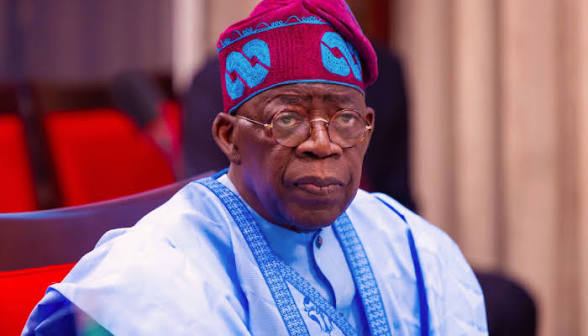
Nigeria’s States and the Federal Capital Territory (FCT) are set to receive $4.8 billion from President Bola Tinubu’s proposed $21.7 billion borrowing plan, despite a 288% increase in federal allocations between 2021 and 2025.
The development comes amid concerns over how state governments have utilised increased federal allocations following the removal of petrol subsidies and foreign exchange reforms, with analysts questioning whether the additional revenue has translated into better infrastructure and living conditions for citizens.
The proposed borrowing plan, submitted to the National Assembly for approval, includes $3.3 billion for state projects and about $1.5 billion for the FCT, according to Taiwo Oyedele, minister of finance and coordinating minister of the economy.
President Tinubu, in a statement on Thursday, defended the borrowing plan, saying Nigeria needs sustained infrastructure investment to achieve its target of becoming a $1 trillion economy by 2030.

He identified the Lagos-Calabar coastal highway, Sokoto-Badagry superhighway, Trans-Sahara superhighway, electricity grid upgrades and the modernisation of key commercial ports in Lagos as major projects expected to strengthen the country’s productive capacity.
“The real question is not how much we borrow, but what we build, what value we create and what future we leave behind,” Tinubu said.
A report by Agora Policy shows that gross revenue shared through the Federation Account Allocation Committee (FAAC) increased from N9.23 trillion in 2021 to N35.81 trillion in 2025, representing a 288 per cent rise.
FAAC allocations reached N31.46 trillion in the first nine months of 2026, already exceeding the full-year totals recorded between 2021 and 2024.
The increase followed the removal of the petrol subsidy and foreign exchange reforms introduced in 2023, which raised the naira value of some oil-related receipts and reduced the government’s fiscal burden from subsidising petrol.
The higher allocations have significantly expanded the financial resources available to state governments.
Read also: Tinubu’s $21.7bn loan plan puts lawmakers’ independence to the test
However, concerns persist over why the additional revenue has failed to translate into meaningful improvements in infrastructure and public services.
“In all honesty, we have not seen significant progress to suggest increased investment in infrastructure that would directly impact the people,” Samuel Oyekanmi, chief research officer at Abuja-based consultancy Norrenberger, said.
Economists argue that borrowing can support economic development when directed towards productive infrastructure, but insist that accountability, transparency and effective project execution remain critical to ensuring that public funds deliver measurable benefits.
“My concern is that many states appear to be spending without clear priorities. Before taking on more debt, they should demonstrate accountability for the revenue they already receive and show how it has translated into tangible benefits for their citizens,” Oluwatobi Ojabello, senior economist at BusinessDay, said.
Ojabello said citizens deserve to know how the increased allocations have been spent, what projects have been executed and what measurable improvements have been achieved before state governments incur additional debt.
“The states should publish detailed reports showing how they have utilised the increased FAAC allocations before turning to additional loans,” he said.
The 2026 Phillips Consulting State Performance Index (pSPI) further highlights the gap between rising government revenue and citizens’ experience of public services.
The report found that federal allocations to states climbed 118 per cent between 2022 and 2025, driven by reforms that boosted federation account receipts.
Yet average citizen satisfaction with public services stood at just 2.90 out of five, with fewer than half of the country’s states scoring above the report’s benchmark of 3.0.
“Spending is a number. Progress is an outcome,” the report said, arguing that the gap between rising government receipts and citizens’ experiences reflects the quality of governance rather than the size of state budgets. (BusinessDay)
-

 News16 hours ago
Awujale succession: DSS invites Fusengbuwa ruling house leaders
-
News15 hours ago
It’s not how much we borrow, but what we build — Tinubu
-
Entertainment16 hours ago
‘Star Trek’, ‘X-Men’ star Patrick Stewart dies at 86
-
Politics15 hours ago
2027: INEC clears Pantami, Gwarzo, rejects Adebutu
-
News16 hours ago
FG pumps N5tn into military operations
-
Politics15 hours ago
I’ll work closely with Kwankwaso if elected – Obi reassures
-
Business15 hours ago
Falana seeks recovery of $123bn in oil funds
-
Sports15 hours ago
Germany’s Zverev becomes tennis world No. 1